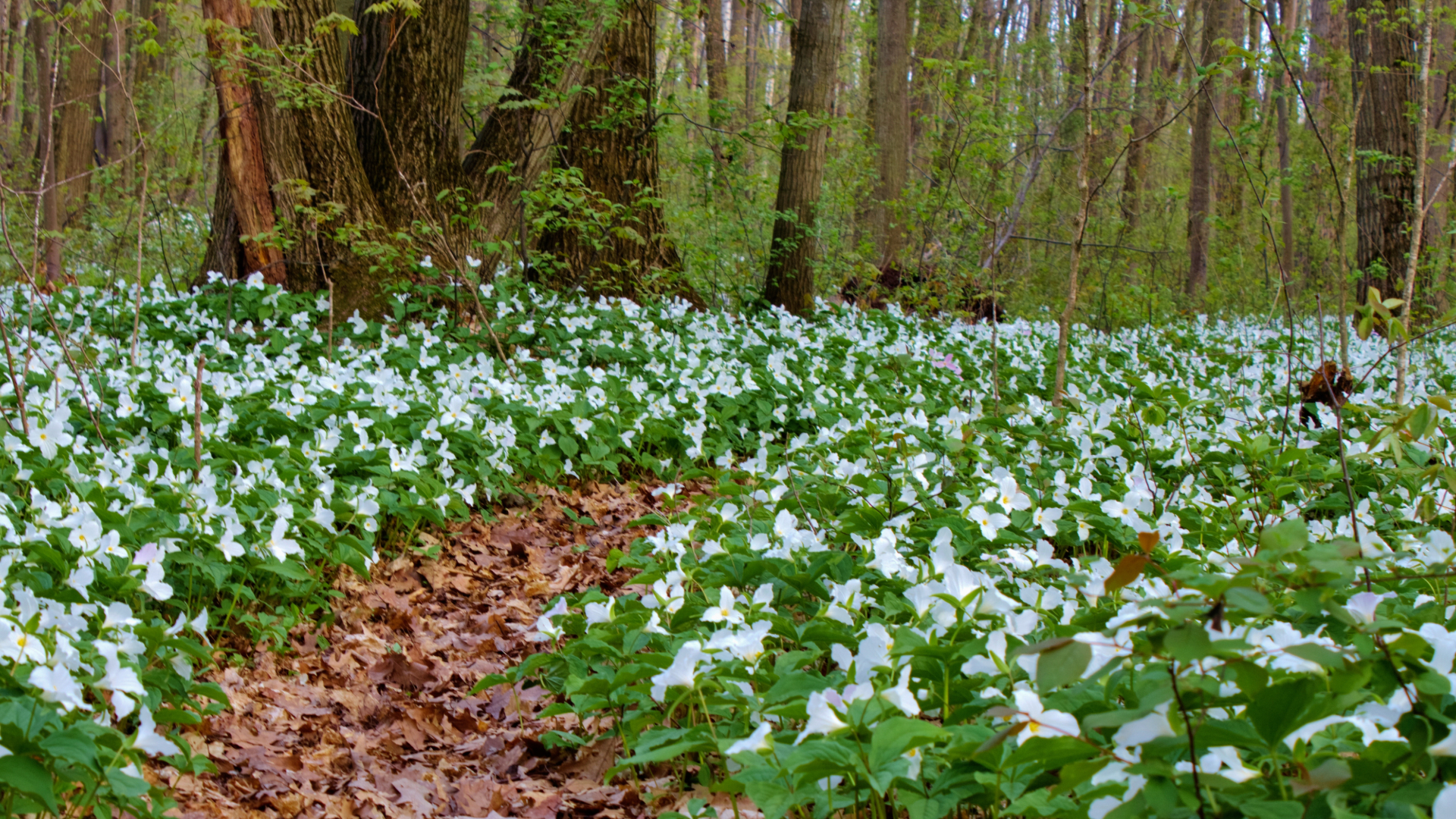
Wildflowers bloom in the Great Smoky Mountains from late March through May, with peak bloom mid-April at lower elevations. But here’s what most visitors don’t know: bloom timing shifts 3–4 weeks from low to high elevations, meaning you can chase spring up the mountain and see wildflowers for 8+ weeks straight.
If you’ve ever arrived in the Smokies hoping to catch that famous carpet of white trillium — only to find you were a week too early or a week too late — you know exactly how frustrating poor timing can be. This guide exists so that it never happens to you again.
We’ve hosted wildflower photographers and nature enthusiasts for almost 10 springs, watching as they time their visits to catch trillium carpets, lady slippers, and flame azaleas. This guide compiles their wisdom plus local trail knowledge into one calendar you can trust.
Here’s what you’ll find inside:
- A week-by-week bloom calendar showing exactly what’s blooming when
- How elevation changes everything (and why it works in your favor)
- The 5 best wildflower hikes in the park — ranked and detailed
- Photography tips from repeat guests who come specifically for the blooms
- Dog-friendly options (because not every trail welcomes your best friend)
- Where to stay so you’re close to the action
Peak Bloom by Elevation
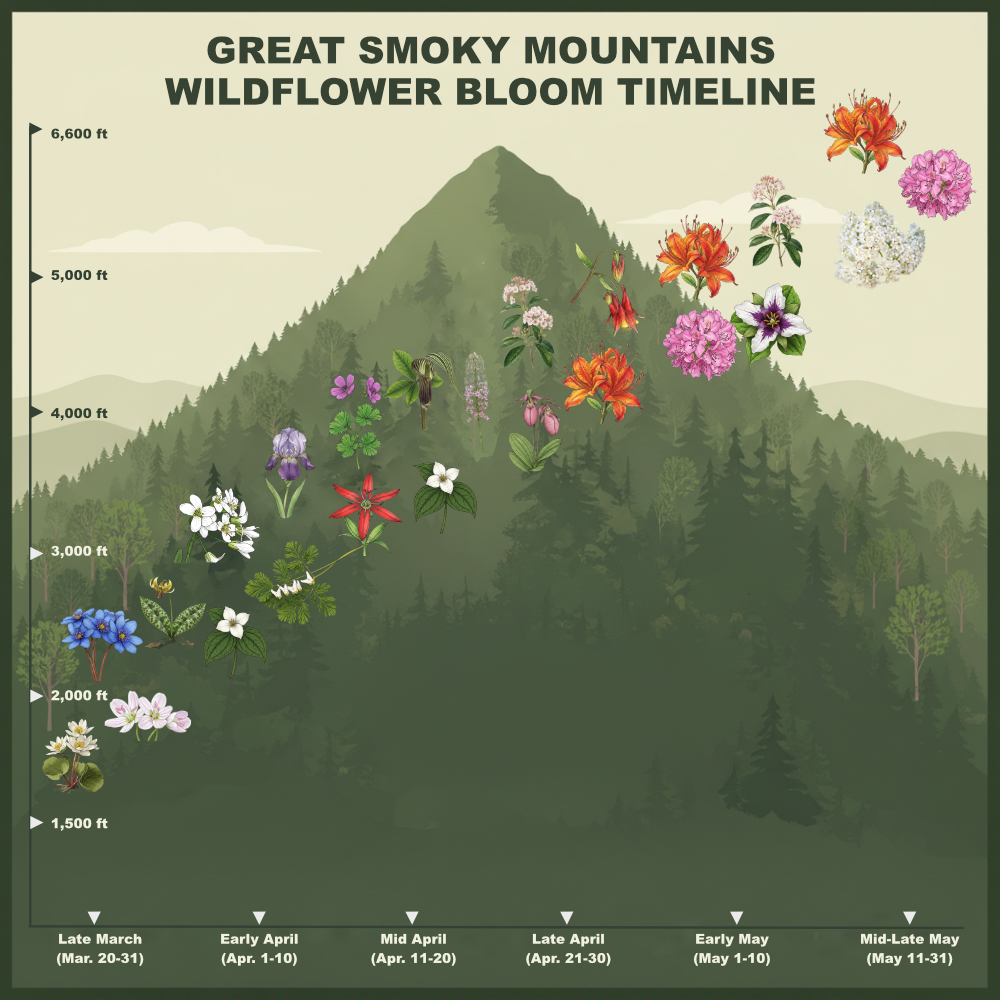
The simple rule: wildflowers follow spring up the mountain. As temperatures warm from the valley floors to the peaks, blooms migrate upward — giving you multiple chances to catch peak color throughout the season.
| Elevation | Location Examples | Peak Bloom |
| Low (1,500–3,000 ft) | Cades Cove, Metcalf Bottoms, Sugarlands | Late March – Mid-April |
| Mid (3,000–4,500 ft) | Grotto Falls, Alum Cave, Laurel Falls | Mid-April – Early May |
| High (4,500–6,600 ft) | Clingmans Dome, Mt. LeConte, Andrews Bald | Late April – Mid-May |
Here’s the practical magic of this elevation shift:
- Visit twice in April → Experience two completely different spring seasons
- Visit April 10 → See low-elevation peak bloom (Cades Cove trillium carpets)
- Visit April 25 → See mid-elevation peak bloom (fringed phacelia, fire pink)
- Visit May 5 → See high-elevation peak bloom (flame azaleas at Andrews Bald)
“We came April 8–12 and hit Cades Cove (trillium everywhere) and Porters Creek (stunning). Came back May 1–5 and did Clingmans Dome road (flame azaleas just opening). Felt like two different spring seasons.” — Karen & Bill, Ohio
Wildflower Bloom Calendar by Week
Here’s what’s blooming week by week. Dates vary ±7 days depending on weather — warmer springs bloom early, colder springs bloom late. Use this as your planning guide, not a guarantee.
Late March (March 20–31)
Elevation: Low (1,500–3,000 ft)
Status: Early bloomers emerging — the season is waking up
Weather: 55–65°F days, 35–45°F nights
Flowers Blooming:

Bloodroot (Sanguinaria canadensis) — White petals with golden centers. One of the most striking early bloomers, but fleeting — each plant blooms for only 2–3 days. Find them on shaded forest floors along Sugarlands and Fighting Creek Nature Trails.

Spring Beauty (Claytonia virginica) — Tiny white and pink flowers with distinctive pink stripes. Forms mass displays in moist, low areas.

Hepatica (Hepatica nobilis) — Purple, white, or pink flowers on rocky hillsides. One of the earliest bloomers in the entire park.

Trout Lily (Erythronium americanum) — Yellow, nodding flowers with mottled leaves. Only mature plants flower, so finding one in bloom feels like a small triumph.
Best Trails for Late March:
- Sugarlands Nature Trail (0.5 mi, easy) — Early hepatica and bloodroot
- Fighting Creek Nature Trail (0.8 mi, easy) — Spring beauty carpets
- Cades Cove Loop (beginning of bloom) — Early signs of spring throughout
Early April (April 1–10)
Elevation: Low–Mid (1,500–3,500 ft)
Status: ⭐ PEAK LOW ELEVATION BLOOM — This is what people come for
Weather: 60–70°F days, 40–50°F nights — perfect hiking weather
Flowers Blooming (Peak Week):
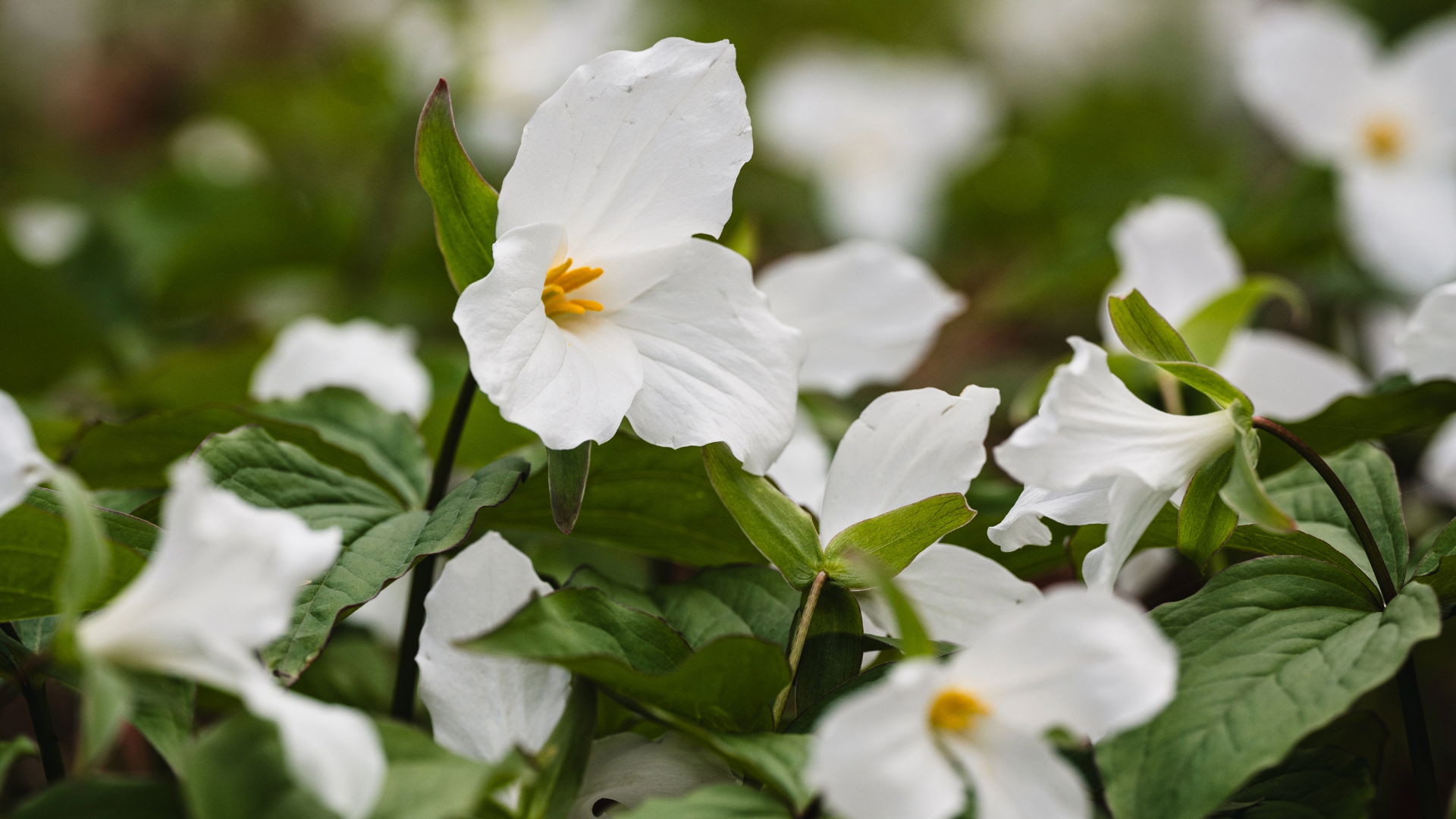
White Trillium ⭐ (Trillium grandiflorum) — THE icon of Smoky Mountain spring. Large three-petaled white flowers bloom in breathtaking carpets — hundreds blanketing the forest floor at Cades Cove, Metcalf Bottoms, and Porters Creek. This is what fills Instagram feeds every April.
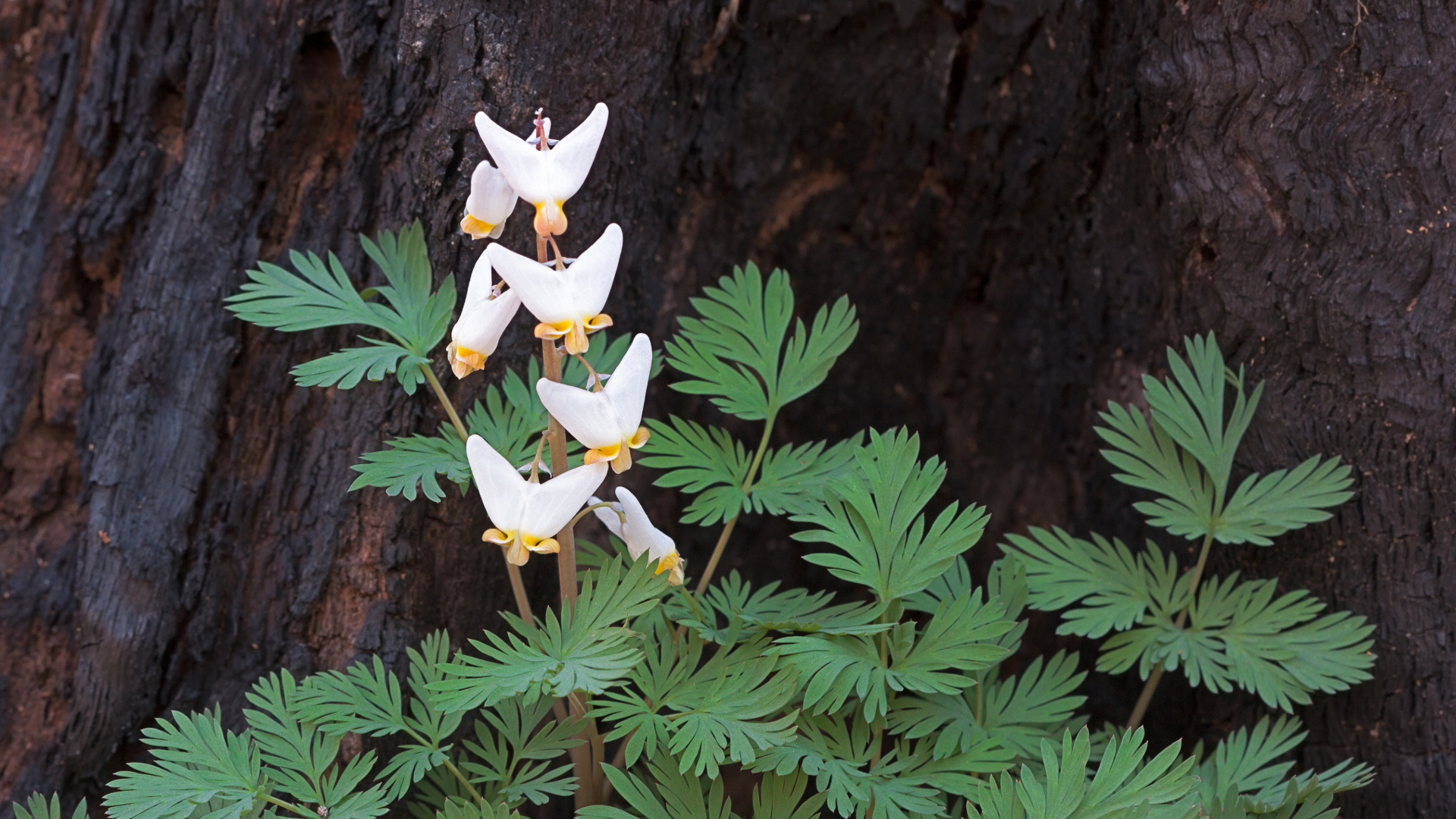
Dutchman’s Breeches (Dicentra cucullaria) — Whimsical white “pantaloons” hanging from arching stems. Delicate and shade-loving, they’re easy to miss until you stop and look.
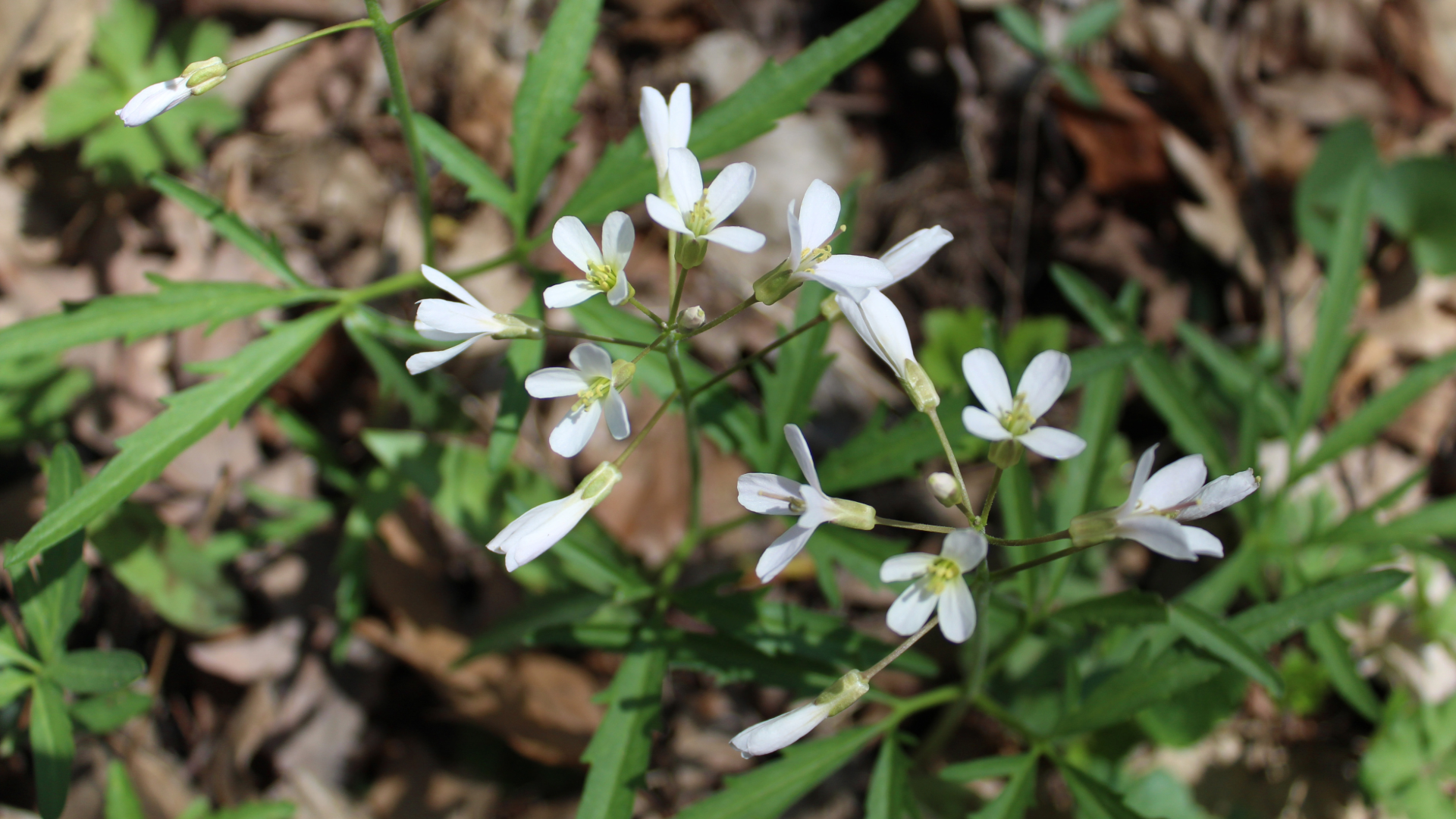
Toothwort (Cardamine concatenata) — Clusters of white and pink four-petaled flowers common along stream banks.
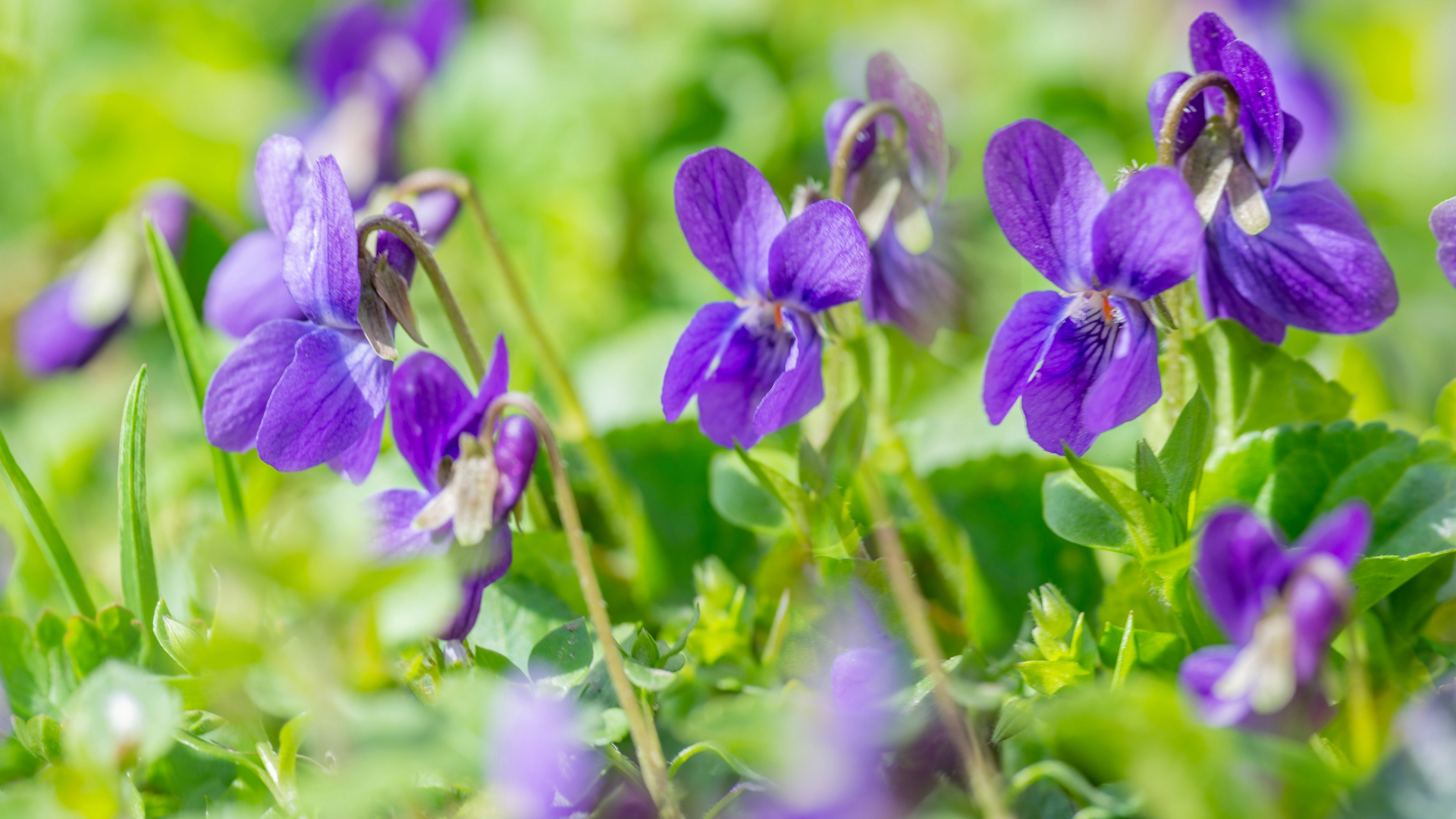
Violets (Viola species) — Purple, white, and yellow varieties pop up everywhere — roadsides, trail edges, even cabin lawns.

Dwarf Iris (Iris verna) — Small blue and purple iris tucked into sandy, rocky areas. Worth seeking out.
Best Trails — Don’t Miss These:
- Porters Creek Trail (4 mi RT, moderate) ⭐⭐⭐⭐⭐ — THE best wildflower trail in the park. Trillium carpets begin around mile one and build to jaw-dropping displays by mile two. The old homesite adds daffodils to the mix. Allow 3+ hours and bring your camera.
- Cades Cove Loop (11 mi, flat) ⭐⭐⭐⭐⭐ — Mass trillium displays in fields and forest edges. Bike it if you can (Wednesday and Saturday mornings are car-free until 10am — stop anywhere for photos).
- Metcalf Bottoms Trail (1 mi to picnic area, easy) ⭐⭐⭐⭐ — Trillium central for families who want an easy walk.
- Chestnut Top Trail (4.3 mi RT, strenuous) ⭐⭐⭐⭐ — Far fewer crowds with equally stunning displays.
⚠️ CROWD WARNING: Early April overlaps with spring break. Popular trailhead parking lots fill by 9am on weekends. Arrive before 8am or visit on weekdays to hike in near-solitude.
Mid-April (April 11–20)
Elevation: Mid (3,000–4,500 ft)
Status: Peak mid-elevation — low elevations still beautiful, photography optimal
Weather: 65–72°F days, 45–52°F nights
Flowers Blooming:

Fringed Phacelia ⭐ (Phacelia fimbriata) — Lavender and white fringed petals that mass into dreamlike, foggy carpets. One of the most photographed wildflowers in the Smokies. Look for them along Porters Creek and Little River Trail.
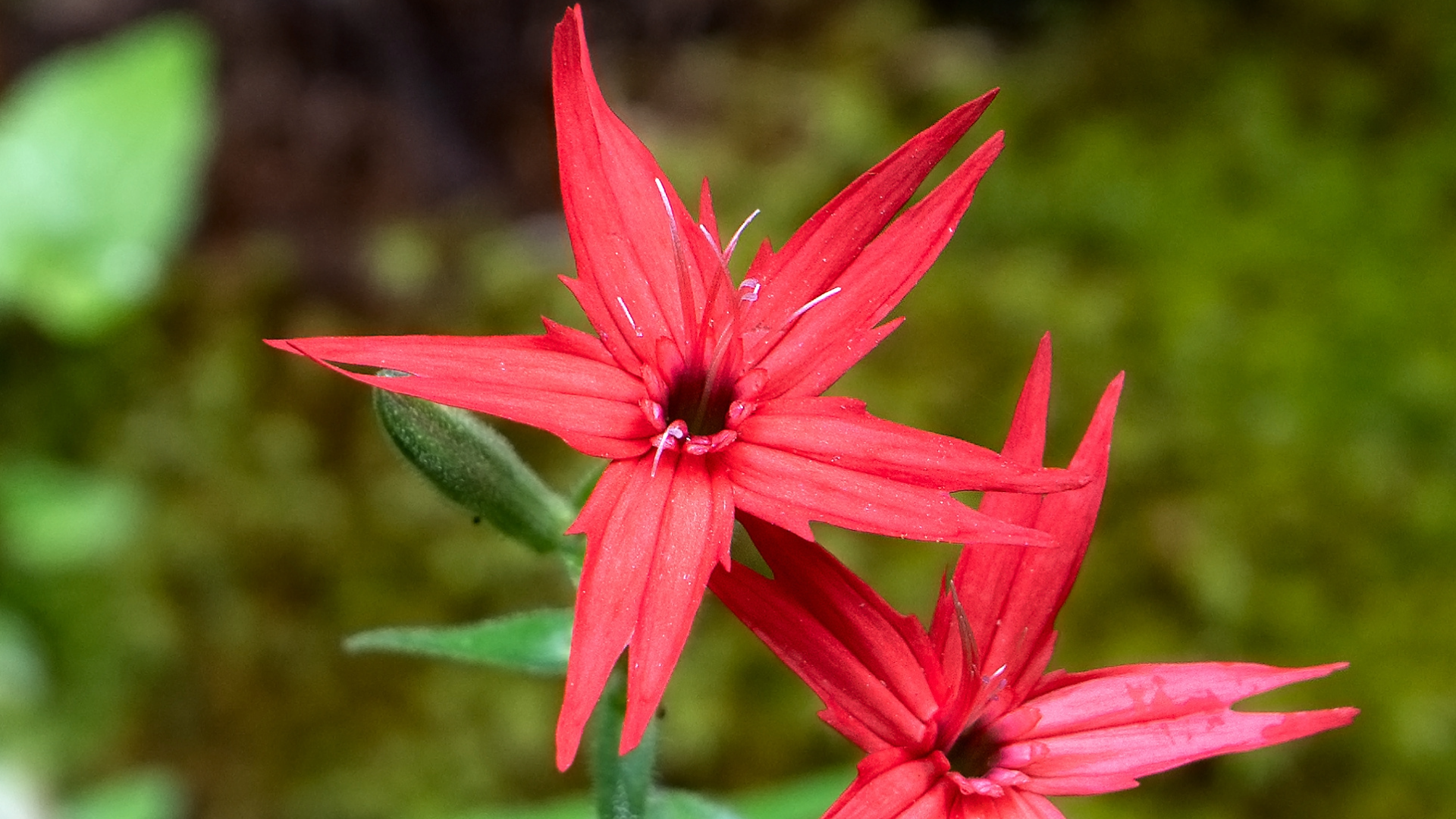
Fire Pink (Silene virginica) — Brilliant red tubular flowers that hummingbirds can’t resist. Stunning against the green ferns.
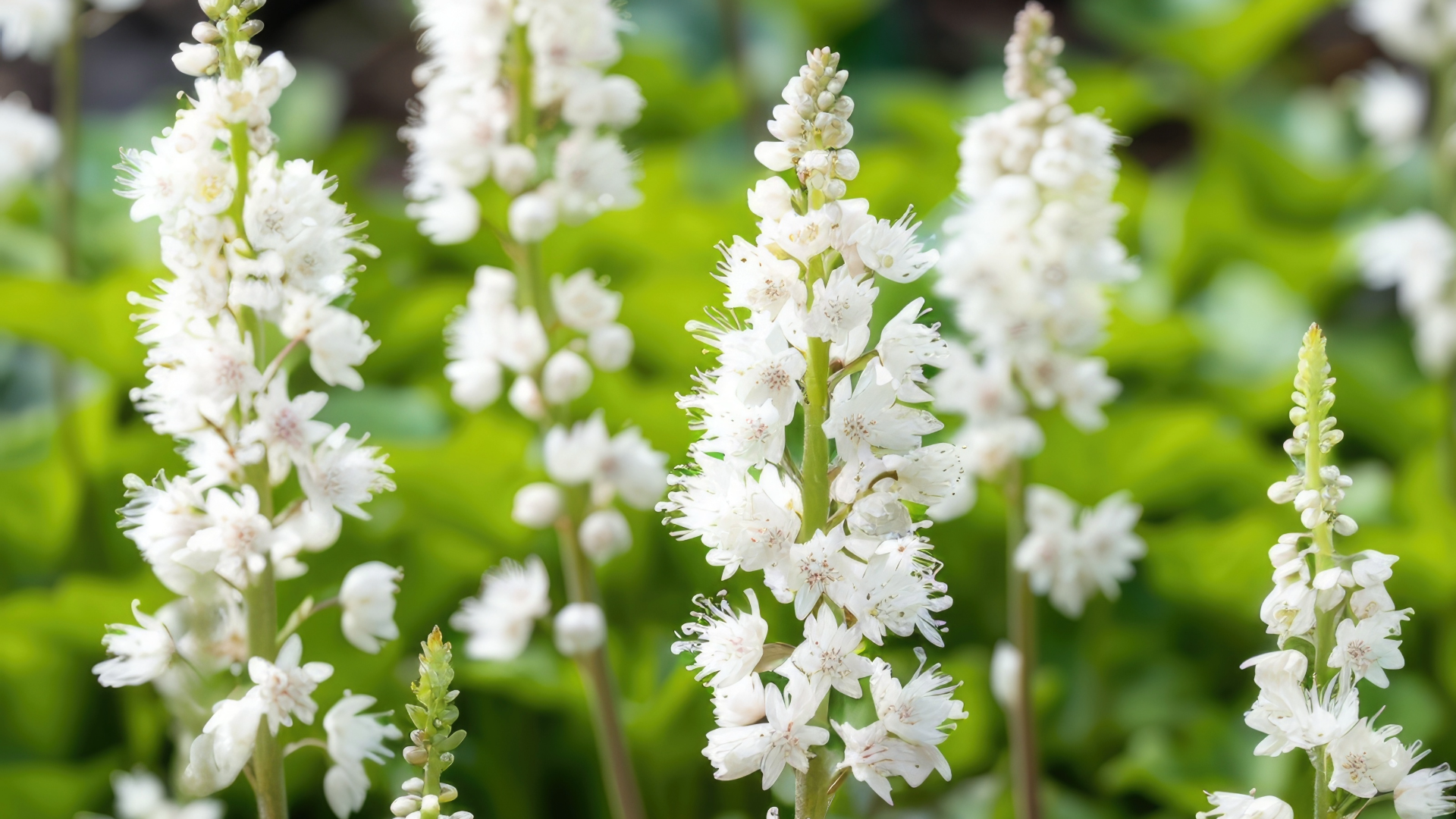
Foamflower (Tiarella cordifolia) — White spike-like flower clusters spreading as ground cover in shaded hollows.
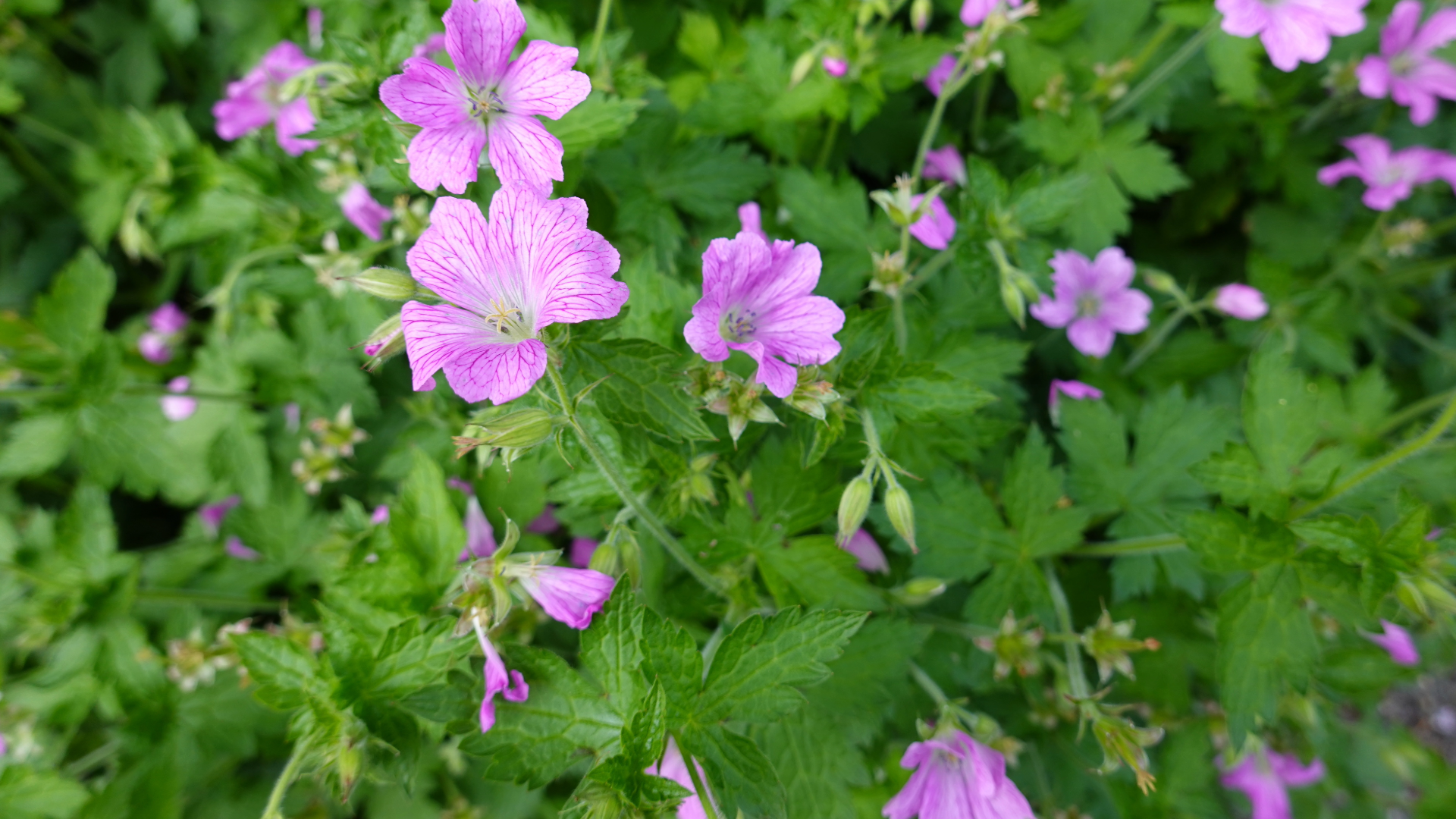
Wild Geranium (Geranium maculatum) — Pink and purple five-petaled flowers in open meadows and along roadsides.
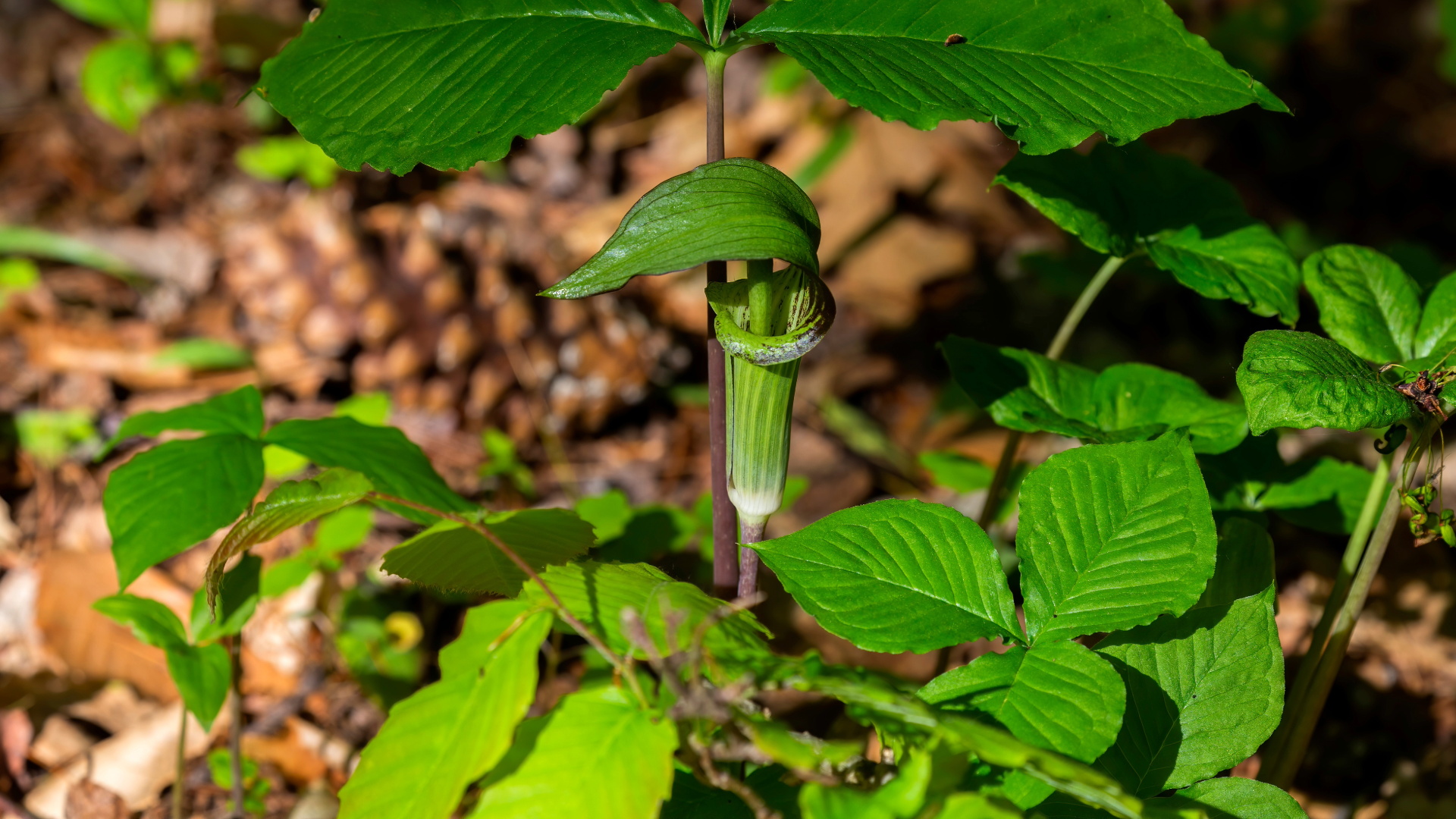
Jack-in-the-Pulpit (Arisaema triphyllum) — A wildflower that looks like it belongs in a fairy tale — hooded green and purple striped flower. A special find for kids.
White Trillium — Still blooming at mid-elevations even as lower areas begin to fade.
Best Trails:
- Grotto Falls Trail (2.6 mi RT, moderate) ⭐⭐⭐⭐⭐ — Walk behind a 25-foot waterfall AND see mid-elevation wildflowers in the same hike. Signature Smokies experience.
- Little River Trail (5 mi one-way, easy) ⭐⭐⭐⭐ — Follows the river with fringed phacelia carpets along the banks. Turn around whenever you’re ready.
- Alum Cave Trail to Arch Rock (2.2 mi RT) ⭐⭐⭐⭐ — Elevation variety means you see low and mid-elevation species in one hike.
- Rich Mountain Loop (8.5 mi, strenuous) ⭐⭐⭐⭐ — Fewer people, incredible displays for those willing to work for it.
Photography Notes:
- Backlight phacelia in late afternoon — the petals glow as the light comes through them
- Fire pink against green ferns creates stunning color contrast
- Bring both macro and wide-angle lenses — you’ll want both
Late April (April 21–30)
Elevation: Mid–High (4,000–5,500 ft)
Status: High elevations beginning to wake up; mid-elevations still blooming
Weather: 70–75°F days, 50–55°F nights
Flowers Blooming:

Pink Lady’s Slipper ⭐ (Cypripedium acaule) — A rare and spectacular native orchid with a distinctive pink “slipper” pouch. Highly sought by photographers. Found in acidic soil near pine forests. Do NOT pick or disturb — transplanting kills them, and they can take 15 years to bloom.
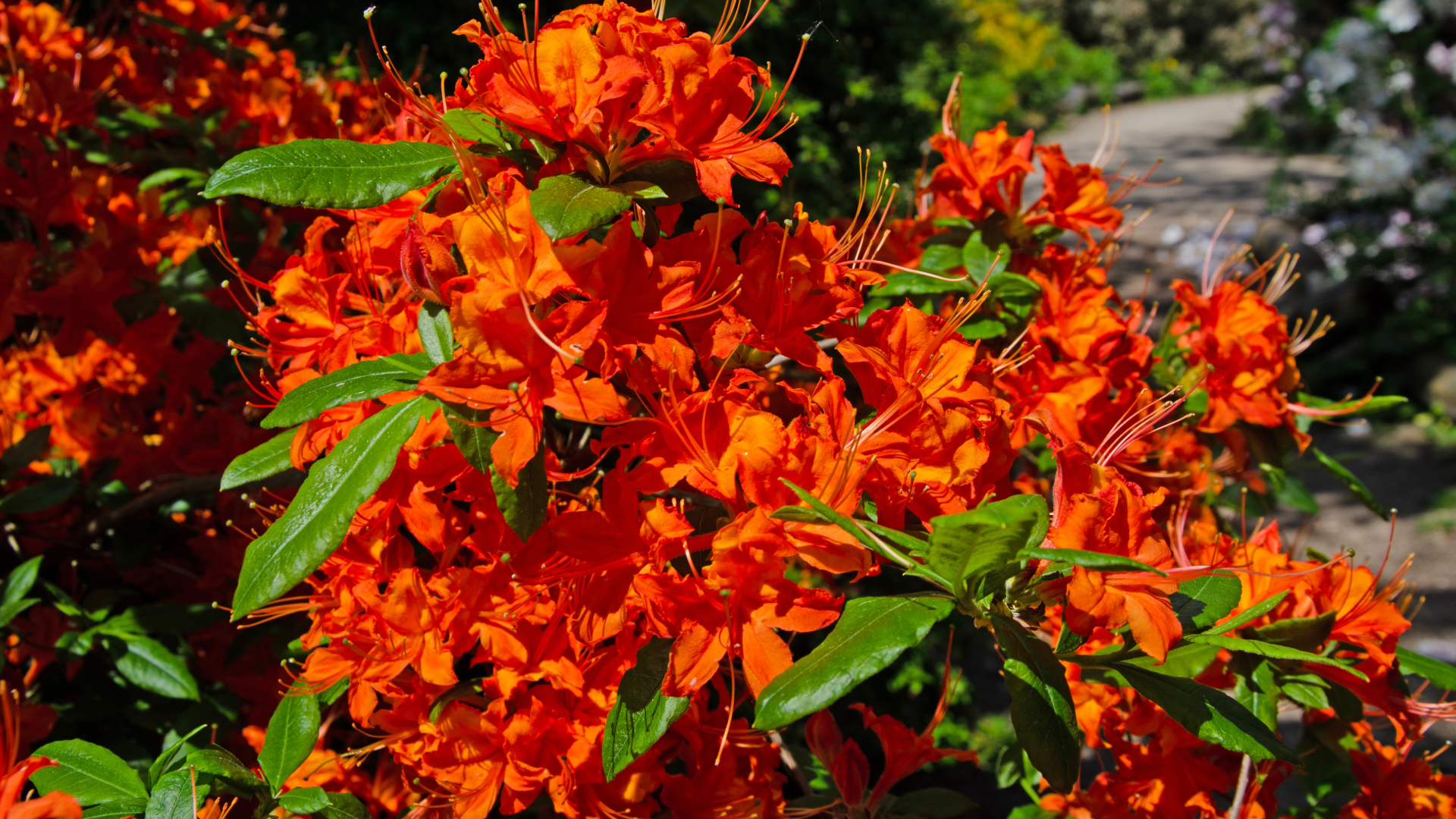
Flame Azalea (Rhododendron calendulaceum) — Beginning to ignite at mid-elevations with orange, red, and yellow clusters. By late April at high elevations, they’re just getting started.
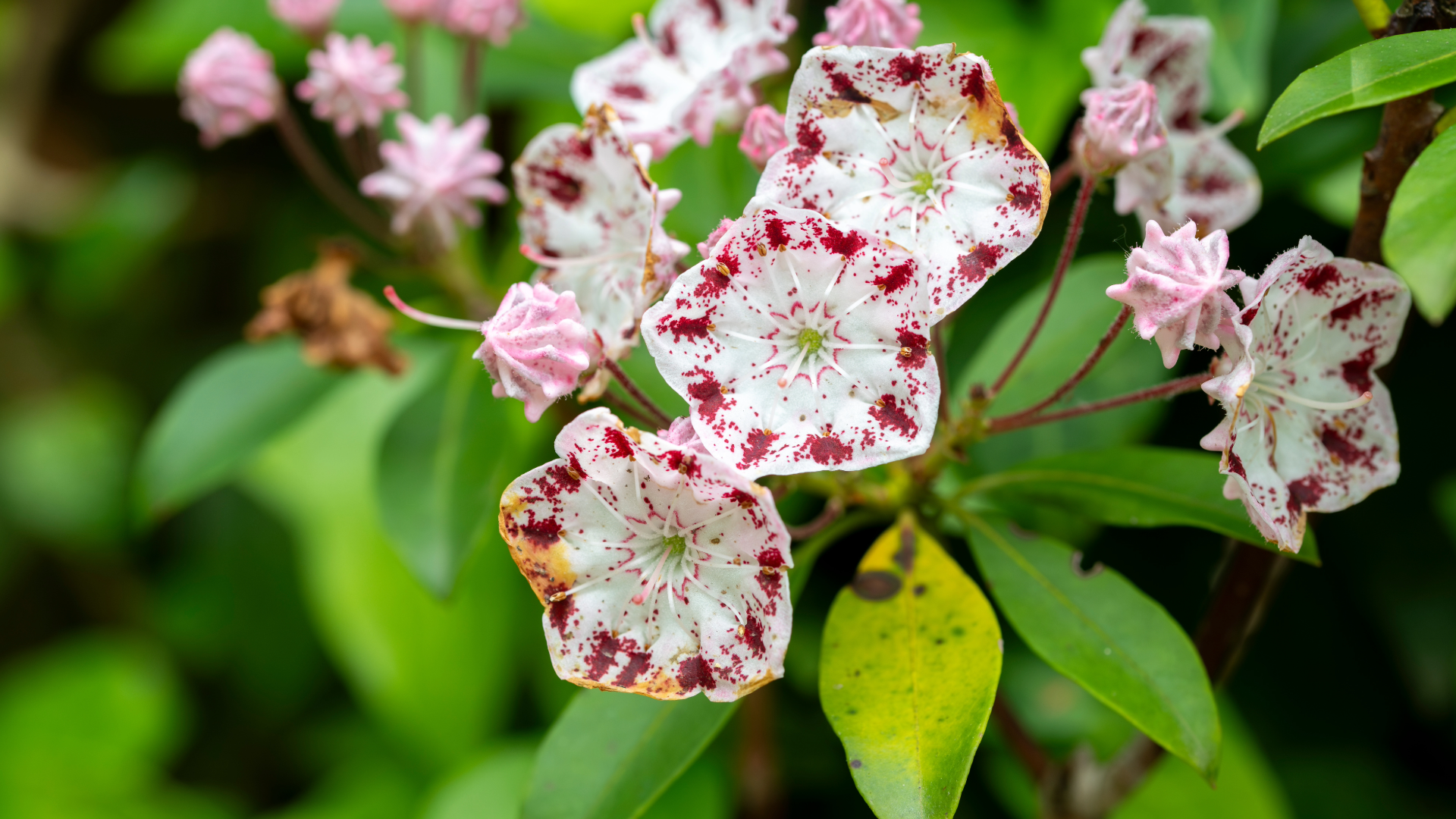
Mountain Laurel (Kalmia latifolia) — Pink and white clusters beginning to open at lower elevations.

Showy Orchid (Galearis spectabilis) — A purple and white orchid that’s uncommon enough that spotting one feels like a genuine discovery.

Red Columbine (Aquilegia canadensis) — Red and yellow nodding flowers on cliff faces and rocky outcrops.
Best Trails:
- Andrews Bald Trail (3.5 mi RT from Clingmans Dome) ⭐⭐⭐⭐⭐ — Flame azalea heaven is coming. By late April, the hillside is beginning to blush with color.
- Alum Cave to Mt. LeConte (11 mi RT, strenuous) ⭐⭐⭐⭐ — See the full elevation gradient of spring bloom in a single hike.
- Laurel Falls Trail (2.6 mi RT, paved) ⭐⭐⭐⭐ — Accessible, beautiful, and mountain laurel starts appearing near the falls.
- Cove Hardwood Nature Trail (0.7 mi loop) ⭐⭐⭐ — Easy walk with a chance of finding lady’s slippers if you’re lucky and look carefully.
📌 NOTE: Clingmans Dome Road typically opens in late April (weather dependent). Once it opens, access to high-elevation trails improves dramatically. Check nps.gov/grsm for current road status.
Early May (May 1–10)
Elevation: High (4,500–6,600 ft)
Status: ⭐ PEAK HIGH ELEVATION BLOOM — Andrews Bald is ablaze
Weather: 75–80°F at low elevations, 60–70°F at high elevations
Flowers Blooming:
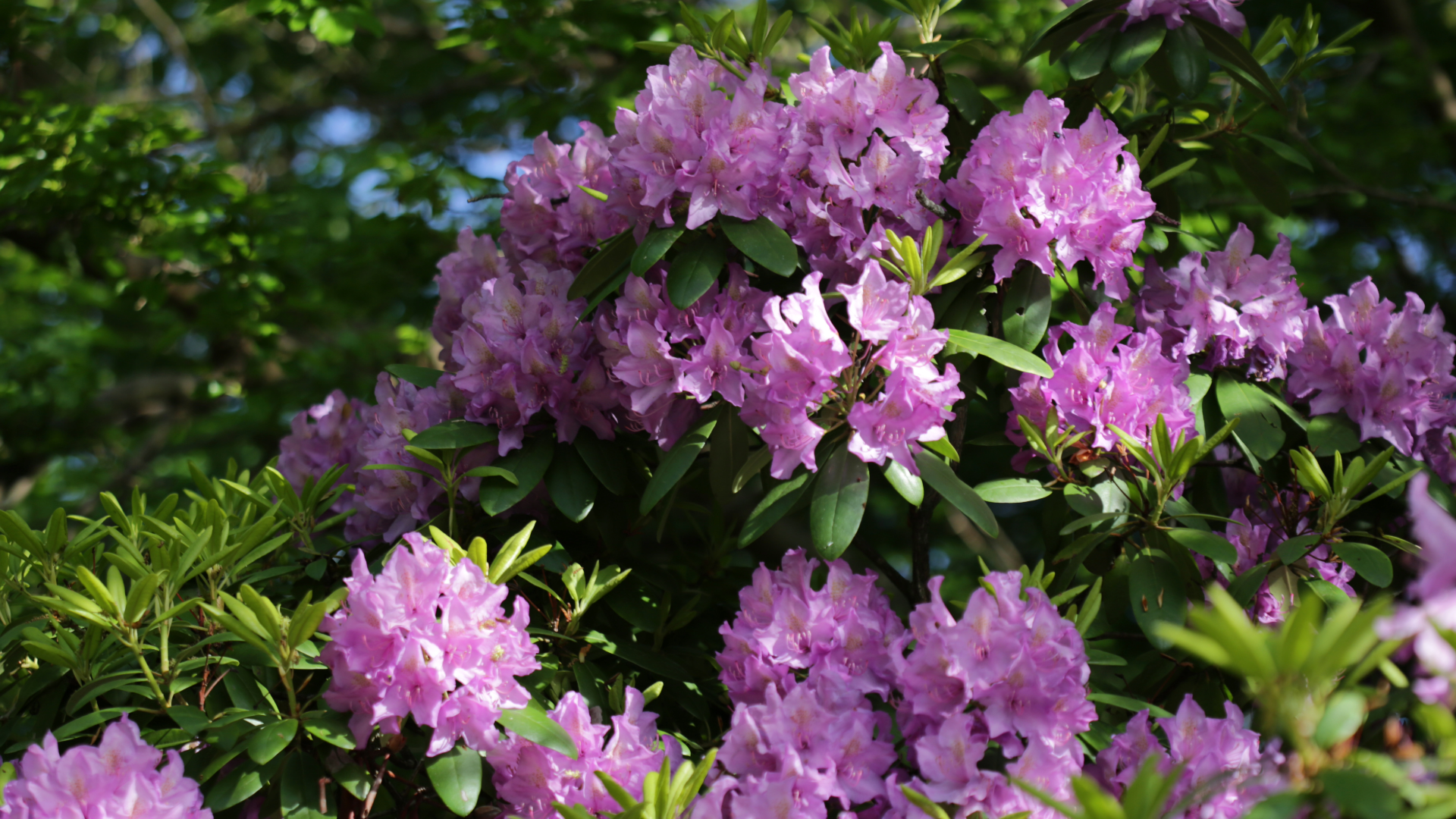
Catawba Rhododendron (Rhododendron catawbiense) — Purple blooms on the grassy balds and exposed ridges. A spectacular high-elevation display.

Painted Trillium (Trillium undulatum) — The high-elevation cousin of white trillium — white petals with a distinctive pink center stripe.

Clinton’s Lily (Clintonia borealis) — Yellow bell-shaped flowers in cool, moist high-elevation forests.
Flame Azalea ⭐ — Peak at high elevations. Andrews Bald transforms into an entire hillside of orange, red, coral, and yellow. No photo does it justice. You have to stand in it.
Mountain Laurel — Peak at mid-high elevations, covering entire hillsides in pink and white.
Best Trails:
- Andrews Bald (3.5 mi RT) ⭐⭐⭐⭐⭐ — Flame azalea PEAK. Put this on your bucket list. Don’t miss it.
- Clingmans Dome Trail (1 mi RT, paved but steep) ⭐⭐⭐⭐ — The highest point in the park with unique high-elevation flora.
- Gregory Bald (11 mi RT from Cades Cove, strenuous) ⭐⭐⭐⭐⭐ — Worth every step for the flame azalea display on this remote, beautiful bald.
- Alum Cave Trail to LeConte (11 mi RT) ⭐⭐⭐⭐ — See the full spectrum from mid to high elevation bloom in a single challenging day.
💡 TIMING TIP: Early May means post-spring break crowds. Trails are quieter, the air is warmer at low elevations, and the high elevations are just waking up. Many photographers consider this the sweet spot.
Mid–Late May (May 11–31)
Elevation: High (5,000–6,600 ft)
Status: Late bloomers and transition to summer
Weather: 80°F+ at low elevations, 70–75°F at high elevations
Flowers Blooming:
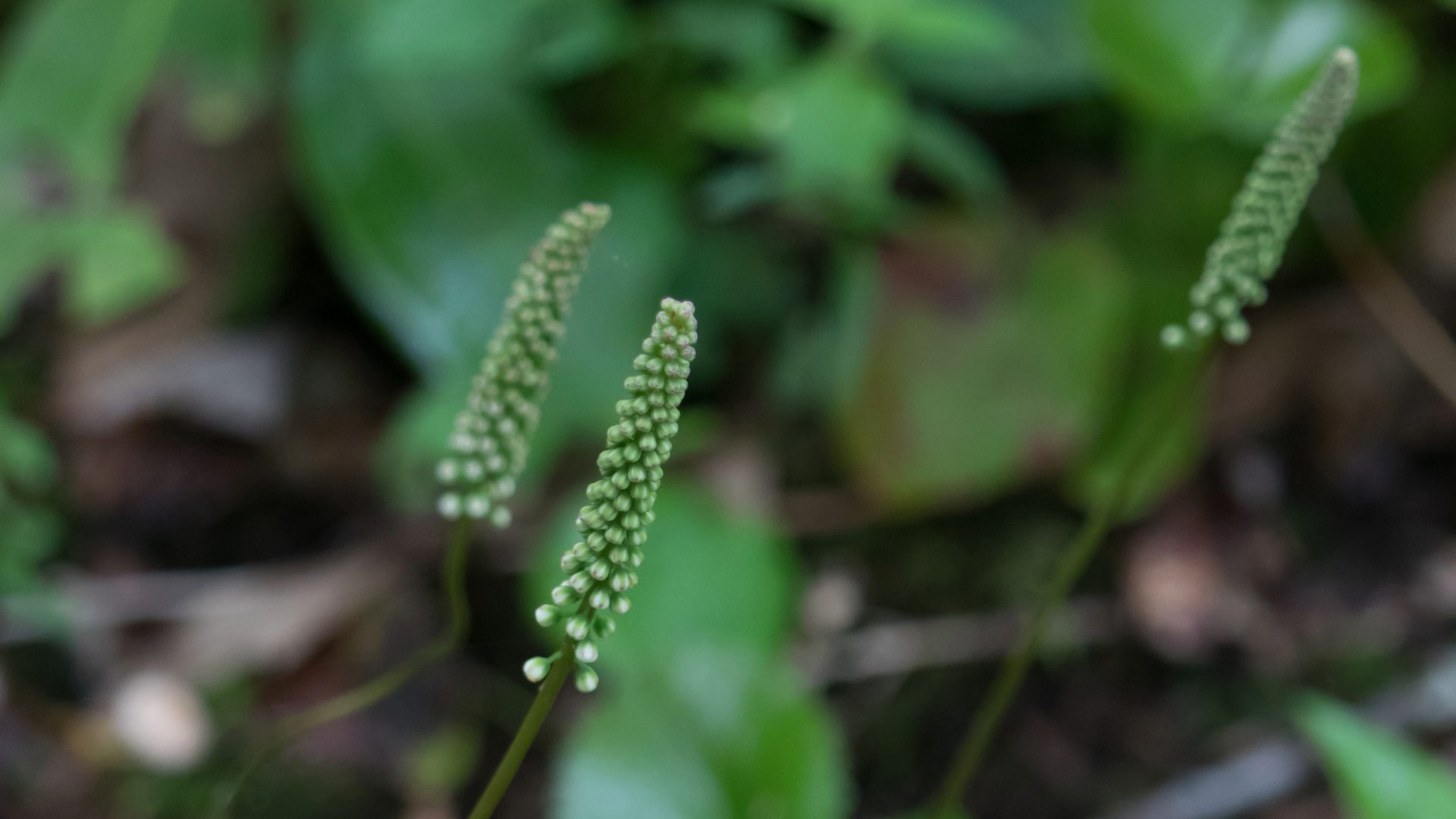
Galax (Galax urceolata) — White spike flowers rising above the ground-cover’s shiny, round leaves.
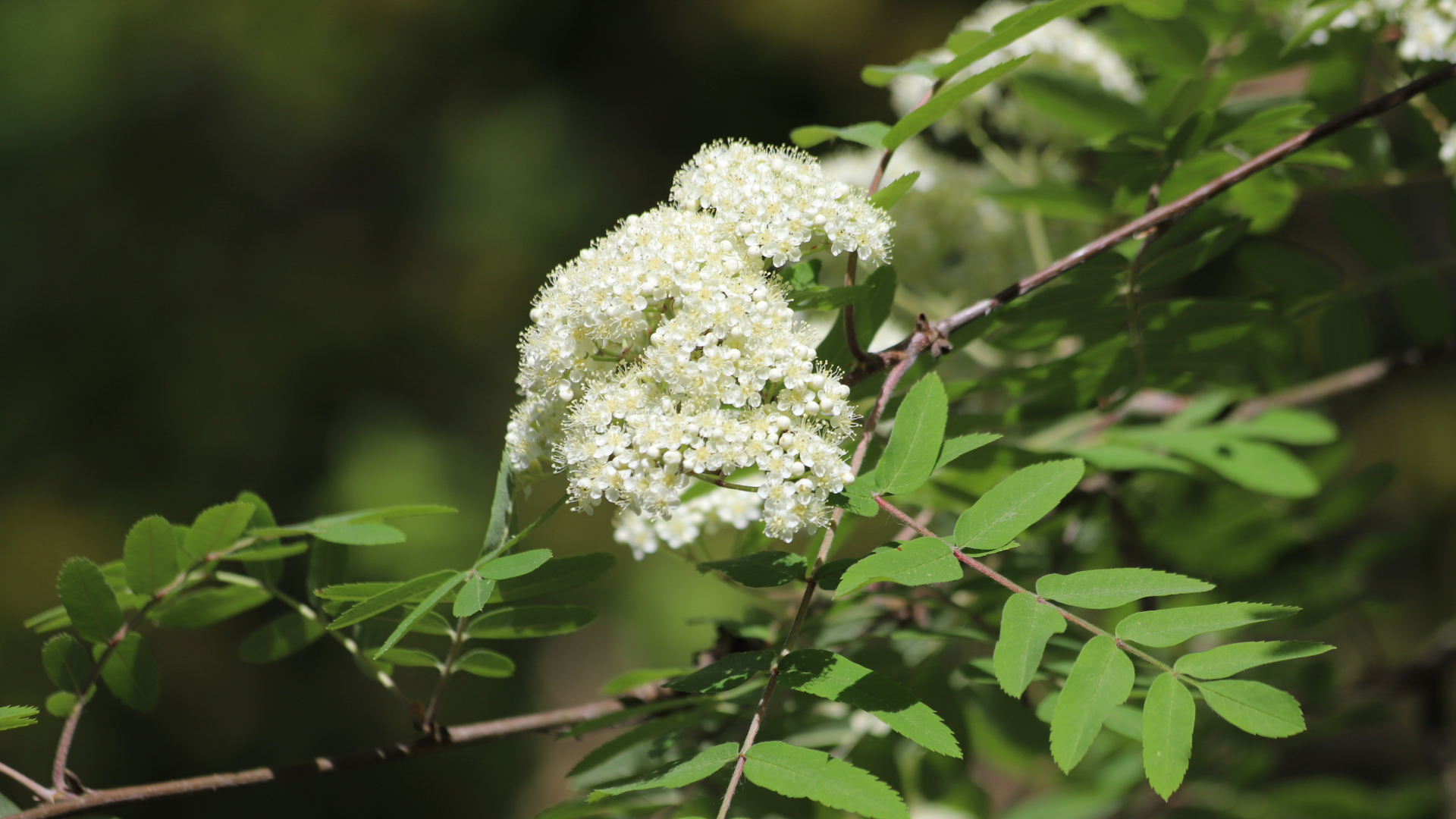
Mountain Ash (Sorbus americana) — White flower clusters that will become the red berries that feed migrating birds come fall.
Flame Azalea — Tail end of bloom at the highest elevations.
Rhododendron — Continuing at high elevations with purple clusters on exposed ridgelines.
By late May, most low and mid-elevation wildflower season is winding down. High elevations are still worth visiting, but the explosive, carpet-covering blooms of April are behind you — until next spring.
The 5 Best Wildflower Hikes
If you only have time for five hikes, make them these. Each offers a unique wildflower experience at a different point in the season.
#1: Porters Creek Trail ⭐⭐⭐⭐⭐
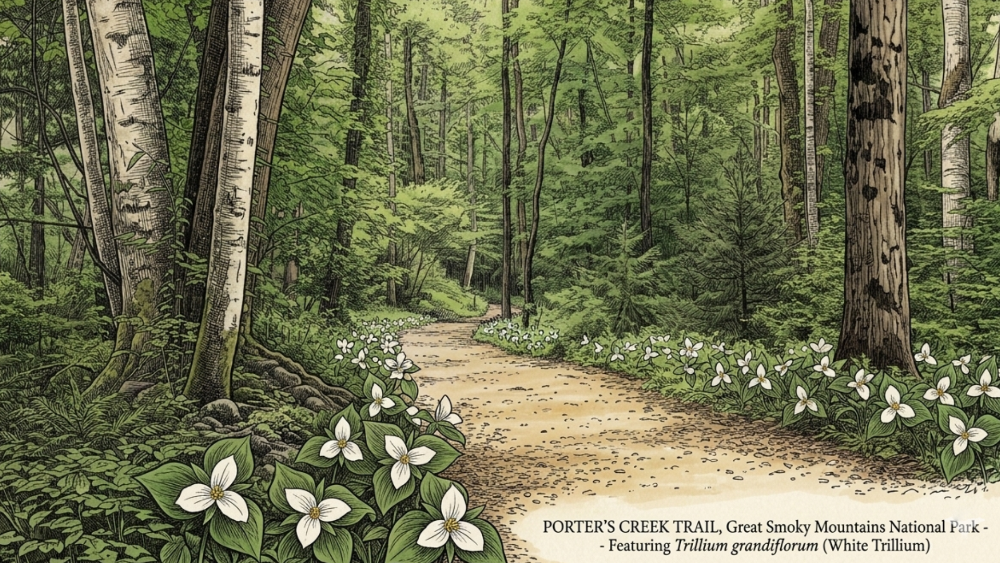
Location: Greenbrier area — 15 min from Gatlinburg
Distance: 4 miles round-trip | Difficulty: Moderate
Best Time: April 1–15 (peak trillium)
Dog-Friendly: No
Why It’s #1: No trail in the park delivers the combination of species variety, mass displays, and a manageable hike. The trillium carpets between miles one and two are the stuff of screensavers — except you’re standing in them.
What you’ll experience:
- First half mile: Gradual warm-up with spring beauty, violets, and toothwort
- Miles 1–2: Trillium heaven — white carpets covering the forest floor in every direction
- Mile 2: Old homesite with daffodils blooming alongside wildflowers (a surreal mix of cultivated and wild)
- Stream crossings: Toothwort and phacelia along the water’s edge
Trail Notes: The parking lot holds 15–20 cars and fills by 9am on April weekends. Arrive by 8am or visit on a weekday. The trail continues past the 2-mile mark to Fern Branch Falls if you want to extend your adventure.
“Porters Creek in early April was a dream. We must have taken 300 photos of trillium. Worth the two-hour drive alone.” — Linda, nature photographer
Where to Stay: Blissful Tranquility (20 min from Greenbrier entrance)
#2: Cades Cove Loop ⭐⭐⭐⭐⭐
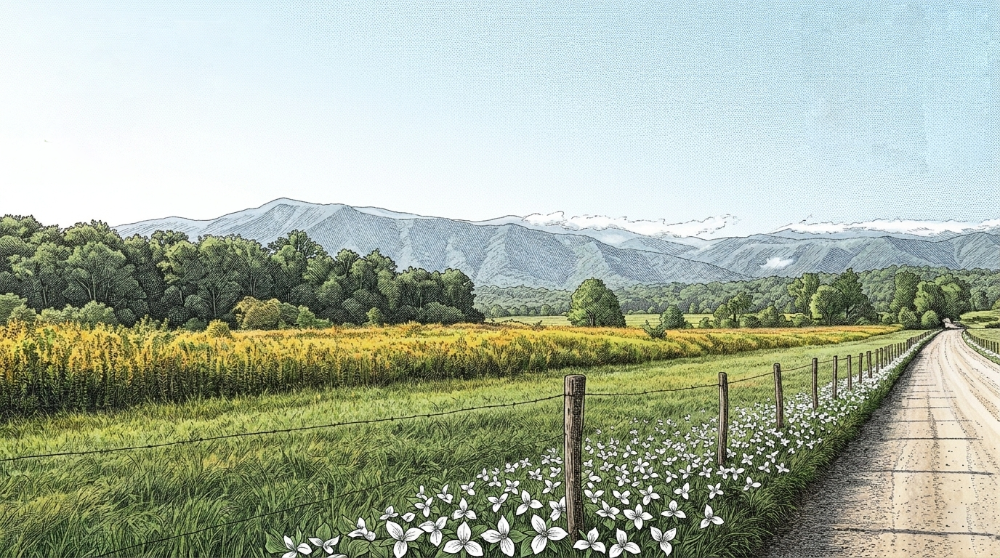
Location: Cades Cove — 30 min from Townsend, 45 min from Gatlinburg
Distance: 11 miles (loop road, bike or drive) | Difficulty: Easy (flat, paved)
Best Time: April 5–15 (peak bloom)
Dog-Friendly: Dogs allowed in vehicles; NOT on trails off the loop road
Why It’s Great: Accessible, family-friendly, and the mass trillium displays in open fields and forest edges are unlike anything else in the park. The historic homesteads add a bonus — settlers planted daffodils and irises that still bloom alongside the wildflowers over a century later.
Loop Strategy:
- Bike on Wednesday or Saturday mornings — the loop is car-free until 10am. You can stop anywhere, anytime, without traffic. Bikes are available for rent in Cades Cove or bring your own.
- Driving: Allow 2–3 hours minimum. Traffic moves slowly (everyone’s stopping for photos and wildlife).
- Best stops: Cable Mill area, Elijah Oliver Cabin, Missionary Baptist Church — all surrounded by wildflower meadows.
Trail Notes: The loop is open sunrise to sunset daily. On April Saturdays, you may share the road with 2,000+ other cars. Arriving before 9am makes a dramatic difference.
Where to Stay: Sleepy Bear Ranch or Hapey Memories (20–30 min from Cades Cove entrance)
#3: Grotto Falls Trail ⭐⭐⭐⭐⭐
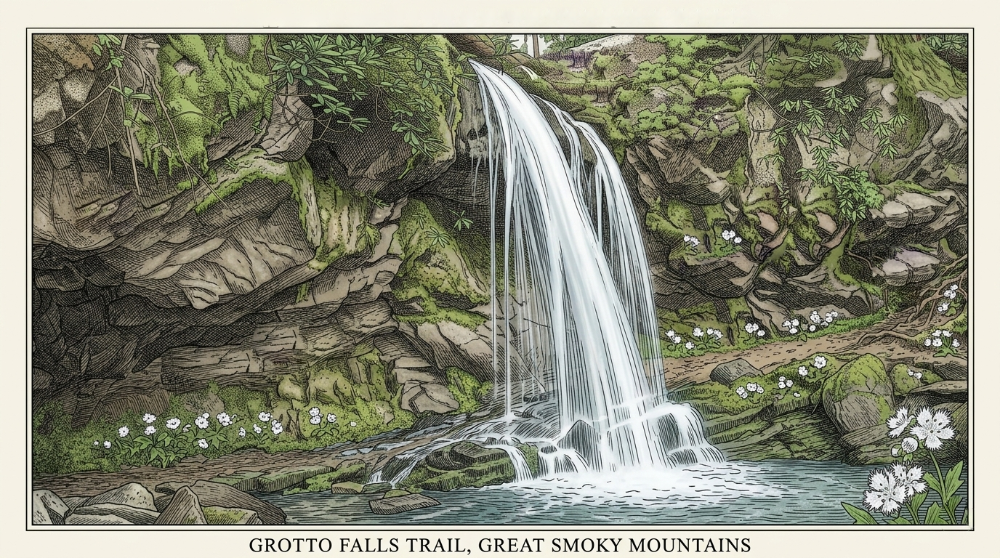
Location: Roaring Fork Motor Trail — 10 min from Gatlinburg
Distance: 2.6 miles round-trip | Difficulty: Moderate (steady uphill to falls)
Best Time: April 15–25 (mid-elevation peak)
Dog-Friendly: No
Why It’s Great: It’s the only trail in the park where you can walk directly behind the waterfall — which happens to be surrounded by wildflowers at peak mid-elevation bloom. The combination is unbeatable for photography.
What you’ll see by section:
- Lower trail: Violets, spring beauty, trout lily
- Mid-trail: Tail-end trillium transitioning to fringed phacelia and foamflower
- Upper trail: Fire pink and jack-in-the-pulpit
- Falls area: Mist-loving mosses and cool-microclimate flowers along the stream
Photography: Spring rains mean the falls are at full thundering power March through May. Bring a microfiber cloth — mist from behind the falls will land on your lens.
“Walking behind the waterfall with wildflowers all around us was one of the most magical moments of our Smoky Mountain trip.” — Hapey Cabin guest
Where to Stay: Timeless Tranquility (10 min from trailhead)
#4: Andrews Bald ⭐⭐⭐⭐⭐
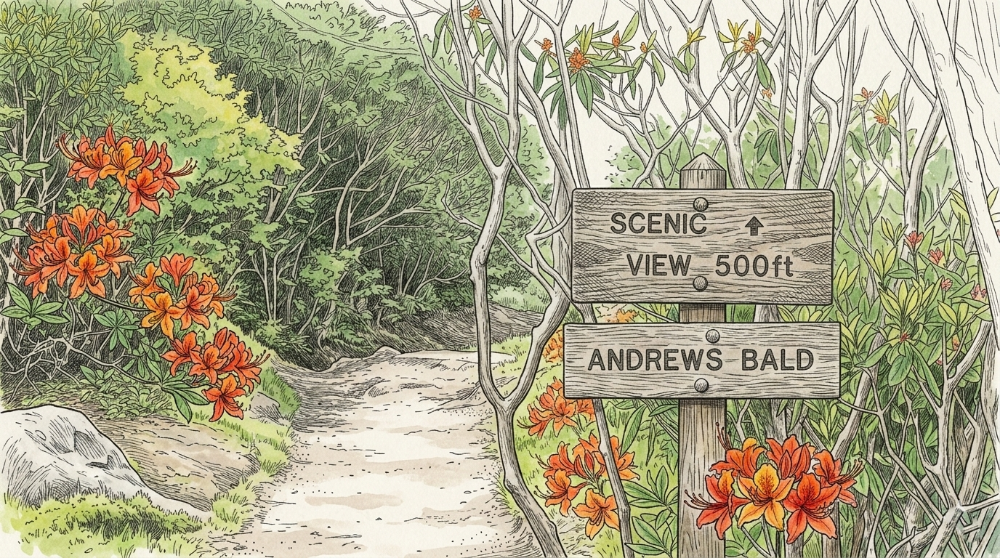
Location: Clingmans Dome Road — 45 min from Gatlinburg
Distance: 3.5 miles round-trip | Difficulty: Moderate (downhill out, uphill back)
Best Time: Late April – Early May (flame azalea)
Dog-Friendly: No
Why It’s Great: The high-elevation grassy bald opens to 360° mountain views surrounded by one of the most spectacular wildflower displays in the entire Eastern United States. When the flame azaleas peak, the hillside becomes a painting.
Trail Notes: The trail starts at Clingmans Dome parking area — the highest point accessible by car in the park. It’s mostly downhill on the way out (easy), which means the uphill return requires moderate effort. The bald is exposed to sun and wind, so bring layers and sunscreen even in May.
“Andrews Bald the first week of May was unreal. The entire hillside was orange and red flame azaleas. We sat for an hour just taking it in.” — Mark & Susan, repeat Hapey guests
Where to Stay: Any Hapey cabin works — all are 45–60 min from Clingmans Dome Road
#5: Little River Trail ⭐⭐⭐⭐
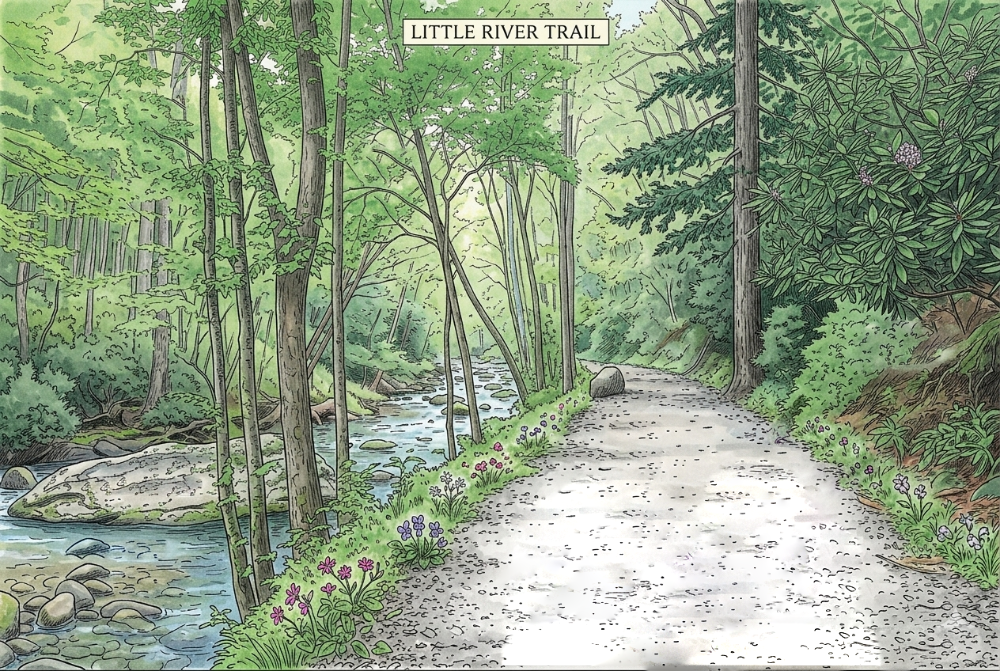
Location: Elkmont area — 15 min from Gatlinburg
Distance: 2–10 miles round-trip (your choice) | Difficulty: Easy (flat, old railroad bed)
Best Time: Mid-April (fringed phacelia peak)
Dog-Friendly: No
Why It’s Great: The flexibility. You can walk as far or as little as you want along the flat, riverside trail. Fringed phacelia forms lavender carpets along the banks, and the sound of the Little River is the soundtrack to the entire experience.
What you’ll see: Stream-side wildflowers including toothwort, trillium, and violets alongside the phacelia carpets. Foamflower, wild geranium, and fire pink join in mid-April. We recommend 4–5 miles round-trip as the sweet spot — enough to see the best displays without overcommitting.
Where to Stay: Blissful Tranquility (closest cabin to the Elkmont entrance)
Photography Tips for Wildflowers
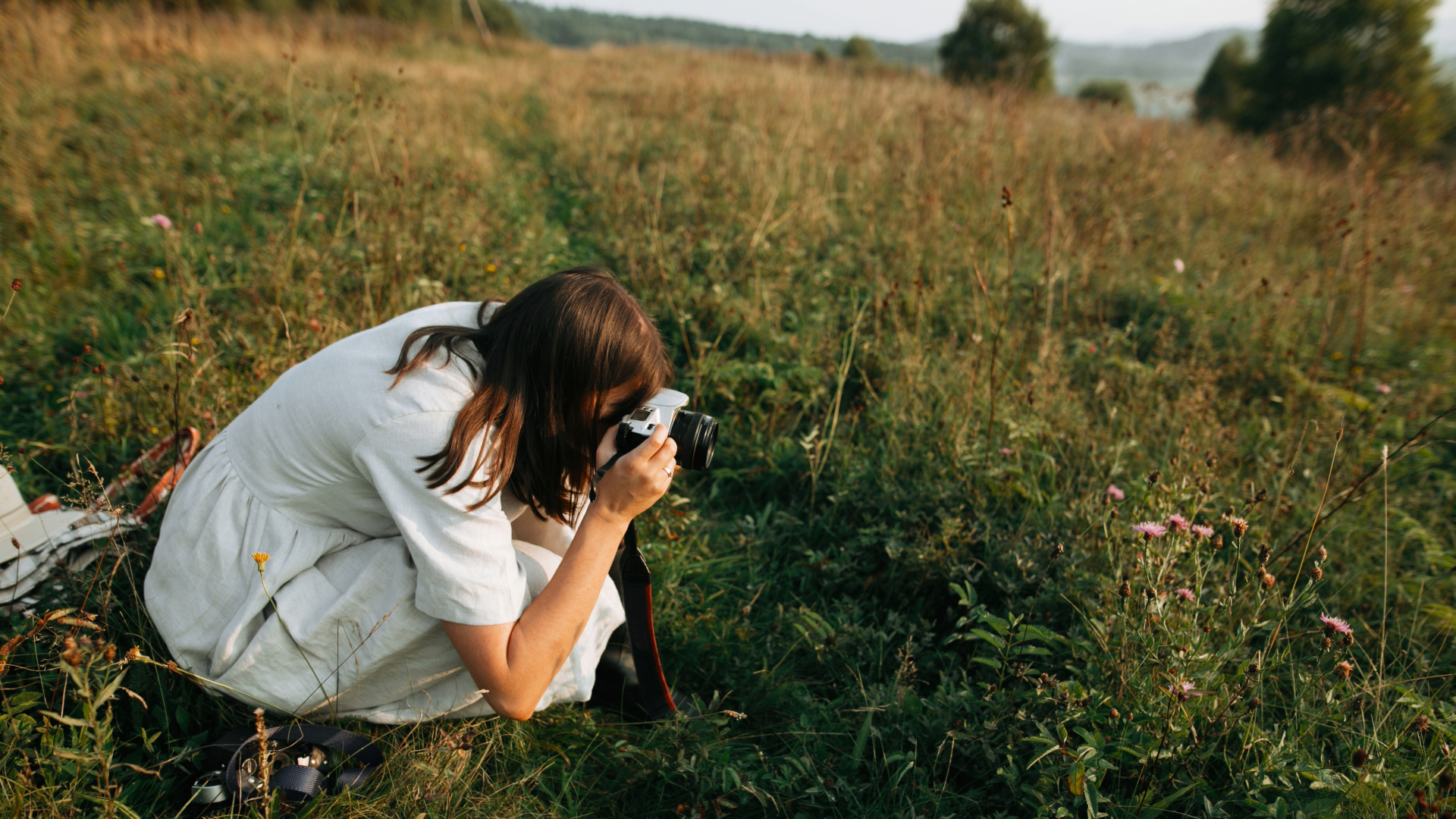
Great wildflower photos aren’t about having the most expensive camera. They’re about light, angle, and patience — and knowing which lens to bring.
Gear Essentials
- Macro lens (50mm, 100mm, or equivalent) — essential for close-up detail shots of petals and water droplets
- Wide-angle lens — for context shots that show the forest surrounding the flowers
- Tripod — non-negotiable for low-light forest conditions and sharp macro shots
- Polarizing filter — reduces glare on leaves and deepens sky contrast
- Extra batteries — cold mountain mornings drain batteries faster than you expect
- Microfiber cloth — you’ll need it behind Grotto Falls, and on dewy mornings
Best Light for Wildflowers
- 7–9am: Soft morning light with dew still on petals — the magic hour
- Overcast days: Even, shadow-free lighting that shows color without harsh contrast
- 6–8pm: Golden hour warm tones, especially beautiful on flame azaleas
- Avoid: Midday sun creates harsh shadows and washes out the delicate colors of white flowers
Composition Tips
- Get low: Shoot at flower level, not standing above looking down. This is the single biggest improvement most photographers can make.
- Shallow depth of field: Shoot at f/2.8–5.6 to blur the background and isolate the flower
- Rule of thirds: Move the flower off-center for more dynamic, interesting images
- Include context: Some of the best wildflower photos show the forest environment — they tell a story
- Macro magic: Fill the entire frame with a single bloom to reveal textures and water droplets invisible to the naked eye
Respect the Flowers
- Never pick wildflowers — it’s illegal in the national park and carries real fines
- Don’t trample around a flower for a better angle — stay on trail
- Don’t bend or move flowers to photograph them — photograph them as-is
- Use Live View on your camera to preview shots without getting too close
Wildflower Identification Resources
Part of the joy of a wildflower trip is learning what you’re looking at. These resources make identification approachable for beginners and rewarding for enthusiasts.
Apps (All Free or Low Cost)
- iNaturalist (FREE) — Snap a photo, AI identifies the plant, crowdsourced accuracy verified by experts. The standard tool for serious naturalists.
- Seek by iNaturalist (FREE) — The kid-friendly version with gamified identification. Perfect for families with children.
- PictureThis (Paid) — High accuracy with detailed plant info and care guides.
- PlantSnap (Paid) — Database of 600,000+ plants worldwide.
Books
- Wildflowers of the Smokies by Carlos C. Campbell — The definitive guide, sold at park visitor centers. Worth buying before your trip.
- Wildflowers of Tennessee by Dennis Horn & Tavia Cathcart — Comprehensive regional coverage.
- Spring Wildflowers of the Northeast by Carol Levine — Covers many species you’ll encounter in the Smokies.
Online Resources
- wildflowerpilgrimage.org — Great Smoky Mountains Wildflower Pilgrimage website with annual updates and event information
- nps.gov/grsm/learn/nature/wildflowers.htm — Official NPS wildflower guide with identification help
- smokykin.com — Great Smoky Mountains Association, with seasonal bloom updates
The Spring Wildflower Pilgrimage (Don’t Miss This)
Held annually in mid-April, the Spring Wildflower Pilgrimage is a five-day event with 150+ guided walks, photography workshops, and expert-led talks. Botanists and naturalists guide small groups on specific trails, identifying every species along the way.
- Registration: Opens in March and fills quickly — sign up early
- Cost: $35–65 per program (some free programs available)
- Worth it? Absolutely. Having an expert identify every flower removes all guesswork and often leads you to species you’d have walked right past.
Dog-Friendly Wildflower Options
Here’s the honest reality for dog owners: most wildflower trails in Great Smoky Mountains National Park do not allow pets. National Park Service regulations restrict dogs to developed areas and two specific trails to protect wildlife. But you have options, and none of them mean your dog misses out on a great vacation.
The Two Dog-Allowed Trails
Gatlinburg Trail
Distance: 3.8 miles round-trip | Difficulty: Easy (paved, flat)
This paved trail starts near Sugarlands Visitor Center and follows the West Prong Little Pigeon River. Wildflower variety is more modest than forest trails — expect violets, spring beauty, and trillium along the edges — but it’s a genuinely pleasant walk with your dog, and the riverside scenery is beautiful.
Oconaluftee River Trail
Distance: 3 miles round-trip | Difficulty: Easy (paved, flat)
Starting at Oconaluftee Visitor Center on the North Carolina side of the park, this trail follows the river with spring beauty, toothwort, and stream-side flowers. It connects to the Mountain Farm Museum — historic buildings surrounded by daffodils planted generations ago — which makes for a uniquely lovely photo opportunity.
Smart Strategies for Dog-Owning Wildflower Enthusiasts
- Option 1: Leave your dog at the cabin. Most of our pet-friendly cabins have fenced yards, air conditioning, and comfortable spaces — your dog will be perfectly content while you hike 3–4 hours. Then return and spend the afternoon together exploring dog-friendly areas of town.
- Option 2: Take turns. One person hikes Porters Creek while the other explores Gatlinburg or a dog-friendly area with your pup. Then swap for an afternoon hike.
- Option 3: Focus on dog-allowed trails and cabin time. Two beautiful walks plus evenings in the hot tub watching the mountain fog roll in is still a spectacular trip.
🐾 ALL HAPEY CABINS are pet-friendly with zero pet fees, most have fenced yards, and our Pet Paradise Promise. Your dog is a full member of the vacation.
Where to Stay for Your Wildflower Trip
Location matters for wildflower trips. The best trails fill up early, and being 10 minutes closer to the trailhead versus 45 minutes can mean the difference between hitting peak morning light and arriving to a full parking lot.
Best Base Camp: Blissful Tranquility
If you want to maximize wildflower viewing with minimal driving, Blissful Tranquility is your cabin. Located just minutes from the Pigeon Forge parkway, it puts you within easy reach of four of the five best trails on this list.
- 15–20 minutes to Porters Creek Trail, Grotto Falls, and Little River Trail
- 7 minutes to Metcalf Bottoms (one of the park’s top trillium hotspots)
- 45 minutes to Clingmans Dome for Andrews Bald flame azaleas
The cabin sleeps 6, so it’s perfect for couples, small families, or wildflower photography partners. Soak in the private hot tub after a long day on the trails, challenge each other to arcade games on a rainy afternoon, and wake up ready to catch morning light on the next day’s hike.
For Photography Groups: Sleepy Bear Ranch
Photography workshops, extended families, and groups of friends have a perfect home at Sleepy Bear Ranch. At 11 guests, it’s the largest property in our portfolio.
- Sleeps 11: Everyone brings their camera gear and everyone gets a bed
- Parking for 6+ vehicles at the top of the paved driveway
- Covered outdoor area is ideal for evening photo reviews and sharing the day’s best shots
- At $300/night split 8–10 ways, that’s $30–40 per person for a Smoky Mountain cabin stay
How Many Nights Do You Need?
- 3–4 nights: Hit 2–3 trails, focus on one elevation zone
- 5–7 nights: See all five must-do trails, catch multiple bloom stages as spring advances up the mountain
- 10–14 nights (the ultimate): Visit twice — early April for low elevation trillium, early May for high-elevation flame azaleas. Two completely different experiences of the same park.
🌸 SPECIAL OFFER: 10% off 7+ night stays — perfect for extended wildflower chasing season. Book direct on our website and save $75–150 compared to VRBO fees on top of your stay.
Frequently Asked Questions
Q: When do wildflowers bloom in the Smoky Mountains?
Wildflowers bloom from late March through May, with peak bloom mid-April at lower elevations and early May at high elevations. The park’s 1,500+ wildflower species bloom in waves as spring moves up the mountain — late March brings the first bloodroot and hepatica at valley level, while flame azaleas don’t reach peak at the highest elevations until the first week of May.
Q: What is the best time to see wildflowers in the Smoky Mountains?
April 5–15 is the single best 10-day window for most visitors. It captures peak white trillium at lower elevations — the most iconic and dramatic display in the park — plus comfortable hiking weather and the tail end of early spring bloomers. If you can only come once and want maximum impact, aim for this window. The second-best window is April 25–May 10 for high-elevation flame azaleas.
Q: Where is the best place to see wildflowers in the Smoky Mountains?
Porters Creek Trail in the Greenbrier area offers the best single-trail wildflower experience — unmatched trillium carpets in early April with fewer crowds than Cades Cove. Cades Cove Loop is the best accessible, family-friendly option with mass displays over 11 flat miles. Andrews Bald is the must-do destination for flame azalea season in early May. For detailed trail guides, see Section IV above.
Q: Can I pick wildflowers in the Smoky Mountains?
No — picking wildflowers (or removing any plant material) is illegal in Great Smoky Mountains National Park and carries real fines. This isn’t a suggestion; it’s federal law protecting the park for everyone who visits after you. Lady’s slipper orchids deserve special mention: picking them kills the plant because they can’t survive transplanting. Photography only.
Q: What are the white flowers covering the forest floor in April?
White trillium (Trillium grandiflorum) — the most iconic wildflower in the Smokies. These large three-petaled white flowers bloom in dramatic mass displays (sometimes hundreds visible in a single glance), most famously at Cades Cove and Porters Creek, peaking April 5–15. They gradually age to pink over several days. Other white flowers blooming in April include bloodroot, spring beauty, toothwort, and Dutchman’s breeches.
Q: Are wildflower trails dog-friendly?
Most wildflower trails do NOT allow dogs — Great Smoky Mountains National Park restricts pets to two specific trails: Gatlinburg Trail and Oconaluftee River Trail. Both are easy, paved walks with modest wildflower displays. For dog owners wanting to see the best blooms, the most practical approach is leaving your pup at your pet-friendly cabin during morning hikes, then reuniting for afternoon adventures. All Hapey cabins offer fenced yards and zero pet fees. See Section VII for full dog-friendly options.
Q: How crowded are the wildflower trails?
Popular early April trails can be genuinely crowded, especially on weekends during spring break overlap. Porters Creek’s small parking lot (15–20 cars) fills by 9am on Saturdays. Cades Cove sees 2,000+ vehicles on busy April weekends. The solution is simple: arrive before 8am or visit on weekdays. Wednesday and Saturday mornings at Cades Cove are car-free until 10am — bikers have the entire loop to themselves. Andrews Bald in early May tends to be lighter since Clingmans Dome Road just opened and the elevation deters casual visitors.
Q: What if I visit at the wrong time and miss the blooms?
First, don’t panic — bloom timing varies year to year by 1–2 weeks based on winter and early spring temperatures. Warmer springs bloom earlier; colder springs bloom later. Check real-time bloom reports at smokykin.com (Great Smoky Mountains Association) and wildflowerpilgrimage.org before your trip. If you arrive and find the low-elevation blooms are wrapping up, remember: high-elevation blooms are always 3–4 weeks behind. Chase spring up the mountain.
Conclusion
The Smoky Mountains contain more wildflower species than any comparable area in North America — over 1,500 species blooming across eight weeks of spring. That’s not an accident. It’s the result of elevation, moisture, diverse habitats, and over a century of national park protection.
But here’s what all those species statistics don’t capture: the feeling of stepping onto Porters Creek Trail on a cool April morning, the forest floor stretching ahead of you in a white carpet of trillium so dense it almost doesn’t look real. Or standing on Andrews Bald with flame azaleas in every direction, the mountains rolling blue and green to the horizon behind them.
Spring wildflowers are the Smokies’ gift — here for eight weeks, then gone until next year. The season rewards those who plan ahead and punishes those who just show up and hope. You now have everything you need to plan ahead.
🌸 BOOK YOUR WILDFLOWER TRIP TODAYApril dates fill fast — reserve your pet-friendly cabin with mountain views now and get No-Surprise Pricing with no hidden fees.