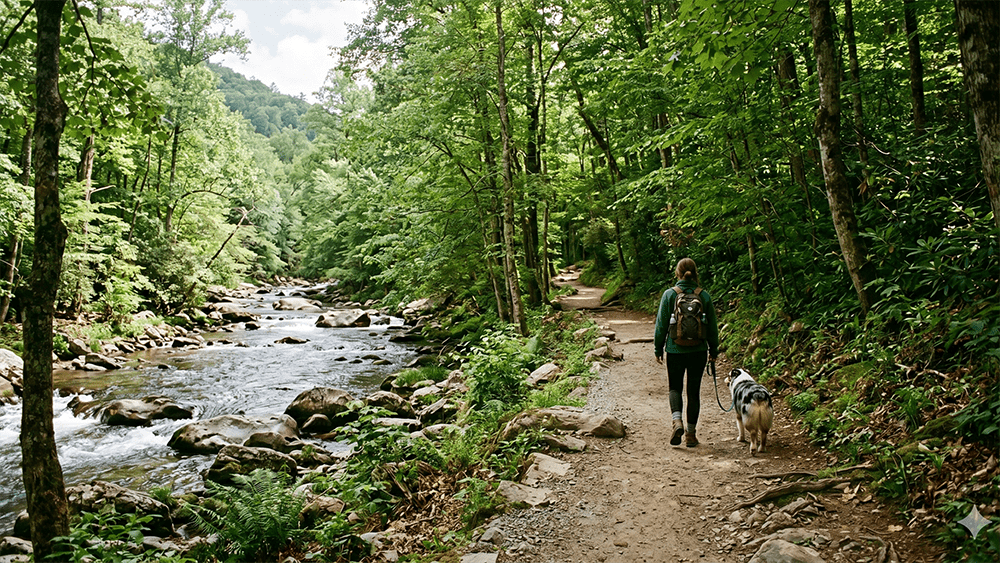
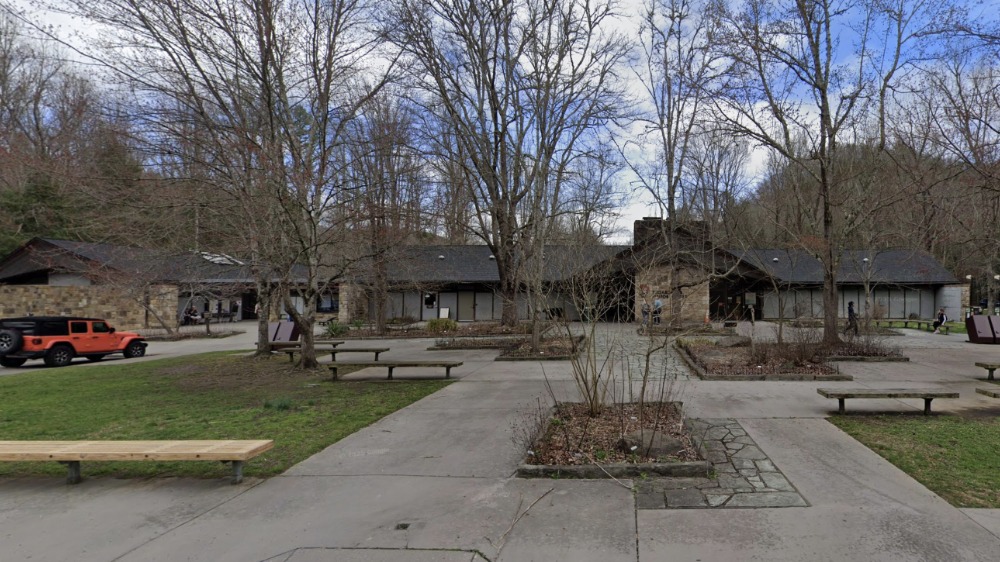
There’s a psychological weight to being turned away from trail after trail. Rainbow Falls: No dogs. Laurel Falls: No dogs. Alum Cave: No dogs. By your third rejection, the “No Pets Beyond This Point” signs start feeling personal. Gatlinburg Trail removes that weight. You park at Sugarlands Visitor Center—the literal front door of GSMNP—walk behind the building, and step onto a trail where your dog is welcome. Not tolerated. Not begrudgingly allowed. Welcome.
For dog owners looking for a pet-friendly Smoky Mountains, who’ve driven 6+ hours to reach the Smokies only to discover their pet is banned from 99% of the park, this trail provides genuine emotional payoff. You’re in the park. Your dog is with you. The scenery is legitimately beautiful. That matters.
Real River Access Throughout
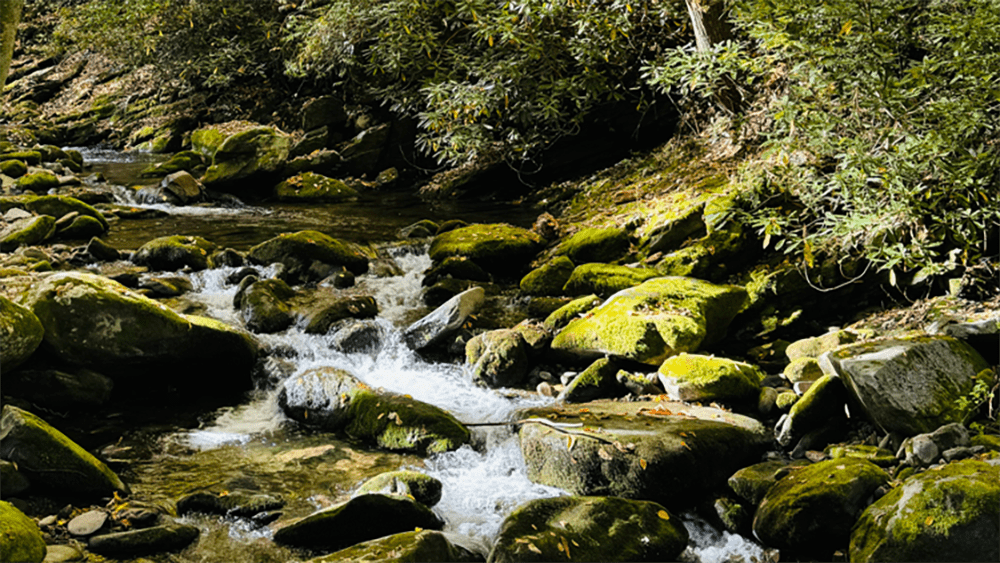
The West Prong of Little Pigeon River runs parallel to the trail for most of the 3.8 miles, with multiple easy entry points where dogs can wade, swim, and cool off. Your dog can hit the water at every accessible spot—quick dips at shallow riffles, longer swims in calm pools, full-body dunks where the river widens near the big footbridge at mile 0.5.
The water depth varies from ankle-deep shallows to waist-deep (on a human) pools. The current is generally gentle except after heavy rain. Most dogs can handle it safely, and the continuous access means you’re never more than a few minutes from the next cooling opportunity.
This isn’t decorative water in the distance, it’s functional hydration and temperature management for summer hiking. When the air temperature hits 88°F with humidity, those river access points transform a potentially dangerous dog hike into a manageable afternoon walk.
Historic Homestead Ruins (Tangible Park History)
The trail passes stone chimneys and rock walls from pre-park homesteads—families who lived here before the government purchased the land in the 1930s to create GSMNP. These aren’t marked with interpretive signs or fenced off as “exhibits.” They’re just there—moss-covered foundations, hand-stacked stone, remnants of lives lived in these mountains 90+ years ago.
Kids love exploring them (carefully—don’t climb on the structures). Dogs love sniffing around the bases. For adults, they’re quiet reminders that the “wilderness” we’re enjoying was someone’s backyard, farm, homeplace.
The most prominent ruins appear around mile 1.2—a stone chimney standing maybe 12 feet tall with the remains of a cabin foundation visible nearby. Worth stopping for photos.
The Challenges: What Makes This Trail Frustrating
Crowds (The Real Deal-Breaker for Some)
On summer weekends and holidays, Gatlinburg Trail sees dozens—sometimes hundreds—of hikers, cyclists, families with strollers, and dogs. Lots of dogs. The parking lot at Sugarlands fills by 10 AM. The trail becomes a highway of two-way traffic. You’ll wait at narrow sections for groups to pass. Your dog will encounter other dogs every few minutes.
If your dog is reactive to other dogs, this trail is miserable. If you hate crowds and came to the Smokies for solitude, this trail will disappoint you. If you envisioned a peaceful forest walk, the reality—especially weekends in July—will feel more like a busy greenway.
We hiked on a Wednesday morning in early May, arriving at 8:15 AM. We encountered maybe 15 other people total. It was pleasant. But the same trail on a Saturday in July at 11 AM? Completely different experience; crowded, noisy, stressful for dogs who need space.
The fix: Timing is everything (more on that below).
Cyclists Share the Trail
Gatlinburg Trail allows bicycles; unusual for GSMNP, but this trail connects downtown Gatlinburg to the visitor center and serves as a multi-use transportation corridor.
Most cyclists are respectful, calling out “On your left!” and slowing down around dogs. But some fly past without warning, startling dogs who aren’t expecting a bike at speed.
What helps: Keep dogs on your side (away from the trail’s edge where bikes pass), shorten the leash in high-traffic sections, and stay alert around blind corners.
Traffic Noise from US-441
For roughly a mile (between miles 0.8-1.8), the trail runs parallel to Newfound Gap Road (US-441). You’ll hear constant car traffic—not overwhelming, but noticeable enough that this doesn’t feel like deep wilderness. The sound diminishes near the river where water noise masks it, but on the uphill sections away from the river, it’s present.
This bothers some people more than others. If you came expecting pristine nature sounds, the highway hum breaks the illusion. If you’re just happy to be hiking with your dog legally in GSMNP, it’s a minor trade-off.
The Cataract Falls Temptation (Don’t Risk It)
At mile 0.5, you’ll see a sign for Cataract Falls Trail—a 0.8-mile side trail leading to a beautiful 25-foot waterfall. The sign does not say “No Pets,” which creates confusion.
DO NOT take your dog on Cataract Falls Trail. It’s prohibited. Dogs are only allowed on the main Gatlinburg Trail. Rangers patrol, and the fine is not worth it.
We watched a family turn onto Cataract Falls with their dog, then turn around 50 yards later when another hiker informed them. They were embarrassed and frustrated; the signage could be clearer. Just know: Main trail only. Side trails = off-limits.
Trail Details: What You Need to Know
The Basics
Distance: 3.8 miles roundtrip (1.9 miles one-way)
Elevation gain: 164-235 feet (essentially flat)
Difficulty: Easy
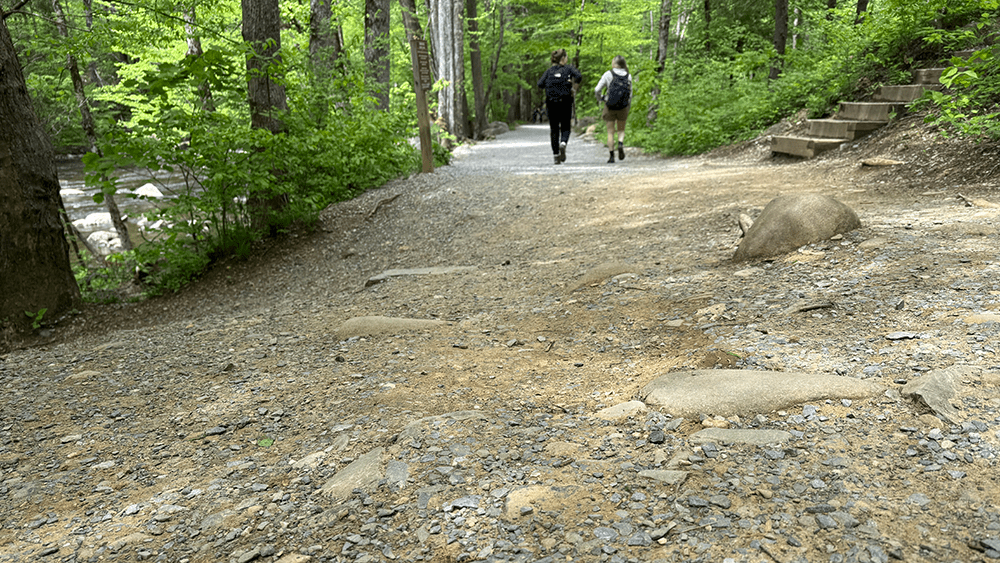
Surface: Mixed—paved near visitor center, gravel and packed dirt through forest, natural trail with roots/rocks in middle sections
Estimated time: 1.5-2.5 hours depending on pace and dog swim breaks
Dog rules: On-leash only (6 feet maximum), waste pickup required
Crowds: High on weekends/holidays, low-moderate on weekday mornings
From Pigeon Forge: 10-12 minutes via US-441 South into Gatlinburg From downtown Gatlinburg: 2 miles south on US-441 (Newfound Gap Road)
From Hapey Cabins:
Timeless Tranquility: 23 minutes
Blissful Tranquility: 12 minutes
Hapey Place: 11 minutes
Hapey Memories: 11 minutes
Sleepy Bear Cabin: 30 minutes
Little Bear: 30 minutes
Sunny View Cabin: 17 minutes (coming June 1, 2026!)
Parking (Critical Timing Information)
Sugarlands Visitor Center lot:
Large paved lot with 100+ spaces
Accessible parking available
Fills by 10 AM on weekends (summer/fall)
Fills by 11 AM on weekdays (summer/fall)
Earlier in October (peak foliage)
Parking requires GSMNP tag for stays over 15 minutes:
Day pass: $5 (good for 1-7 days)
Weekly pass: $15
Annual pass: $40
Purchase passes: At visitor center, online at recreation.gov, or at park entrance stations
Alternative parking: Downtown Gatlinburg end (near Traffic Light #10 on River Road)—smaller lot, free street parking nearby, but often full during peak season
Pro tip: Arrive before 9 AM on any day to guarantee parking and enjoy the trail before crowds hit. This single timing decision makes or breaks the experience.
Walking the Trail: What to Expect
Starting at Sugarlands (Mile 0.0-0.5)
The trail begins behind the visitor center. Walk past the restrooms and brick headquarters building—the trailhead sign is visible from there. The first quarter-mile is paved, wide, and flat, running alongside Park Headquarters Road.
This section sees the most foot traffic (visitors walking from the parking lot to use facilities or explore grounds). It’s not scenic yet, but you’re easing into the hike.
At 0.25 miles, the trail crosses under the Gatlinburg Bypass (US-321) via a tunnel. On the far side, the pavement ends and the trail transitions to gravel and natural surface. The river becomes visible to your right, and the forest closes in. This is where it starts feeling like a real trail.
The Big Footbridge & River Access (Mile 0.5)
Around mile 0.5, you’ll cross one of GSMNP’s longest footbridges—a sturdy wooden structure spanning the West Prong. It’s wide enough for two-way traffic, with railings. Some dogs hesitate at the hollow sound their paws make on wood planks.
image courtesy of nps.gov
Just past the bridge, multiple easy access points lead down to the river. This is prime swimming territory—the water is calm, clear, and maybe 1-2 feet deep depending on season.
Also at mile 0.5: The Cataract Falls Trail junction. Remember—side trail is off-limits to dogs. Stay on the main trail.
The Scenic Middle Section (Mile 0.5-1.5)
This is the best part of the trail. The path runs through cove hardwood forest—hemlocks, yellow buckeye, tulip poplars—with the West Prong paralleling to your right. Good shade coverage keeps temperatures comfortable. The river provides constant sound masking (partially) the highway noise from US-441.
You’ll pass more homestead ruins around mile 1.2—that prominent stone chimney and foundation mentioned earlier. We stopped here for water break and photos. A few other hikers were doing the same, but it wasn’t crowded (this was a Wednesday at 9 AM).
image courtesy of nps.gov
The trail surface through here is mostly natural dirt with some rocky sections and exposed roots. Nothing technical—just watch your footing. Dogs handle it easily.
River access continues throughout this stretch with multiple spots to descend to the water.
Approaching Downtown Gatlinburg (Mile 1.5-1.9)
The final half-mile transitions back to more developed terrain as you approach downtown Gatlinburg. The trail runs closer to US-441 here (traffic noise increases), crosses River Road near Traffic Light #10, and technically continues into downtown—though most people turn around before reaching the downtown end.
We turned around at mile 1.8, making our total hike 3.6 miles instead of the full 3.8. The final sections near downtown didn’t feel worth the extra steps—more traffic noise, less scenery, closer to roads. Your call.
The Return Trip
Walking back, the trail flips: what was uphill is now downhill (though this trail is so flat it barely matters). The return took about 40 minutes compared to our 55-minute outbound pace—we’d already stopped for photos and swim breaks on the way out, so the return was efficient.
One note: The big footbridge at mile 0.5 now comes at mile 1.4 on the return. It’s a good landmark: “Bridge ahead, then 1.4 miles back to the truck.”
Best Times to Hike
Weekday Mornings (⭐⭐⭐⭐⭐)
Ideal window: Tuesday-Thursday, 7:30-9:30 AM
This is when the Gatlinburg Trail is actually pleasant. Parking is easy. The trail is quiet—maybe 10-20 other people total. Your dog has space. You hear birds and river more than traffic. It feels like the trail everyone imagines when they picture “hiking GSMNP.”
We hiked on a Wednesday at 8:15 AM in early May. Weather was perfect (65°F, light breeze). We encountered 15 people, 3 dogs, zero cyclists. It was everything the trail is supposed to be.
If you can only hike one morning of your trip, make it a weekday and come here.
Weekend Mornings (⭐⭐⭐)
Arrive before 8:30 AM for parking and pre-crowd hiking
Weekends bring more people, but early arrival mitigates it. The trail from 8-10 AM on Saturday/Sunday is busier than Tuesday but still manageable. By 10:30 AM, it becomes crowded. By noon, it’s a zoo.
We tried this once—Saturday at 9:15 AM. Parking lot was 60% full (got a spot near the back). Trail had 30-40 people visible at any time. Not terrible, but not peaceful. Still worth it, but definitely busier.
Weekday Afternoons (⭐⭐⭐)
After 3 PM, crowds thin out
Most tourists follow the pattern: arrive mid-morning, hike, leave by 2-3 PM for lunch/dinner elsewhere. If you hike 3:30-6 PM on weekdays, the trail quiets down again.
Summer warning: Afternoon temps hit 85-90°F. Only do this if your dog tolerates heat well and you plan to use the river for cooling constantly.
Weekends & Holidays (⭐⭐)
Crowded, stressful, parking nightmare—only if you have no alternative
Summer Saturdays, July 4th weekend, fall foliage weekends in October—these are when Gatlinburg Trail is at its worst. Parking lot full by 9:30 AM. Trail packed with people, dogs, bikes. Wait times at narrow sections. Dogs encountering other dogs every 2-3 minutes.
If your only option is Saturday at 11 AM in July, consider hiking a different trail entirely (Pigeon Forge Riverwalk, Tennessee Gulf, Sevierville Greenway). The crowds on Gatlinburg Trail during peak times genuinely reduce the experience quality.
Seasonal Breakdown
Spring (April-May): ⭐⭐⭐⭐⭐ Perfect temps (60-75°F), wildflowers, high river flow, fewer crowds before summer rush. Best overall season.
Summer (June-August): ⭐⭐⭐ Hot (85-95°F), crowded on weekends, but river access makes heat manageable. Weekday mornings still work well.
Fall (September-October): ⭐⭐⭐⭐ Comfortable temps, stunning foliage (especially October), but October weekends are insanely crowded due to leaf peepers. Weekdays are excellent.
Winter (November-March): ⭐⭐⭐⭐ Lowest crowds, cold but manageable, fewer river swims (too cold for most dogs). Winterfest lights along portions of trail in December create a beautiful evening hike option.
Who This Trail Is For
✅ Anyone who wants to legally hike GSMNP with their dog (even if just to say you did it) ✅ Families with young kids + dogs (flat, easy, short, facilities at trailhead) ✅ Dogs who love water and tolerate crowds ✅ First-time Smokies visitors (it’s the “official” dog trail, quintessential GSMNP experience) ✅ People staying in Gatlinburg (2 miles from downtown, super convenient)
❌ Dogs who are reactive to other dogs or bikes ❌ Anyone seeking solitude or wilderness experience (unless you hit perfect timing) ❌ People who can’t hike early morning (afternoons and late mornings = crowded)
After the Hike: Return to Your Porch
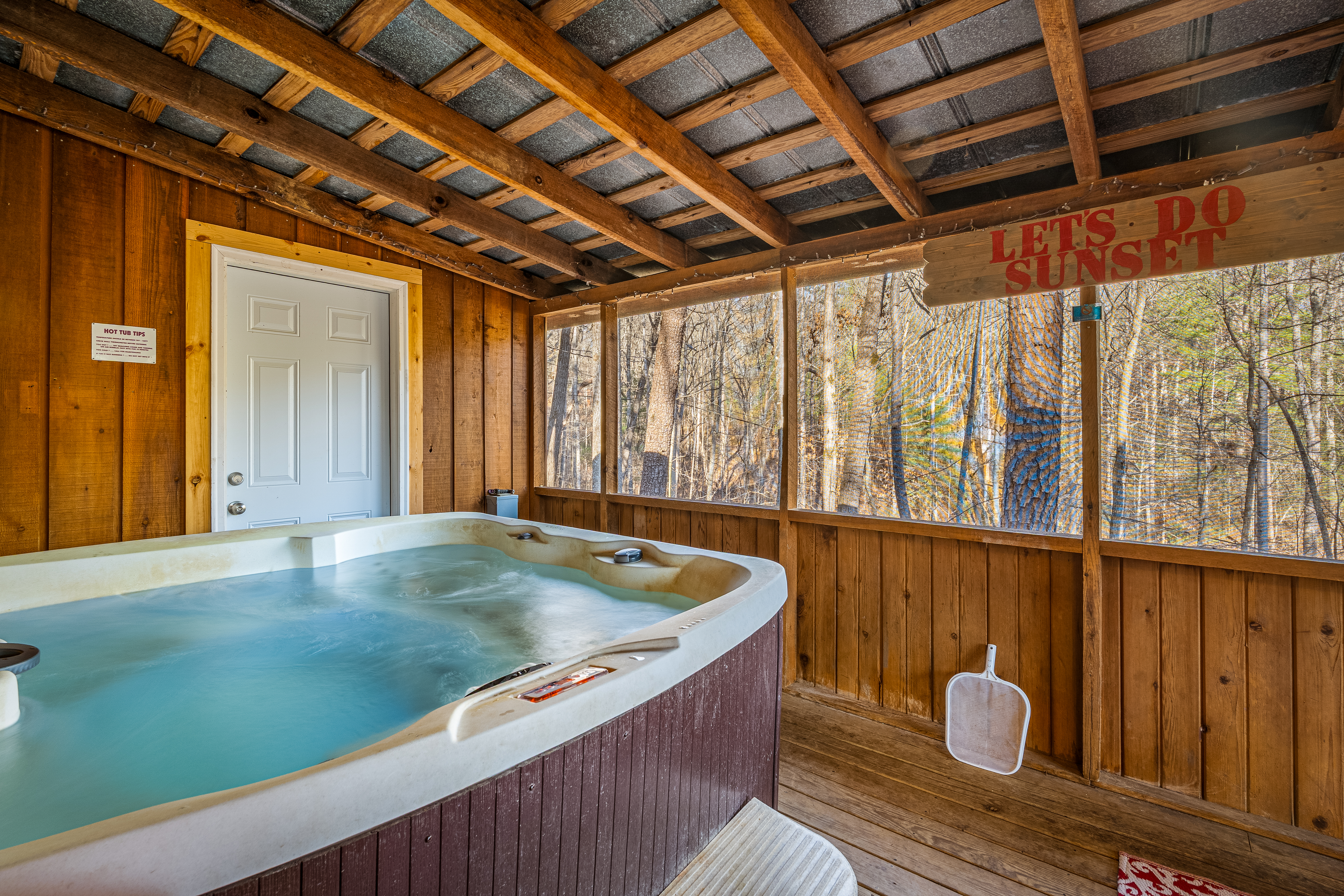
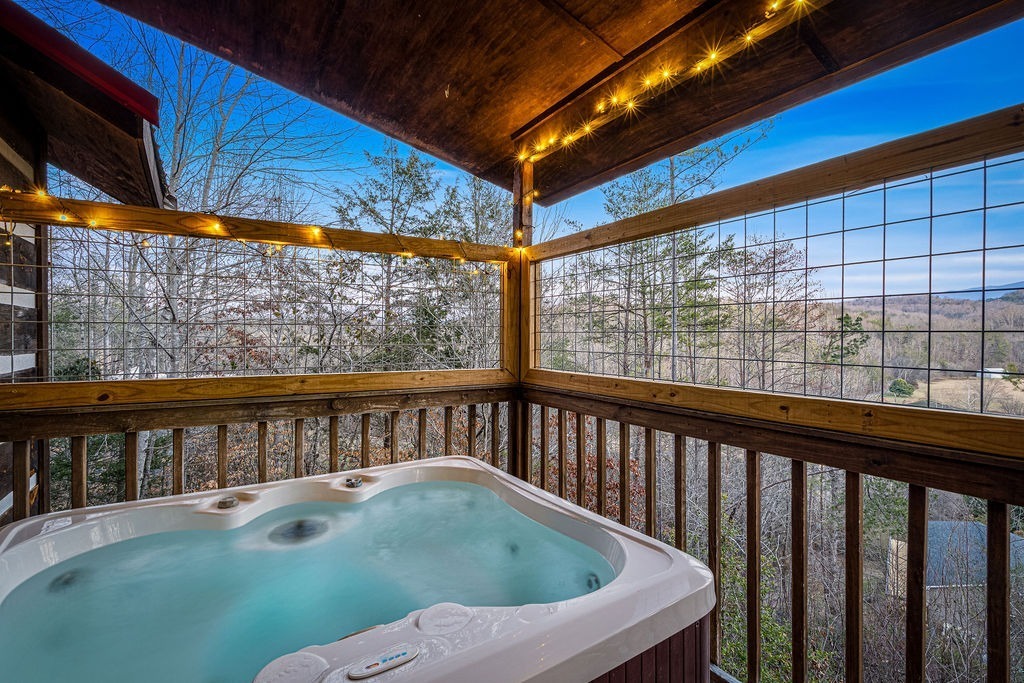
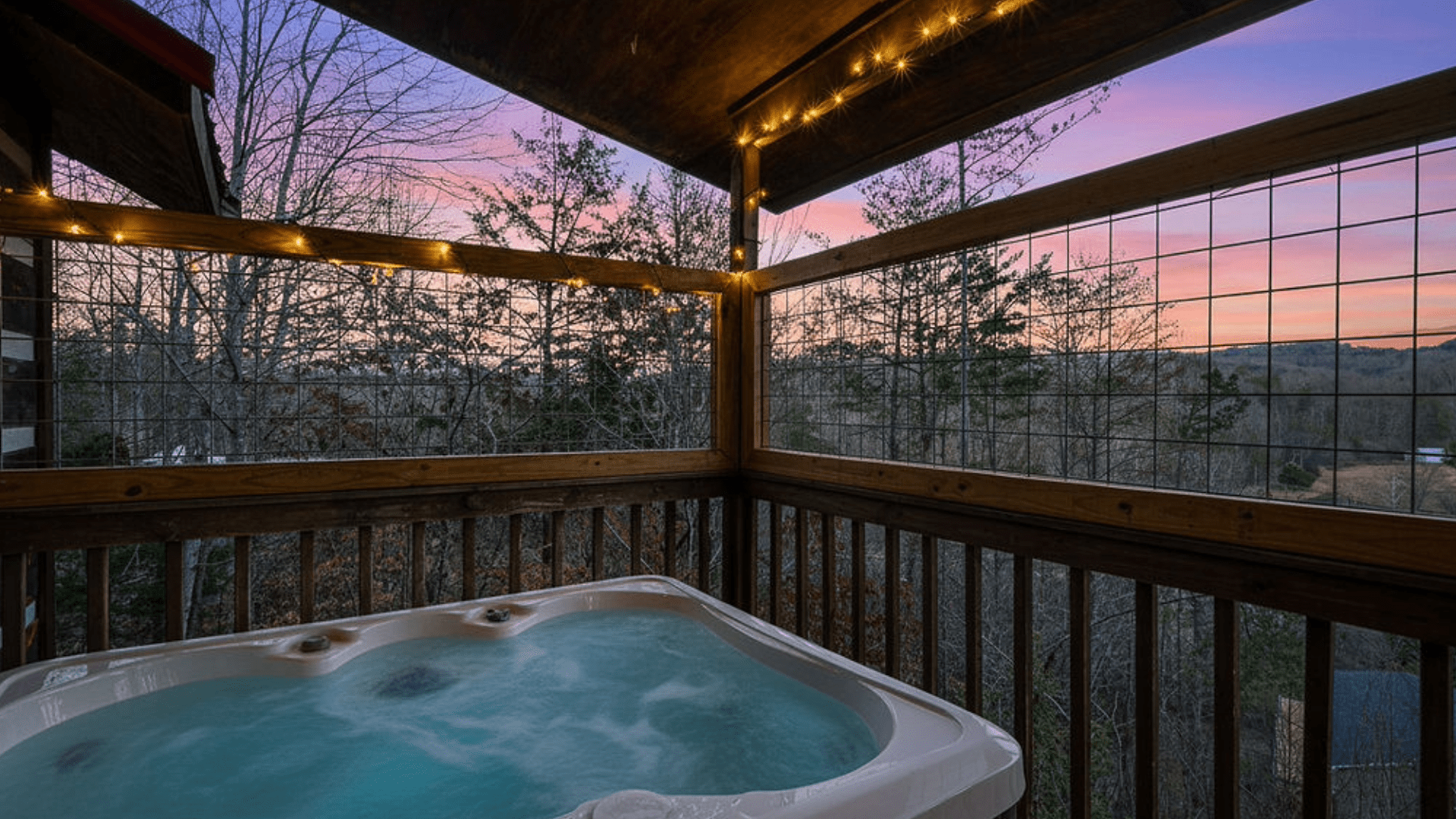
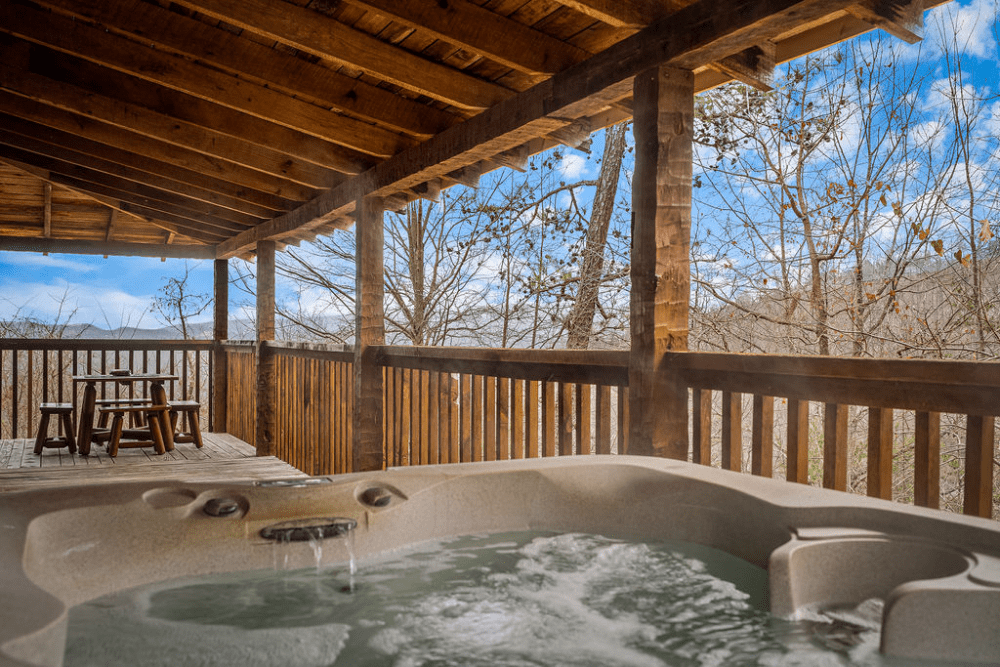
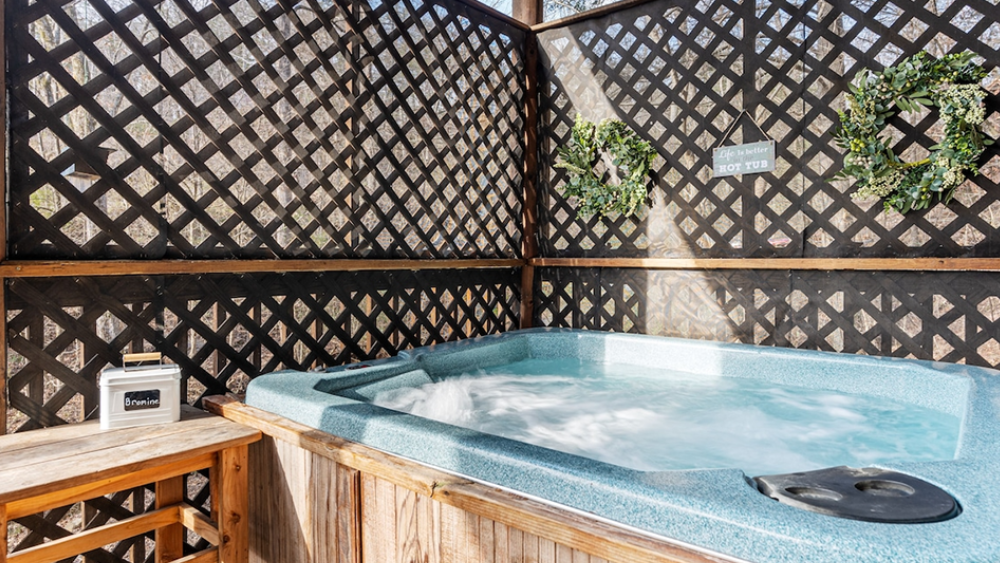
The ideal Gatlinburg Trail day looks something like this: Trailhead by 8 AM. Finished hiking and toweling off the dog by 11. Back at your Hapey cabin by late morning, cold drink in hand, hot tub warming up on the back deck.
Three Hapey properties sit within about a dozen minutes of Sugarlands Visitor Center — pick the one that matches the trip you want:
Blissful Tranquility is 12 minutes from Sugarlands Visitor Center.
Perfect pairing: A mountain-side retreat with double porches and a fenced dog run — a trail-tired dog can take a proper post-hike zoomie lap and then pass out in the sun. The pick when you want the drive home to feel like part of the vacation.
Hapey Memories is 11 minutes from Sugarlands Visitor Center.
Perfect pairing: Same short drive as Hapey Place, with a layout that leans a little more toward quiet-porch decompress time. Fenced area and hot tub included, and the location makes post-hike Parkway runs effortless if dinner downtown is on the plan.
Hapey Place is 11 minutes from Sugarlands Visitor Center.
Perfect pairing: A central, easy-access cabin with the full Pet Paradise Promise setup: fully fenced dog run zero pet fees, hot tub, and an arcade room that earns its keep on rainy afternoons. The “everybody’s happy” pick for families mixing kids and dogs.
local favorite tucked off the Parkway with a relaxed back-patio vibe where dogs settle in easily
Wings, burgers, and casual bar-and-grill comfort food
Lower-key crowd than the main-drag spots — exactly what a tired dog (and tired hiker) wants
Pet policies at all spots can shift seasonally — a quick call before you walk over keeps the evening stress-free.
Bottom Line: Timing Is Everything
Gatlinburg Trail on a Tuesday morning in May at 8:15 AM? Absolutely worth it. Quiet, scenic, emotionally satisfying—the legal GSMNP access with your dog that you drove 8 hours to experience.
Gatlinburg Trail on a Saturday afternoon in July at 1 PM? Borderline miserable. Crowded, noisy, stressful for dogs who need space, and you’ll spend more time managing other hikers than enjoying the hike.
The trail itself is legitimately nice—flat and easy, continuous river access, historic ruins, genuine park scenery. But the experience quality varies wildly based on when you go.
If you can hike weekday mornings, do it. Park at Sugarlands before 9 AM, walk the trail before the buses arrive, let your dog swim in the West Prong, and return to your truck by 11 AM having hiked inside Great Smoky Mountains National Park legally with your best friend. That’s worth everything.
If you can only hike weekends or midday, consider alternative trails instead (Tennessee Gulf for solitude, Pigeon Forge Riverwalk for convenience). The crowds on Gatlinburg Trail during peak times turn a 4-star trail into a 2-star experience.
Trailhead: Sugarlands Visitor Center, 1420 Fighting Creek Gap Road GPS: 35.68579, -83.53677 Distance: 3.8 miles RT Elevation gain: 164-235 feet (flat) Difficulty: Easy Best times: Weekday mornings before 10 AM Worst times: Weekend afternoons, July 4th, October weekends Water for dogs: ✅ Continuous river access Shade: ⭐⭐⭐⭐ (Good coverage) Crowds: High on weekends, low on weekday mornings Cell service: Yes (near visitor center) Facilities: Restrooms at visitor center Dog rules: On-leash (6 ft), waste pickup required
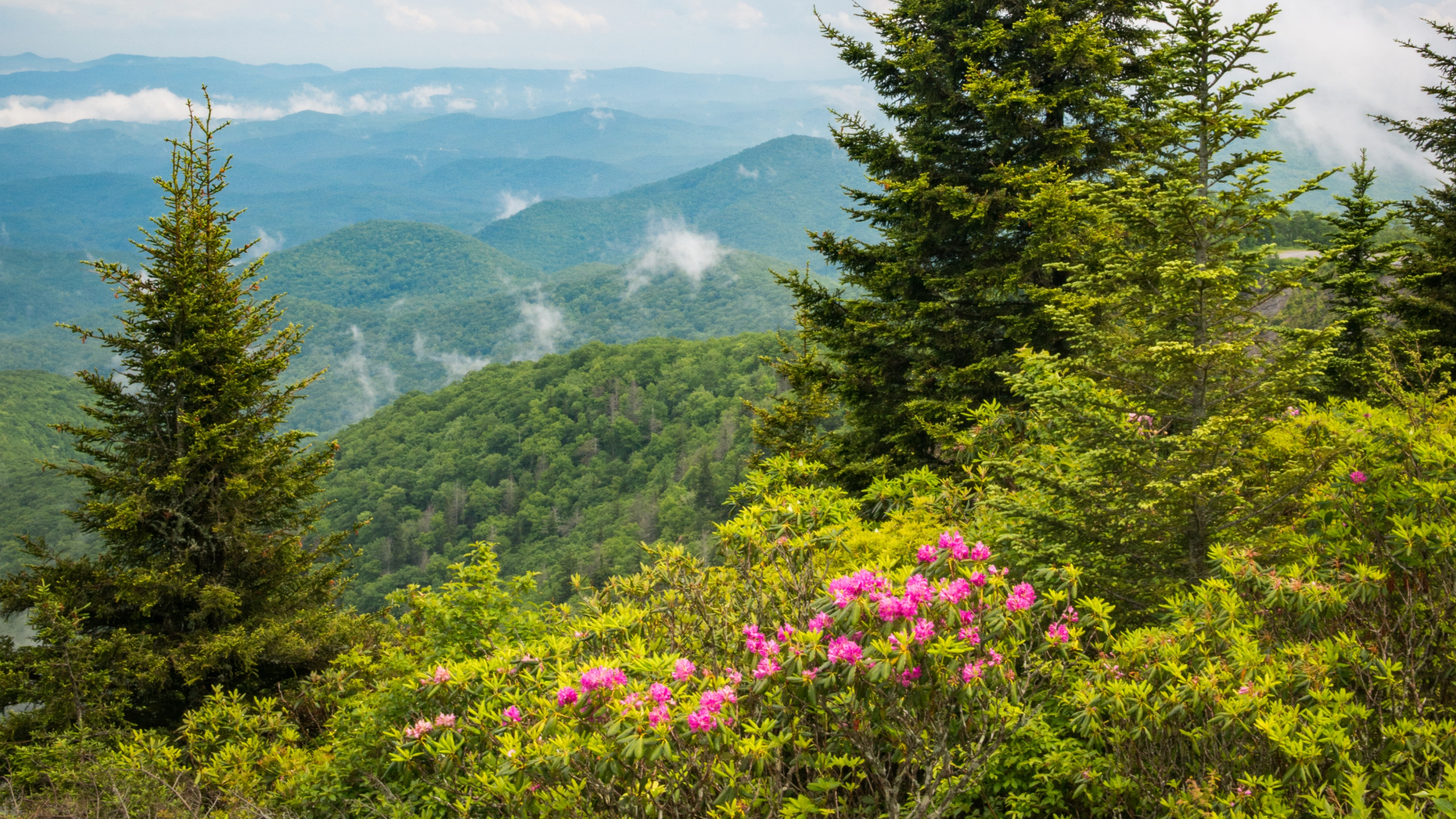
You’ve been hearing about the Smoky Mountains for years. Maybe a friend posted one of those impossibly beautiful photos—wildflowers spilling down a hillside, morning mist drifting through the ridgeline, a hot tub steaming against a backdrop of ancient green peaks. And every time you see it, you think: we need to go.
But when? Summer is packed. Fall foliage is gorgeous, but the leaf-peeper crowds can turn a peaceful drive into a parking lot crawl. December is magical, but you’re not sure you want to navigate mountain roads in January. So when is the sweet spot?
We’re going to make the case—as people who live and breathe the Smokies—that April is it. It’s the month when the mountains wake up in full color, the trail parking lots haven’t yet hit summer overflow, cabin rates sit below peak, and the weather is genuinely wonderful for hiking, exploring, and sitting on a deck with your dog and a cup of coffee while the valley fog burns off below you.
Here’s everything you need to know to plan your perfect April trip to the Great Smoky Mountains.
1. The Wildflowers: Nature’s Most Underrated Show
Most people think of fall foliage when they picture the Smokies at their peak. But locals know the secret: April wildflowers are every bit as spectacular—and far fewer people make the trip to see them.
Great Smoky Mountains National Park protects more than 1,500 species of flowering plants, earning it the nickname “The Wildflower National Park.” Every spring, the mountains put on a staggered bloom that travels upward from the lower valleys to the high ridges, meaning peak color can last for weeks rather than days.
Early April (weeks 1–2) brings the lower-elevation bloomers out in force:
Trout lilies carpet the forest floors along easy trails like Cove Hardwood Nature Trail in Cades Cove
Violets and spring beauties fill sunny gaps along the Roaring Fork Motor Nature Trail
Serviceberry trees produce white blossoms that dust the ridgelines like late snow
By mid-to-late April, the show moves higher and gets bolder:
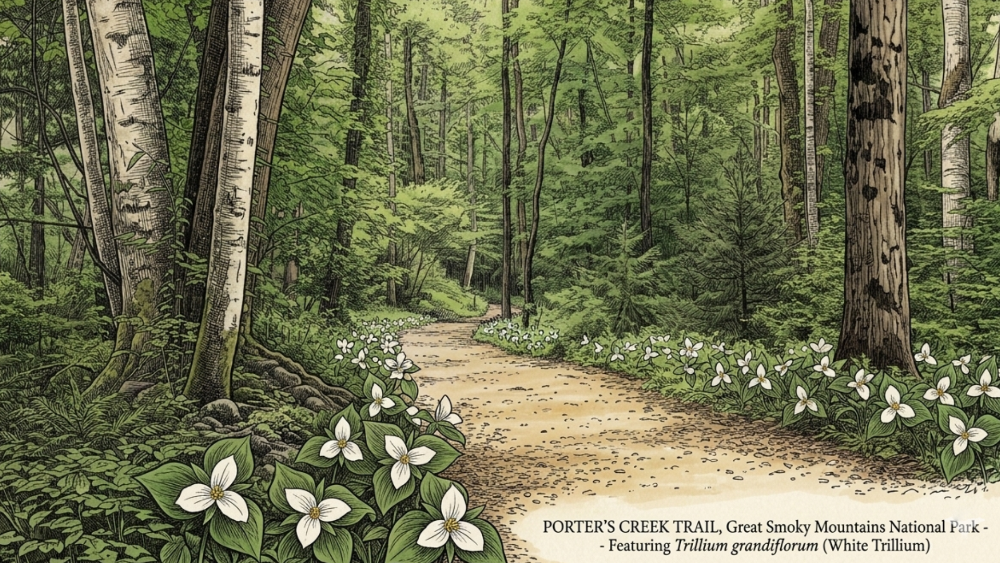
Wild geraniums, phacelia (sometimes called “bluebells of the Appalachians”), and bloodroot appear along Porters Creek Trail—one of the most photogenic wildflower hikes in the entire park
Redbud trees explode in magenta along lower roads and in towns like Gatlinburg and Pigeon Forge
Dogwood trees—the official Tennessee state tree—hit full bloom and frame every mountain view in soft white and pink
The Smokies even host an official Wildflower Pilgrimage each spring—a multi-day festival of guided hikes, photography walks, and nature programs led by park rangers and naturalists. It’s worth checking the park’s schedule and registering early if you want a guided experience.
Pro Tip: Download the iNaturalist app before your trip. You can identify wildflowers in real-time on the trail and contribute to citizen science data that helps protect the park—and it turns every hike into an interactive treasure hunt for kids.
2. April Weather: That Perfect Hiker’s Sweet Spot
One of the most common questions we hear is: “Will it be cold in April?” The answer is nuanced—and the nuance is actually great news.
Temperature breakdown
In Pigeon Forge and Gatlinburg (elevation roughly 1,300–1,500 feet), April daytime highs typically settle into the mid-60s°F, dropping to the mid-40s overnight. That means mornings are brisk and crisp—perfect for hot-tub soaks before you head out—while afternoons warm up beautifully for hiking, exploring the strip, or grabbing lunch on a patio.
At higher elevations like Clingmans Dome (6,643 feet), temperatures run about 10–20 degrees cooler than the valleys. A light jacket or fleece is essential if you’re heading to the high country. That same elevation difference is also why you’ll see snow on the peaks while wildflowers bloom in the valleys below—one of the most surreal and stunning contrasts the Smokies have to offer.
What about rain?
April in the Smokies averages about 5 inches of rainfall, spread across roughly 12 rain days per month. That sounds like a lot, but consider two things: first, most rain arrives in short, intense afternoon showers rather than all-day soakers. Second, those rainy mornings are when the famous Smoky Mountain mist rises off the ridges like slow-motion breath—the look that inspired the park’s name and makes for the most dramatic photographs of the entire year.
A waterproof layer and a flexible itinerary go a long way in April. If it rains in the morning, sleep in, make breakfast in the cabin, and let the clouds clear before you hit the trails. The park is often less crowded during and right after rain—one of those insider secrets that rewards flexible travelers.
Packing Note: Layers are everything in April. Start mornings in a fleece, peel down to a t-shirt by lunch, and pack a light rain jacket for afternoon showers. Your dog will love the cool morning temps for trail walks—just bring a towel for muddy paws before you pile back into the cabin.
3. The Crowds (or the Wonderful Lack Thereof)
Here’s a hard truth about visiting the Smokies in peak summer: the Great Smoky Mountains National Park draws over 12 million visitors per year. On a busy July Saturday, Clingmans Dome Road can back up for miles. Parking lots at popular trailheads fill before 9 AM. Restaurants in Gatlinburg have hour-plus waits by 6 PM.
April is different.
Why April beats the summer crowds
Spring break—which brings the biggest April wave of visitors—typically runs from mid-March through the first week of April in most school districts. By the third and fourth weeks of April, families are back in school and the park settles into a beautiful rhythm of shoulder-season calm.
What does that mean practically? It means you can pull into the Laurel Falls trailhead parking lot at 9 AM and actually find a spot. You can walk the Alum Cave Trail without a bottleneck of hikers. You can get a table at your favorite Gatlinburg restaurant without a reservation. The experience feels spacious, unhurried—the Smokies the way they’re meant to be experienced.
The one exception worth planning around: if Easter weekend falls in late April that year, expect a short surge in family travel for that holiday weekend. Book early and you’ll be just fine.
Wildlife is more active in April
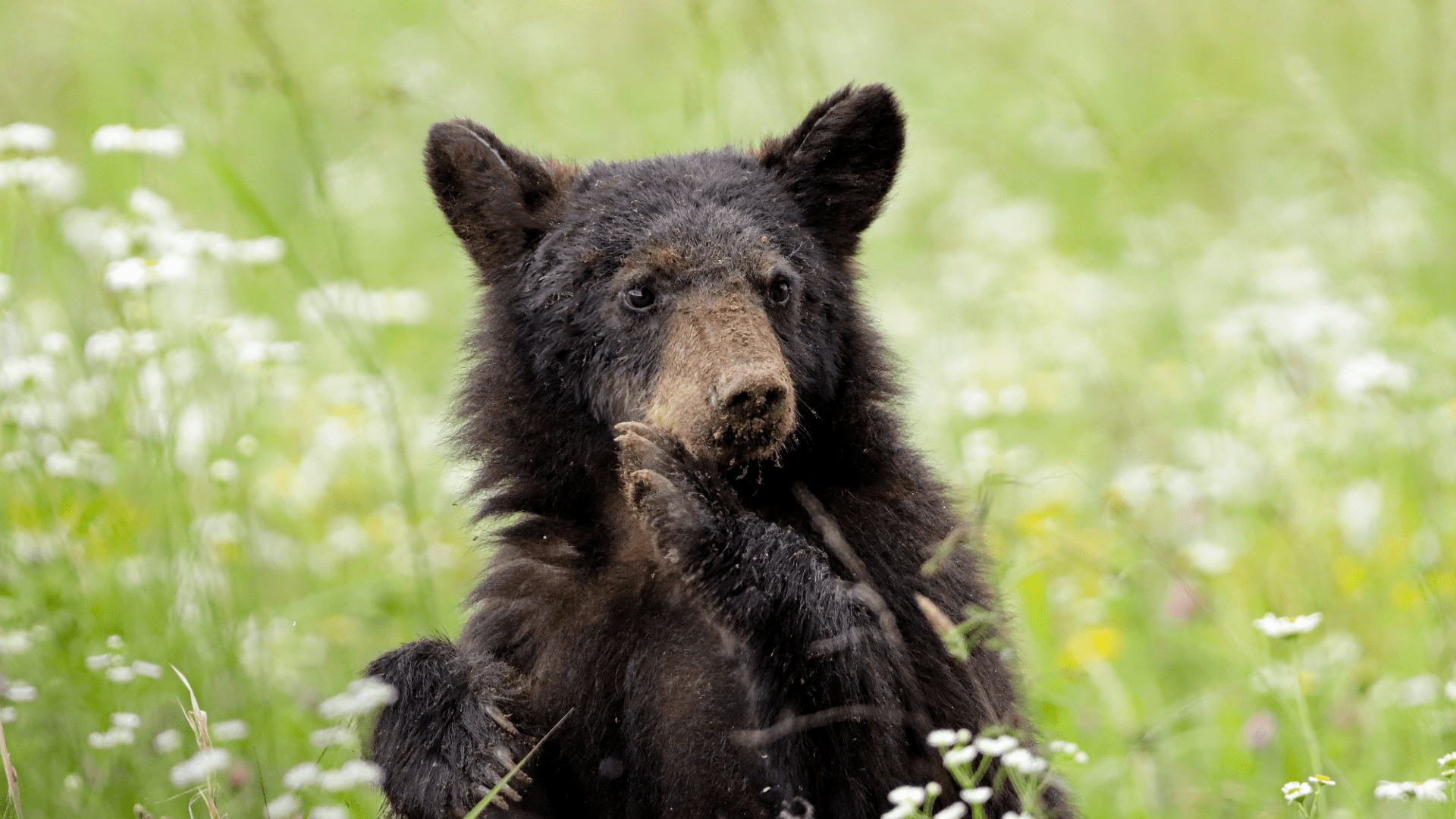
Spring is when the Smokies come alive in every sense. Black bears emerge from their dens and can often be spotted foraging in Cades Cove, particularly in early morning and evening. White-tailed deer are abundant. Wild turkeys strut along roadsides. Synchronous fireflies—one of the most extraordinary natural events in North America—begin their earliest appearances in late April in the lower elevations, before the lottery-ticketed peak event in late May.
Early risers in April are often rewarded with wildlife sightings that summer crowds simply scare off. If you’ve never done the Cades Cove loop road at 7 AM on an April morning, it belongs on your bucket list.
4. The Savings: Real Money Back in Your Pocket
Timing your trip right doesn’t just mean better weather and thinner crowds—it can also mean significantly lower costs across the board.
Cabin rental rates
April sits firmly in what the vacation rental industry calls “shoulder season”—the sweet spot between winter slow season and summer peak. That translates into real savings on cabin rates, often 20–30% lower than what you’d pay for the same property on a July Fourth weekend.
At Hapey Cabin Rentals, you’ll find that mid-week April stays in particular hit the best value window. A cabin that would be $250+ per night in peak summer might be available at $179 per night in the second or third week of April. Run that across a five-night trip and you’re talking meaningful savings—money that’s better spent on a Dollywood day, a nice dinner in Gatlinburg, or a float trip on the river.
Dining and attractions
Restaurants in Pigeon Forge and Gatlinburg operate at full swing in summer, but staffing, wait times, and even some menu pricing reflect peak demand. In April, you’re more likely to waltz into a popular local spot without a wait and enjoy a meal at a relaxed pace. Several area attractions—including Dollywood’s Flower & Food Festival, which typically runs in late April through early June—offer some of their best programming during this period.
No park entry fee
Great Smoky Mountains National Park remains one of the only major national parks with no entry fee—a fact worth celebrating every time you roll through the gate. That’s a significant cost advantage over visiting parks like Yellowstone or Zion. Your biggest variable expenses are lodging, dining, and optional attractions.
5. Best April Hikes in the Smokies (For Every Ability Level)
April transforms the trails. The summer humidity that can make lower-elevation hikes feel like a sauna hasn’t arrived yet. The leaves are budding—enough green to feel lush, but not so thick that you lose the mountain views that bare winter trees provide. It’s a genuinely magical time to be on the trail.
Easy: Cove Hardwood Nature Trail
Located in Cades Cove, this 0.75-mile loop is one of the best wildflower hikes in the park for families with young kids or anyone who wants big payoff for low effort. In April, the forest floor erupts with trout lilies, trillium, and spring beauties. Paved parking, flat terrain, and absolutely gorgeous old-growth forest. This one’s magic.
Moderate: Porters Creek Trail
This 4-mile out-and-back (to the old homestead) follows a historic wagon road through a forest famous for its spring wildflower displays. You’ll find phacelia in drifts that look like blue-purple snow along the creek banks in mid-to-late April. The trail is popular but not crowded like Alum Cave in summer, and the wildflowers reward the effort many times over.
Challenging: Alum Cave Trail
This 4.4-mile round-trip to Alum Cave Bluffs is one of the park’s most rewarding moderate-to-difficult hikes. In April, the trail runs below Arch Rock before opening onto stunning views and the dramatic overhanging bluff. You can continue to the summit of Mount LeConte for a full 11-mile day—one of the best full-day hikes in the entire Southeast. Spring water levels make the creek crossings a bit feisty, but the scenery is extraordinary.
Dog-friendly option: Gatlinburg Trail
One of only two trails in the national park where leashed dogs are permitted, Gatlinburg Trail runs 1.9 miles one way from the Sugarlands Visitor Center into the Gatlinburg arts district. It follows the West Prong of the Little Pigeon River with multiple photo-worthy spots and shaded sections your pup will love on a warm afternoon. This is the trail Hapey guests take their dogs on again and again—flat, beautiful, and dog-approved.
The national park is the crown jewel, but the surrounding communities of Pigeon Forge, Gatlinburg, and Sevierville offer a full slate of April activities that round out a perfect trip.
Dollywood’s Flower & Food Festival
Dollywood’s spring festival typically launches in late April and is widely considered the best-value time to visit the park. Thousands of flowers transform the grounds, regional food vendors set up across the park, and the spring crowds are still manageable compared to summer peak. If you’ve never been, April gives you the full Dollywood experience without the midsummer waits.
Explore Gatlinburg’s Arts Scene
Gatlinburg is home to one of the most concentrated collections of artisan studios in the Southeast, anchored by the Arrowmont School of Arts and Crafts. April is an excellent time to browse galleries, watch working artists, and pick up something handmade and meaningful to take home. The downtown strip is lively without being overwhelming—very different from August.
Scenic drives that you can actually enjoy
In summer, Newfound Gap Road—the main trans-mountain highway through the park—can back up significantly near overlooks. In April, you can pull off at any overlook on a whim, get out, breathe in the mountain air, and actually linger. The loop through Cades Cove (open to cars on certain days of the week) is particularly spectacular on spring mornings when the valley mist is still settling.
Tubing and river activities
The Little Pigeon River running through Gatlinburg and the Pigeon River below the national park both offer tubing and whitewater opportunities. April water levels run higher and faster than summer, making this a particularly exciting time for couples or adventure-seeking groups looking to add some adrenaline to their trip. Check out our Smoky Mountain Deals page for special pricing for our Hapey guests.
7. Bringing Your Pet to the Smokies in April
If you’re traveling with a dog—and so many of our guests are—April is honestly the best month of the year for it. Here’s why:
Trail temperatures: Cooler air means longer, more comfortable hikes without overheating concerns. Your dog can cover more ground and enjoy it more than in summer heat.
Fenced yard mornings: Step out of the cabin into the fenced yard, coffee in hand, while your dog races figure-eights through the cool spring grass. It’s the kind of morning that makes vacation feel like vacation.
Less crowded trails: The Gatlinburg Trail, Oconaluftee River Trail, and pet-friendly areas of Cades Cove are less congested in April, making leashed walks calmer and more enjoyable.
Wildflower sniffing: Dogs love wildflower season, apparently. Something about April in the mountains just sends tails into overdrive.
At Hapey Cabin Rentals, every property is fully pet-friendly with a fenced yard—no breed restrictions, no pet fees, no surprise charges on checkout. That’s our Pet Paradise Promise. We believe your dog is part of the family, and they should be able to enjoy the mountains without anyone making you feel otherwise.
8. Hot Tub Season Is Year-Round, but April Has the Best Ambiance
There’s a specific kind of magic that happens when you’re sitting in a hot tub on an April evening in the Smoky Mountains.
The air temperature is hovering around 50°F. Steam rises off the water in soft curls. The tree frogs and peepers have started their spring chorus—the sound is almost unbelievably loud for such small creatures. The stars are sharp and bright above because the summer haze hasn’t arrived yet. Your dog is curled up on the deck beside you.
This is the version of the Smokies that makes guests call us and say, “We’re already planning our next trip.”
All six Hapey Cabin Rentals properties include private outdoor hot tubs. They’re maintained and inspected before every guest arrival as part of our Clean-Cabin Guarantee. When you step in on your first evening, the water is ready—this is your welcome to the mountains.
9. Planning Your April Trip: A Quick-Start Checklist
Ready to make it happen? Here’s how to set yourself up for a perfect April trip:
Book accommodations early: Despite being shoulder season, April’s reputation is growing. The best cabins for the most popular April dates (especially Easter weekend and the final weeks of spring break) book 60–90 days out.
Check the wildflower bloom reports: The park service updates bloom status on its website and social media as spring progresses. Late April is usually peak for mid-elevation species.
Pack in layers: Mornings in the 40s, afternoons in the 60s. A fleece, a rain jacket, and comfortable hiking shoes cover 90% of April scenarios.
Reserve Dollywood tickets in advance: If you plan to visit the park, online advance tickets save you money and skip the gate lines.
Plan wildlife-viewing for dawn and dusk: Cades Cove wildlife activity peaks in the first and last hour of daylight. Set that alarm—it’s worth it.
Download offline maps: Cell service in the national park is spotty. Download the park’s AllTrails maps before you leave the cabin WiFi.
Build rain-day plans: Have a couple of Gatlinburg favorites in your back pocket for slower mornings—a breakfast spot, an indoor attraction for the kids, a coffee shop where you can plan your afternoon.
Your April in the Smokies Starts Here
There’s a reason we talk about April with a little extra enthusiasm. It’s the month that makes locals smile and say, “This is my favorite time of year up here.” The wildflowers are doing things that feel impossible. The trails are open and uncrowded. The evenings are made for hot tubs and mountain quiet. And your dog is going to lose their mind over the fenced-yard mornings.
Hapey Cabin Rentals has six fully pet-friendly cabins in Pigeon Forge, Gatlinburg, and Sevierville—most with a fenced yard, private hot tub, full kitchen, arcade games, and our No-Surprise Pricing guarantee. We don’t charge pet fees—not one cent. We don’t have breed restrictions. And we genuinely love hosting families who want to do the Smokies right.
April fills up faster than people expect. If you’re thinking about it, now is the time to check availability.
Frequently Asked Questions About Visiting the Smokies in April
Is April a good time to visit the Smoky Mountains?
Yes—April is one of the best times to visit the Great Smoky Mountains. You get peak wildflower season, comfortable hiking temperatures, lower cabin rates than summer, and smaller crowds at popular trails and attractions. The tradeoff is some afternoon rain, but it’s rarely an all-day event.
What is the weather like in the Smoky Mountains in April?
In the valley towns of Pigeon Forge and Gatlinburg, April daytime highs average in the mid-60s°F with overnight lows in the mid-40s. Higher elevations run 10–20 degrees cooler. Pack layers and a light rain jacket. Rain is common but typically falls in shorter afternoon bursts rather than all-day events.
When do wildflowers peak in the Smokies?
Wildflower timing varies by elevation and species. In the lower valleys and along the Roaring Fork area, peak blooming often occurs in early-to-mid April. Mid-elevation trails like Porters Creek see peak wildflowers from mid-to-late April. Higher-elevation species continue blooming into May. The park’s wildflower pilgrimage is typically held in late April.
Are the Smoky Mountains crowded in April?
April is significantly less crowded than summer or peak fall foliage season. Spring break (typically mid-March through early April) brings some family travel, but by the third and fourth weeks of April, crowds thin considerably. Easter weekend can be an exception if it falls in late April—book ahead for that specific weekend.
Are pets allowed in Great Smoky Mountains National Park?
Pets are allowed in the national park but must remain on a leash (maximum 6 feet) at all times. They’re permitted in parking areas, campgrounds, picnic areas, and on two designated trails: the Gatlinburg Trail and the Oconaluftee River Trail. Most hiking trails in the park are not pet-friendly. If you’re traveling with a dog, staying in a pet-friendly cabin gives you easy access to both the park trails and private outdoor space for your pet.
What are the best hikes for April in the Smoky Mountains?
For wildflower hikes, Porters Creek Trail and Cove Hardwood Nature Trail are top picks. For views, the Alum Cave Trail to Alum Cave Bluffs delivers big payoff for moderate effort. With dogs on leash, the Gatlinburg Trail is the best option within the park. All are best visited early morning or on weekdays to avoid the most popular parking areas.
Planning your 2026 Smoky Mountain car show calendar? You’re in the right place.
From Spring Rod Run to Fall Rod Run, Corvette Expo to Jeep Invasion, the Smokies host some of the Southeast’s best automotive events and we’ve mapped every single one. Whether you’re bringing your classic hot rod, Mustang, lifted Jeep, or pristine Corvette, this guide covers everything you need to plan the perfect car show weekend in the mountains.
What you’ll find in this guide:
Complete 2026 event calendar with confirmed dates
What makes each show unique (crowd size, vibe, vehicle types)
Why cabins beat hotels for car show weekends
Where to stay for each major event
Booking timelines so you don’t miss out
Local hot spots where car crowds gather
Why trust this guide? I’m Angie, owner of Hapey Cabin Rentals and a local here in the Pigeon Forge, Gatlinburg, and Sevierville area. We’ve hosted hundreds of car show attendees since our founding, and I update this calendar monthly as new events are announced. Consider this your insider’s roadmap to every major automotive event in the Smokies.
2026 Smoky Mountain Car Show Calendar
The Smokies car show season runs nearly year-round, with peak action from March through September. Some events draw 50,000+ spectators over a single weekend, while others offer intimate gatherings of specific makes and models. Here’s every major event confirmed for 2026, organized by month.
JANUARY & FEBRUARY 2026
No major car shows: Winterfest season focuses on family attractions and Christmas lights. But here’s the insider tip: January and February are the perfect time to book cabins for spring shows. Spring Rod Run cabins typically reserve 8-12 weeks in advance, and the best ones go even earlier.
MARCH 2026
1. Chevys in the Smokies
image: via Chevy’s in the Smokies
Dates: March 19-21, 2026 (Wednesday-Friday) Location: LeConte Center, Pigeon Forge
What it is: Brand loyalty at its finest. This is a Chevy-exclusive show celebrating Camaros, Chevelles, C10 trucks, and all types of Chevrolet vehicles. Indoor and outdoor displays with a massive swap meet where you can hunt for those impossible-to-find parts. This event is presented by H-J Promotions and runs alongside the Spring Corvette Expo.
Vehicle types: Chevrolet vehicles only (all years welcome)
Expected attendance: 300-500 vehicles
Admission: $20/day (3-day pass available) Kids 12 & Under Free. Check the event site for Vendor/Exhibitor fees.
Why it’s special: Early season timing means you beat the summer heat and tourist crowds. Indoor/outdoor format gives you options if weather doesn’t cooperate. Plus, the Bowtie pride runs deep, Chevy people really love Chevys. Being held the same weekend as Corvette Expo means double the Chevrolet content.
Where to stay: Any Hapey cabin works. Blissful Tranquility is just 7 minutes from LeConte Center. March still has good availability since most people don’t realize the season kicks off this early.
Booking timeline: Reserve by late February-early March (3-4 weeks out is usually fine)
Dates: March 19-21, 2026 (Wednesday-Friday) Location: LeConte Center, Pigeon Forge
What it is: The 49th anniversary of this legendary Smoky Mountain Corvette show. Presented by Cooper Events, LLC, this is THE event for Corvette enthusiasts. The expo features a massive swap meet (perfect for sourcing parts for your restoration), sales corral (if you’re looking to buy or sell), vendor marketplace, and stunning displays of Corvettes from every generation.
Vehicle types: Corvettes only (C1 through C8—all generations welcome)
Expected attendance: 500+ Corvettes
Admission: $20/day (3-day pass available) Kids 12 & Under Free. Check the event website for vendor/exhibitor fees.
Why it’s special: This is one of the longest-running Corvette shows in the Southeast; 49 years of history means serious collectors show up. The swap meet is legendary if you’re hunting specific parts. And because it’s indoors at LeConte Center, weather is never an issue. Running the same weekend as Chevys in the Smokies means you get two Chevy events in one trip.
Where to stay: Cabins with covered or protected parking if possible. Blissful Tranquility is just 7 minutes from the venue.
Booking timeline: Reserve by late February (3-4 weeks out). Corvette folks are serious planners, so don’t wait too long.
Dates: March 23-28, 2026 (Sunday-Friday) Location: Sevierville Convention Center, 200 Gary Wade Blvd, Sevierville, TN
What it is: If you bleed Ford blue and love Mustangs, this is your show. Six days of Mustang heaven featuring 108,000 square feet of indoor vendors, special displays, and everything Pony Car. This is the official kickoff to the car show season for Mustang enthusiasts, and it’s a big one.
Vehicle types: Ford Mustangs (all years from 1964½ to current), Shelby variants, Boss models, specialty Fords
Expected attendance: 400-600 Mustangs expected
Admission: $10 adults, kids 12 & under free (typical pricing, verify on official site)
Why it’s special: Six full days means you can come for a long weekend or the whole week. The Sevierville location gives you less tourist traffic than Pigeon Forge, easier parking, and a more intimate show atmosphere. The vendor marketplace is extensive—if you need Mustang parts, you’ll find them here.
Where to stay: Sevierville cabins are 5-10 minutes from the Convention Center. Hapey Place and Hapey Memories are both in Sevierville, giving you the shortest commute and easy access without fighting Pigeon Forge traffic.
Booking timeline: Reserve by late February-early March (4 weeks out). This is a multi-day event, so some folks book for 4-6 nights.
Dates: April 16-18, 2026 (Wednesday-Friday) Location: Parkway, Pigeon Forge (entire downtown strip) + LeConte Center
What it is: The big one. Spring Rod Run transforms the entire Pigeon Forge Parkway into a rolling car museum for three solid days. Over 3,000+ classic cars, hot rods, and muscle cars line every parking lot, side street, and display area. You’ll see cruise nights where hundreds of classics roll down the Parkway at sunset, a massive swap meet at LeConte Center, and awards ceremonies recognizing the best builds.
Vehicle types: All classics pre-1980, hot rods, muscle cars, street rods, customs. If it’s got chrome and history, it’s welcome.
Expected attendance: 3,000+ vehicles, 50,000+ spectators over 3 days
Admission: $20/day (3-day and VIP passes available) Spectator parking free at Leconte Center. Check the event website for vendor/exhibitor fees.
Why it’s special: This is legendary. The Parkway becomes one long, slow-moving car show where you can walk for miles seeing incredible builds—everything from a perfectly restored ’57 Chevy to a flame-painted rat rod that looks like it drove straight out of a cartoon. The atmosphere is electric, the weather is usually perfect (65-75°F in April), and the mountain backdrop makes every photo look like a magazine cover.
Where to stay: Cabins 5-15 minutes from the Parkway work best. Blissful Tranquility is just 7 minutes out, while Sleepy Bear Ranch (15 minutes) is perfect for larger groups or car clubs traveling together.
Booking timeline: Book NOW if you’re reading this before March. Spring Rod Run cabins typically reserve 8-12 weeks in advance, and some enthusiasts book as early as January or February. By late March, you’re scrambling for overpriced hotel rooms an hour away.
Insider tips:
Wednesday is setup day — Fewer crowds, best for photos, easier parking
Thursday-Friday is peak action — Arrive by 9am or wait until after 7pm
Wear comfortable shoes — You’ll walk miles on pavement
Bring a camera + extra battery — You’ll take 500 photos and not regret it
image: Ford truck on display at Grand National F-100 Reunion Show via site
Dates: May 14-16, 2026 (Wednesday-Friday) Location: LeConte Center, Pigeon Forge
What it is: The largest classic Ford truck show in the entire country. If you own a vintage Ford F-100, this is your Mecca. The event is open to Ford trucks from 1996 and older, including pre F-1, F-1, F-100, F-250 and up, F-150, F-250 and up. Sorry, no Rancheros or Broncos—this is strictly about Ford trucks.
Vehicle types: Ford trucks only (1996 and older)
Expected attendance: 500-700 classic Ford trucks
Admission: $20/day (3-day pass available) Kids 12 & Under Free. Check event website for vendor/exhibitor fees.
Why it’s special: This is a national reunion—people trailer their trucks from all over the country to attend. The pride in these builds is incredible. Many are three-generation family trucks (grandpa’s farm truck restored by grandson). The camaraderie is real, and everyone has a story about their F-100. Plus, May weather in the Smokies is perfect—warm days, cool evenings, no July humidity.
Where to stay: Many attendees bring both their show truck and their daily driver. Sleepy Bear Ranch and Hapey Memories both have space for extra parking.
Booking timeline: Reserve by late April (3-4 weeks out). Ford truck folks are loyal and plan ahead, but this show doesn’t sell out lodging as fast as Rod Run.
Bonus: Mother’s Day weekend is May 10-11, so some families combine a Mother’s Day trip with the truck show.
Dates: June 4-6, 2026 (Wednesday-Friday) Location: LeConte Center, Pigeon Forge
What it is: The annual Pontiacs in Pigeon Forge celebrates GTOs, Firebirds, Trans Ams, Fieros, and all things Pontiac. Features include a swap meet (hunt for those discontinued GM parts), Best in Show and Best in Stock competitions, and the legendary Saturday Night Cruise where Pontiacs take over the Parkway.
Vehicle types: Pontiac vehicles only (all years, all models)
Expected attendance: 300-400 Pontiacs
Admission: Check official site for current pricing (typically $10-20 spectators, $60-$135 registration)
Why it’s special: Pontiac stopped production in 2010, so this community is fiercely protective of the brand’s legacy. You’ll see rare models, numbers-matching restorations, and wild pro-touring builds. The Saturday night cruise is a highlight—hundreds of Pontiacs rumbling down the Parkway with that distinctive Pontiac exhaust note. Plus, early June weather is ideal—warm but not oppressively hot yet.
Where to stay: Any Hapey cabin works perfectly. Blissful Tranquility is 7 minutes from LeConte Center. Sleepy Bear Ranch is ideal if you’re traveling with a Pontiac club.
Booking timeline: Reserve by mid-May (3 weeks out). Early summer still has decent cabin availability.
Local tip: Dollywood’s summer season is in full swing, so if you’re bringing family, they can hit the theme park while you’re at the show.
No major car shows: July is peak family vacation season (Dollywood, Splash Country water park), so the Smokies shift focus to kids and families. Use this time to plan your Fall Rod Run trip in September or enjoy shoulder-season cabin deals.
AUGUST 2026
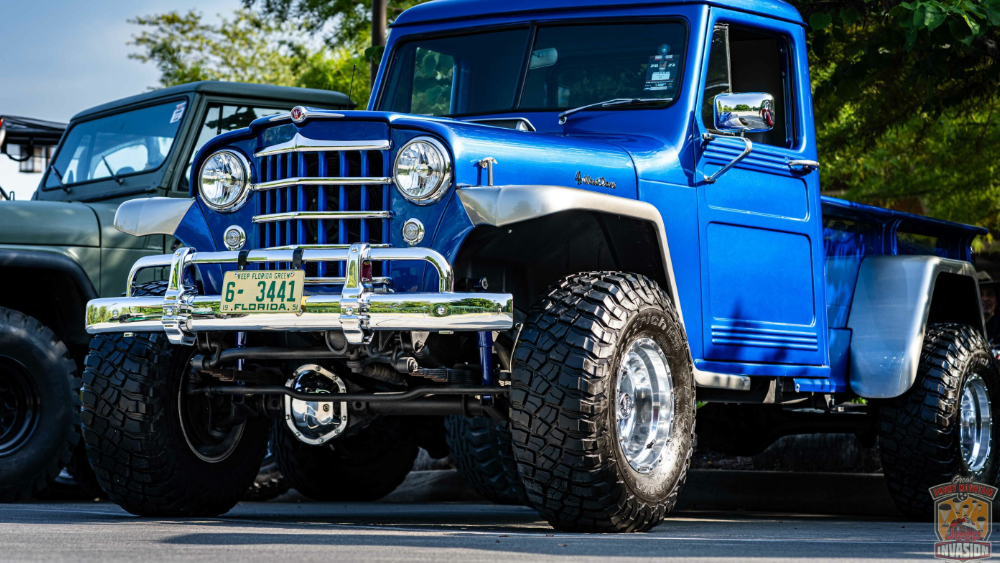
7. Great Smoky Mountain Jeep Invasion
Image: Vintage Jeep displayed at the Great Smoky Mountain Jeep Invasion via site
Dates: August 20-22, 2026 (Wednesday-Friday) Location: LeConte Center, Pigeon Forge (expo) + organized trail rides
What it is: Calling all Jeep enthusiasts and Jeep Clubs! This is the premier Jeep event in the Smokies, where the Jeep community comes together for a weekend of everything Jeep. The event combines an indoor expo at LeConte Center (aftermarket vendors, gear, new products) with organized trail rides, a parade through downtown Pigeon Forge, vendor village, and show & shine competition.
Expected attendance: 1,000-2,000+ Jeeps (this is one of the largest Jeep gatherings in the Southeast)
Admission: $20/day for adults, $10/day for children 6-12, Free for kids 5 & under. Check the event website for vendor/exhibitor fees.
Why it’s special: The Jeep community is incredibly tight-knit and welcoming. Everyone waves. Everyone wants to talk about their build. The parade through Pigeon Forge is spectacular—hundreds of Jeeps with light bars, air horns, and custom paint jobs rolling through downtown. And unlike static car shows, you get to see these rigs in action on trail rides to nearby off-road parks.
Where to stay: Sleepy Bear Ranch has a huge driveway that handles Jeeps on 37s with roof racks easily. The large outdoor area is perfect for Jeep club gatherings and bench-racing.
Booking timeline: Reserve by late July-early August (3-4 weeks out). Jeep events book up, but not as frantically as Rod Run.
Trail ride options nearby:
Windrock Park (1 hour away: 300+ miles of trails, beginner to extreme
Brimstone Recreation (1.5 hours): 20,000 acres, technical rock crawling
Image: Vintage car on display at the Fall Rod Run via site
Dates: September 17-19, 2026 (Wednesday-Friday) Location: Parkway, Pigeon Forge (entire downtown) + LeConte Center
What it is: The biggest car show in the Smokies. Period. Even larger than Spring Rod Run. Three days of non-stop classic cars, cruise nights every evening where the Parkway glows with headlights at sunset, a massive swap meet at LeConte Center (football-field-sized tents full of parts and memorabilia), and awards ceremonies that actually matter to builders.
Vehicle types: Same as Spring Rod Run; all classics pre-1980, hot rods, muscle cars, street rods, customs
Expected attendance: 4,000+ vehicles, 75,000+ spectators over 3 days
Largest car show in the Smokies (yes, bigger than Spring Rod Run)
September weather is perfect; 70-75°F days, cool evenings, low humidity
Fall color starting in higher elevations; Early foliage in the mountains provides bonus scenic drives
Legendary night cruises; The Parkway at 8pm on a Thursday night, packed bumper-to-bumper with classics, headlights reflecting off chrome… it’s automotive heaven
Where to stay: BOOK EARLY. Fall Rod Run cabins sell out 10-14 weeks in advance (late June-early July reservations are normal). By late August, you’re looking at scraps or hotels an hour away.
Insider tips:
Wednesday is the best day for photos: Setup day, fewer crowds, perfect light
Thursday-Friday is packed: Plan your parking strategy in advance
Stay hydrated: You’ll walk 10+ miles over the weekend
Bring a folding chair: Rest between car-spotting sessions (your feet will thank you)
Fall Rod Run Event Website (See Spring Rod Run Link)
OCTOBER – DECEMBER 2026
No major car shows: October shifts to fall foliage tourism (peak leaf-peeping season), November begins Winterfest with holiday lights and family attractions, and December is in full Christmas mode.
October pro tip: While there are no organized car shows, October is actually perfect for scenic drives in your classic. The mountain roads explode with red and gold leaves, traffic is manageable on weekdays, and your car photos against fall foliage will be magazine-worthy. Cades Cove Loop, Foothills Parkway, and the Roaring Fork Motor Trail are all spectacular in October.
November pro tip: This is the best time to book Spring 2027 Rod Run cabins. Mark your calendar right now.
Why Cabins Beat Hotels for Car Show Weekends
After hosting hundreds of car show attendees over the years, I’ve heard every hotel horror story. Tight parking lots where someone dinged a door. Multi-level garages with clearance too low for lifted Jeeps. Valet drivers who don’t understand what “be careful with the clutch” means.
Here’s why smart car enthusiasts choose cabins.
1. Parking: Your #1 Priority
The hotel problem:
You didn’t trailer your ’67 Mustang 300 miles to park it in a crowded hotel lot next to a minivan with kids who think door handles are for swinging. Hotels offer:
Tight parking lots (risk of door dings, shopping cart hits)
Cabin (Blissful Tranquility): $600 total ÷ 4 people = $150 per person
Savings: $300 per person = more money for that custom exhaust you’ve been eyeing
3. Pre/Post-Show Relaxation
After walking 10 miles on the Parkway:
Hotels: Crowded pool full of screaming kids, tiny gym with one broken treadmill, overpriced bar with weak drinks
Cabins: Private hot tub (soak your feet while watching the sunset), game room (arcade, foosball, darts), fire pit (s’mores under the stars while talking about that insane ’32 Ford you saw)
Morning prep:
Hotels: Fight for the shower, pay $15 for a mediocre hotel breakfast buffet that closes at 9:30am
Cabins: Multiple bathrooms (no waiting), cook your own breakfast (bacon, eggs, coffee—real food), leave when you’re ready (not when the buffet closes)
4. Photo Opportunities
Let’s be honest: half the reason you bring your car to the Smokies is for photos.
Cabin backdrops beat parking lots:
Mountain views: Your hot rod with the Smokies in the background (vs a Motel 6 parking lot)
Rustic log cabin aesthetic: Instagram gold
Sunrise shots on the deck: Your Corvette with morning mist rolling through the mountains
Fall foliage + chrome: Magazine-worthy photos without even leaving the driveway
5. Dog-Friendly (Bonus for Pet Owners)
Many car enthusiasts travel with dogs. (Car people and dog people have a Venn diagram that’s basically a circle.)
Hotels:
$75-150 pet fees per stay
Size and breed restrictions (Sorry, your pit bull can’t come)
No outdoor space (tiny patch of grass next to the dumpster)
Hapey cabins:
Zero pet fees (we mean it—not a single dollar)
All dogs welcome (no size or breed restrictions)
Fenced yards (your dog plays safely while you detail the car)
Real guest story:
“Our golden retriever comes to every car show—he’s basically our mascot. Hapey’s fenced yard at Hapey Memories meant he could run around while we prepped the car. No way that works at a hotel. Plus, he loved sitting on the deck.” — Sarah & Tom, Nashville
Where to Stay: Cabin Recommendations by Event
Not all cabins are created equal for car shows. Location matters. Parking space matters. Here’s where Hapey guests stay for each major event.
For Spring Rod Run & Fall Rod Run (Pigeon Forge Parkway Events)
Best choice: Blissful Tranquility
Location: 7 minutes to Dollywood/Parkway/LeConte Center
Sleeps: 6 (perfect for 2 couples or a family of 4 + 2 friends)
Amenities: Hot tub, arcade games, foosball, 2 decks by a stream
Base rate: $179-199/night
Why it works: Close enough to hit the Parkway multiple times daily, far enough to escape the crowds and noise at night. You get the best of both worlds—easy access and peaceful evenings.
Amenities: Hot tub, games, fire pit, large covered outdoor area
Base rate: $299-349/night
Why it works: Split 8-10 ways, this is $30-40 per person per night. You literally can’t beat that. Plus, the outdoor space is perfect for group hangouts and late-night car talk.
Location: 10 minutes to Sevierville Convention Center
Parking: Able to park several vehicles
Sleeps: 4 (couples, small groups)
Amenities: Screened porch hot tub, game table, rocking chairs, mountain views
Base rate: $179-199/night
Why it works: Sevierville location = quieter, less tourist traffic, easier drives. You’re right in the heart of the action without the Pigeon Forge chaos.
Why: Parking for lifted Jeeps on 37s. The huge outdoor area is perfect for Jeep club gatherings. The fire pit becomes Jeep council headquarters Friday night. Can accommodate multiple Jeeps with roof racks, full-size spares, and all the gear.
Runner-up: Blissful Tranquility
Why: 7 minutes to LeConte Center for the expo. Driveway handles 2-3 Jeeps easily, even with modifications.
For Corvette Expo & Chevys in the Smokies (Same Weekend)
Best choice: Timeless Tranquility
Location: 5 minutes to LeConte Center
Sleeps: 4 (perfect for 2 Corvette couples)
Amenities: Screened hot tub, gas fireplace, wrap-around deck with mountain views, Ms. Pac-Man arcade
Base rate: $179-199/night
Why it works: Intimate cabin perfect for serious enthusiasts. The mountain views give you stunning photo backdrops, and the quiet location means you can hear yourself think after a long day of talking horsepower.
Why: Driveway parking area for 6. Many F-100 owners bring both their show truck and their daily driver.
Best choice for Pontiacs: Little Bear
Why: 20 minutes to LeConte Center, great for couples or small groups traveling to the Pontiac show.
Local Hot Spots: Where Car Crowds Gather
The real magic of car show weekends isn’t just the official events—it’s where enthusiasts gather unofficially. Parking lots become impromptu car meets. Restaurants turn into cruise-in spots. Here’s the insider guide locals won’t tell you.
1. Parkway Cruise Nights
What it is: After official show hours end (around 6-7pm), classic cars cruise the Parkway from 8pm to midnight during Rod Run weekends. It’s not organized—it just happens. Hundreds of cars rolling slowly down the strip, revving engines, waving to spectators lining the sidewalks.
Best spots to watch:
The Island parking lot — Center of the Parkway, great vantage point, food and shops nearby
In front of Paula Deen’s restaurant — Wide sidewalk, good visibility, less crowded than The Island
LeConte Center parking area — Cars line up here before joining the cruise
If you’re participating:
Join the cruise around 8:30pm (it builds gradually)
Stay in the right lane, slow roll (15-20 mph max)
Wave to spectators—it’s tradition
Respectful revving only (police monitor noise levels, and citations happen)
2. Breakfast Spots (Where Car Folks Eat)
Flapjack’s Pancake Cabin (Pigeon Forge) Huge parking lot, classic car-friendly, great food. Expect a 45-minute wait during Rod Run weekends, but the people-watching (and car-watching) is worth it.
image: Pancake Pantry via site
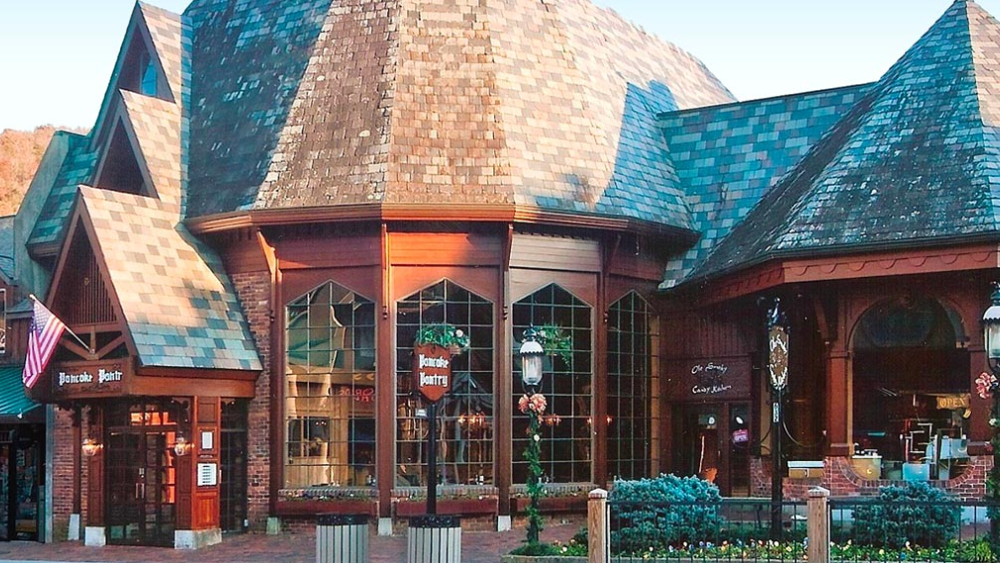
Pancake Pantry (Gatlinburg) 60+ year tradition, smaller lot. Arrive before 8am or you’ll wait an hour. Cash only.
image: Reagan’s House of Pancakes via Facebook
Reagan’s House of Pancakes (Pigeon Forge) Locals’ favorite, faster service, less touristy. If you want to eat without the wait, this is it.
Pro tip: Cook breakfast at the cabin. Save 2 hours of waiting and spend that time on the Parkway instead.
3. Photo Spots (Best Backgrounds for Car Photos)
Patriot Park (Pigeon Forge) American flag backdrop, free parking, beautiful morning light. Gets crowded by 10am on Rod Run weekends, so shoot early.
The Old Mill (Pigeon Forge) Historic mill + creek + rustic bridge = iconic Smokies shot. This is the photo spot everyone wants. Go at sunrise (6:30-7:30am) before the tour buses arrive.
image: Foothills Parkway in the Smokies via site
Foothills Parkway (15 minutes from Pigeon Forge) Mountain overlooks with sweeping vistas. Multiple pullouts along the route. Sunset here is unbeatable—golden hour + your car + the Smokies = frame-worthy.
Cades Cove Loop (45 minutes from Pigeon Forge) Misty morning fields, rustic barns, wildlife (deer, turkeys, sometimes bears). Go early (before 9am) to avoid the RV traffic jam that turns this 11-mile loop into a 3-hour crawl.
Timing matters:
Sunrise (6:30-7:30am): Soft light, empty roads, mist in the valleys
Sunset (7:30-8:30pm): Golden hour, dramatic shadows, warm tones
4. Parts & Supplies (If You Need Something Last-Minute)
AutoZone (Pigeon Forge Parkway) Open 7:30am-10pm. Most common parts in stock. Good for quick fixes (bulbs, fuses, fluids).
O’Reilly Auto Parts (Sevierville) Better selection than AutoZone, knowledgeable staff who actually know what a points distributor is.
NAPA (Gatlinburg) High-performance parts, racing supplies. If you need something specific (carburetor jets, braided lines), this is your spot.
5. Evening Hangouts (Where to Grab a Beer & Talk Cars)
image: Ole Smoky Distillery, Gatlinburg TN va Instagram
Ole Smoky Distillery (Gatlinburg) Outdoor patio, live music, moonshine tastings. The car culture loves moonshine history (because, let’s be honest, hot rodding and moonshine running are cousins). Free samples, good vibes.
Calhoun’s (Gatlinburg) Riverside patio, BBQ, relaxed atmosphere. Dog-friendly patio if you brought your pup.
image: Local Goat in Pigeon Forge, TN via site
Local Goat (Pigeon Forge) Craft beer selection, frequent car crowd on weekends. Outdoor seating, sports on TV.
Honestly? Most attendees just hang at the cabin. Hot tub + cold beer + talking about that wild rat rod you saw = perfect ending to the day.
Booking Timeline & Strategy
Here’s the truth nobody wants to hear: Car show cabins sell out. Fast.
If you wait until two weeks before Spring Rod Run and start looking for lodging, you’ll end up in a hotel an hour away, paying $250/night, with nowhere to park your classic. Don’t be that person.
Step 3: Book Direct We now offer direct, secure bookings (transparent fees, guest protections, easy communication). Pay deposit now, rest due 30 days before arrival. Free cancellation up to 14 days before check-in (see full policies on cabin pages).
Step 4: Get ready We’ll email you a pre-arrival guide (what to pack, directions, check-in code) about a week before you arrive. Questions anytime? Text or call us.
What If Cabins Are Sold Out?
Plan B options:
Waitlist: Email hapeycabins@gmail.com to get on the cancellation list. People’s plans change, and we’ll notify you if something opens up.
Nearby cities: Sevierville and Gatlinburg (10-20 minute drives) still beat hotels for parking and space.
Book next year: Seriously. If you’re reading this in April 2026 and Spring Rod Run is sold out, book Fall 2026 or Spring 2027 right now.
First-Timer Tips: Making the Most of Your Car Show Weekend
Never been to a Smoky Mountain car show? Here’s what 10+ years of hosting car enthusiasts has taught me.
Before You Go
1. Register your vehicle (if displaying)
Spring/Fall Rod Run: registration fees vary, check the site
Jeep Invasion: Check official site for pricing
Corvette Expo, Chevys, etc.: Check official site for pricing
Do it early—some shows offer early-bird discounts
2. Prep your car
Detail before you arrive (cabin hose-down works for trail dust, but start clean)
Check fluids (mountain driving is hard on older cars—cooling systems especially)
Bring touch-up paint (rock chips happen on the Parkway)
Fill up before you arrive (gas stations during Rod Run = 30-minute waits)
3. Pack smart
Folding chair (for sitting by your car during the show)
Cooler with water and snacks (food vendors exist, but $$$)
Sunscreen + hat (Tennessee sun is real, and you’re walking on pavement all day)
Comfortable shoes (you’ll walk 5-10 miles easily)
Phone charger (you’ll take 500 photos and use GPS constantly)
During the Event
4. Parkway parking strategy
Arrive early (before 9am) or late (after 7pm). Midday parking is a nightmare: every spot within 2 miles is taken.
Don’t park on the Parkway during peak hours. You’ll sit in gridlock for an hour trying to leave. Use side streets and side lots instead.
5. Respectful behavior
Ask before touching someone’s car (yes, even just to peek under the hood)
Don’t rev your engine excessively; noise ordinances exist and police will cite you
Trash goes in trash cans (keep the Smokies clean)
Kids? Keep them close; crowded sidewalks and distracted drivers are a bad combo
6. Photography etiquette
Ask the owner before doing a full photo shoot of their car
Don’t block traffic for your Instagram shot
Tag owners on social media when you can (most cars have Instagram handles displayed)
7. Stay hydrated & fed
Food trucks are everywhere (BBQ, funnel cakes, fresh-squeezed lemonade). But cabin meals save you time and money, especially breakfast.
Drink water. Heat + walking + asphalt = dehydration happens faster than you think.
Safety & Security
8. Protecting your vehicle
Lock it (even at the cabin—seems obvious, but people forget)
Don’t leave valuables visible in the car
Park in well-lit areas at night during cruise events
Consider a dash cam for cruise nights (just in case)
9. Driving tips
Parkway traffic during shows is a nightmare: bumper-to-bumper, stop-and-go
Use alternate routes (Teaster Lane, Wears Valley Road) to avoid the Parkway entirely
GPS will lie to you: locals know better, so ask us for directions
Watch for pedestrians: they step into traffic constantly during Rod Run
Making Friends
10. Car show community
Everyone at these events wants to talk cars. Strike up conversations. Swap stories. Share build tips. Exchange Instagram handles. The car community is one of the most welcoming subcultures out there.
11. Evening hangouts
Cabin hangouts are common. Don’t be surprised if neighboring car folks wander over to check out your ride. Cruise nights (8pm-midnight on the Parkway during Rod Run) are the best part of the weekend. Local bars welcome car crowds, just don’t drink and drive.
FAQ: Your Top Car Show Questions Answered
About the Events
Q: When is Spring Rod Run 2026?
A: Spring Rod Run 2026 is April 16-18, 2026 (Wednesday-Friday) on the Pigeon Forge Parkway and at LeConte Center.
Spring Rod Run is the first major rod run of the season in the Smokies. It runs mid-April, lasting 3 days from Wednesday through Friday. The event covers the entire Parkway in Pigeon Forge, with 3,000+ classic cars, hot rods, and muscle cars lining the streets and parking lots.
Registration is typically $35-45 if you want to display your vehicle, or free if you’re just walking and viewing. Most attendees stay Wednesday-Friday, but even a single day is worth it if you can’t commit to the full weekend.
Q: When is Fall Rod Run 2026?
A: Fall Rod Run 2026 is September 17-19, 2026 (Wednesday-Friday) on the Pigeon Forge Parkway and at LeConte Center.
Fall Rod Run is even larger than Spring Rod Run, attracting 4,000+ vehicles and 75,000+ spectators over 3 days. September weather is perfect (70-75°F days, cool evenings), and you get the added bonus of early fall color in the higher elevations. This is the single biggest car show in the Smokies all year.
Book cabins by late June or July. Fall Rod Run sells out lodging faster than any other event. I’ve had guests book 4-5 months in advance for their preferred cabins.
Q: Are these events family-friendly?
A: Yes! All Smoky Mountain car shows are family-friendly with kids welcome.
While car shows naturally attract adult enthusiasts, families are absolutely welcome. Kids love seeing unique vehicles, especially hot rods with flames painted on the sides, loud muscle cars with open headers, and custom Jeeps with 40-inch tires. Most events have food vendors, ice cream stands, and kid-friendly activities nearby (Pigeon Forge has mini-golf, arcades, and go-karts within walking distance).
That said, crowds are thick during peak hours (especially on Fridays). Keep little ones close. Strollers work but can be cumbersome on crowded sidewalks. Many families visit on Wednesday afternoons or early mornings when crowds thin out and it’s easier to actually see the cars.
Q: Can I bring my dog to car shows?
A: Most outdoor car shows allow leashed dogs, but expect intense crowds and noise.
Dogs are technically allowed on public streets during Rod Run and at outdoor shows, but crowds are thick and the atmosphere can be overwhelming. Loud exhausts, air horns, and thousands of people create sensory overload. If your dog is nervous around noise or crowds, it might be stressful for them.Many guests leave dogs at the cabin with A/C and come back to check on them every few hours. All Hapey cabins are pet-friendly with fenced yards, so your dog can enjoy the trip safely even if they skip the Parkway chaos. If you prefer to have someone with your pup, we recommend Rachel Stacy with Rover for in-home sitting, she’s who we use for our pets and love her to pieces.
Q: Do I need to register in advance?
A: No, you can register on-site for most events, but pre-registration often saves you $5-10.
Most car shows offer online pre-registration (usually cheaper than day-of rates). For big events like Spring and Fall Rod Run, pre-registration also guarantees your spot if they cap entries (rare, but it has happened when LeConte Center parking fills completely).
Smaller shows like Corvette Expo and Chevys in the Smokies have plenty of day-of availability. You can literally roll up Wednesday morning and register on the spot.
Check event websites or the official PigeonForgeRodRuns.com site in February-March for 2026 registration links.
Q: Why are cabins better than hotels for car shows?
A: Cabins offer private parking, group space, and significant cost savings compared to hotels.
Hotels have notoriously bad parking during car shows; tight lots where door dings happen, zero security, and often not enough spaces (arrive late = park blocks away). Cabins give you a private driveway where you control access to your vehicle. No strangers. No shopping carts. No minivan doors swinging into your quarter panel.
Plus, cabins sleep 4-11 people in one booking, so split costs make them dramatically cheaper than booking multiple hotel rooms. And you get actual space to hang out; living rooms, kitchens, and porches instead of being crammed into a 300-square-foot box.
See the full breakdown in “Why Cabins Beat Hotels” above. [#ANCHOR LINK]
Q: How far are Hapey cabins from car show events?
A: 5-15 minutes depending on which cabin and which event.
Here’s the breakdown:
Blissful Tranquility: 7 minutes to Pigeon Forge Parkway/LeConte Center
Sleepy Bear Ranch: 15 minutes to Pigeon Forge Parkway/LeConte Center
Hapey Place: 15 minutes to Pigeon Forge, 10 minutes to Sevierville Convention Center
Hapey Memories: 15 minutes to Pigeon Forge, 10 minutes to Sevierville Convention Center
Timeless Tranquility: 5 minutes to Pigeon Forge Parkway/LeConte Center
All cabins are within easy driving distance of major venues. You’re close enough to visit the show multiple times per day (morning walk-through, back to cabin for lunch and a hot tub break, evening cruise), but far enough away to escape the madness and actually sleep at night.
Q: What if I’m traveling with a group?
A: Sleepy Bear Ranch sleeps 11 and is perfect for car clubs and large groups.
We’ve hosted Jeep clubs (8-10 people), Corvette groups (6-8 couples sharing costs), and Mustang clubs at Sleepy Bear Ranch. With 3 bedrooms, 3 bathrooms, a huge covered outdoor area, and parking for 6+ vehicles, it’s built for group gatherings.
The fire pit becomes car club headquarters on Friday nights. The outdoor table seats 10 for cookouts. And when you split the cost 10 ways, it’s just $30-40 per person per night which is cheaper than any hotel, and infinitely more fun.
Check Sleepy Bear Ranch Availability →
Q: When should I book for Spring Rod Run?
A: Book by January-February 2026 (10-14 weeks before the April event). Ideally earlier if possible.
Spring Rod Run is one of the busiest weekends of the year for Pigeon Forge lodging. The best cabins are reserved by late January and February. If you’re reading this in March, check availability immediately; you might still find openings, but selection will be limited and prices may be higher.
Don’t wait until April. By then, you’ll be scrambling for overpriced hotel rooms an hour away in Knoxville or Maryville, with nowhere safe to park your classic.
Q: When should I book for Fall Rod Run?
A: Book by late June-July 2026 (10-14 weeks before the September event). Some book even earlier.
Fall Rod Run is the biggest car show of the year, and cabins sell out faster than any other event. Serious attendees (the folks who’ve been coming for 10+ years) book as early as April-May (4-5 months out). By mid-August, you’re looking at scraps.
Set a calendar reminder right now: “Book Fall Rod Run cabin – July 1, 2026.” Future you will thank present you.
Q: Where do I park during the shows?
A: The Parkway has metered street parking and paid lots, but they fill up fast. Many attendees park at their cabin and Uber or carpool in.
During Rod Run, every parking spot within 2 miles of the Parkway is taken by 10am on peak days. Your options:
Street parking (metered): $1-2/hour, but you have to move your car every 2-3 hours (and good luck finding the next spot)
Paid lots: $10-20/day, but they fill up by 9am
Park at cabin + Uber/Lyft: $15-20 each way, but completely stress-free
Many guests visit early (before 9am when parking is plentiful) or late (after 7pm when people start leaving). Midday parking is an absolute nightmare.
Q: Can I drive my classic car during the events?
A: Yes! But expect heavy traffic and very slow cruise speeds during Rod Run weekends.
Your classic car is absolutely welcome on the Parkway during car shows; half the fun is cruising past spectators who line the sidewalks to watch. Just know that traffic moves at 10-15 mph during peak hours (it’s basically a slow-moving parking lot with occasional stops).
If you’re worried about overheating (older cars with marginal cooling systems), stick to morning or evening cruises when traffic flows better and temperatures are cooler.
For Jeep Invasion, there’s an official parade through downtown on Saturday.
Q: What if it rains during the event?
A: Most shows continue rain or shine. Indoor shows like Corvette Expo and Chevys are unaffected.
Smoky Mountain car shows are mostly outdoor events, and Tennessee spring weather can be unpredictable (70°F and sunny one hour, 55°F and pouring rain the next). Light rain doesn’t stop Rod Run; people bring umbrellas and keep walking. Heavy rain thins crowds significantly, which actually makes for better photo opportunities if you’re dedicated enough to brave the weather.
Indoor shows at LeConte Center (Corvette Expo, Chevys, F-100, Pontiacs) are weather-proof. Covered areas along the Parkway include restaurant awnings and the Old Mill covered bridge (popular photo spot).
And when the weather doesn’t cooperate? Cabins become the backup plan. Hot tubs, game rooms, fireplaces, and dry porches keep the weekend fun even if you can’t spend 12 hours walking the Parkway.
Q: What about Jeep trail rides during Jeep Invasion?
A: Organized trail rides to Windrock Park (1 hour away) and Brimstone Recreation (1.5 hours) are typically offered.
Trail rides are priced separately from the main event admission (usually $50-100 depending on difficulty level and park). Pre-registration is recommended as spots fill up. Check the official Jeep Invasion website for 2026 trail ride details and registration.
Many Jeepers spend Wednesday at the expo, Thursday on trails, and Friday at the parade/show & shine.
Ready to Book Your 2026 Car Show Weekend?
You’ve got the dates. You know why cabins beat hotels. You’ve seen where to stay for each event. Now it’s time to actually book before someone else claims your spot.
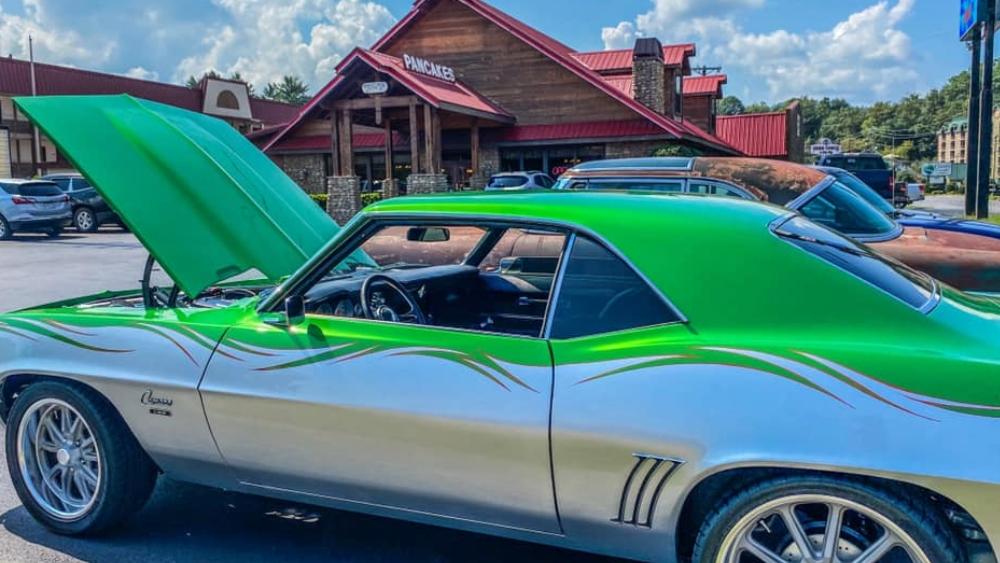
Whether you’re cruising the Parkway in your ’69 Camaro during Spring Rod Run, wheeling your Jeep at Jeep Invasion, or admiring pristine Corvettes at the Spring Expo, the Smokies welcome car enthusiasts like family. And after the show ends, you’ll have a private cabin with a hot tub, mountain views, and space to relax, not a cramped hotel room with paper-thin walls.
Planning a wedding in Gatlinburg, Tennessee is like stepping into a real-life fairytale. For out-of-state couples and those dreaming of an elopement in the Smoky Mountains, Gatlinburg offers an unbeatable mix of stunning mountain scenery, affordable all-inclusive wedding packages, and unique venues to suit any style. Best of all, it’s easy to plan a destination wedding here. Whether you’re envisioning a quaint chapel ceremony or an outdoor celebration with panoramic views, this comprehensive guide will help you discover the best places to get married in Gatlinburg, TN and plan your perfect day.
Why Choose a Gatlinburg Wedding?
Gatlinburg has earned its reputation as a destination wedding hotspot for good reason. Nestled at the gateway to Great Smoky Mountains National Park, this charming town provides a storybook backdrop of rolling peaks, lush forests, and misty mornings – pure romance for nature-loving couples. Beyond the scenery, Gatlinburg makes wedding planning a breeze, especially for out-of-state couples. Many local venues offer one-stop wedding packages that include everything from the venue and officiant to photography and flowers. That means you can show up and say “I do” without worrying about the details – perfect for elopements or small ceremonies where stress-free planning is a priority.
Another big draw is affordability. Weddings here can be far more budget-friendly than in big cities. In fact, “Gatlinburg wedding packages” is a popular search term, reflecting how many couples seek value in this area. You’ll find plenty of affordable wedding options – from simple chapel ceremonies costing just a few hundred dollars to all-inclusive packages under $1,000 that cover multiple services. If you’re looking to maximize your budget, Gatlinburg might be one of the best places in Tennessee (or anywhere) to tie the knot without breaking the bank.
Finally, Gatlinburg is extraordinarily wedding-friendly. The town and surrounding county welcome thousands of weddings each year, so they’ve streamlined the process for visitors. There’s no waiting period for marriage licenses and no blood tests required, and a special Tennessee law actually rewards out-of-state couples with a lower marriage license fee (more on that later). Couple all this with the quaint restaurants, attractions, and cozy cabins and hotels available for lodging, and you have all the ingredients for an unforgettable destination wedding experience. Now, let’s dive into the venues and locations that make Gatlinburg a wedding paradise.
Local wedding chapels are perhaps Gatlinburg’s most iconic venues – and for good reason. These charming chapels, tucked into wooded glades or perched on scenic hillsides, specialize in intimate ceremonies and often provide all-inclusive Gatlinburg wedding packages. If you want a stress-free experience where most of the details are handled for you, a chapel might be your perfect choice. Couples frequently rave about how Gatlinburg chapels made planning from out of state so easy, thanks to bundled services and experienced staff.
image: via Chapel in the Glen, Chapel in the Glen offers a picturesque waterfall backdrop for a romantic ceremony.
What can you expect from a Gatlinburg wedding chapel? Most chapels offer ceremony packages that include the venue time, an officiant to conduct the vows, basic floral arrangements, recorded music or a musician, and even a photographer or videographer in some cases. All-inclusive packages might add on extras like a small cake, champagne toast, or unity ceremonies. Many chapels also coordinate on-site or nearby outdoor photo ops – for example, the famed Chapel in the Glen has a picturesque waterfall and garden on the grounds for dreamy post-ceremony photos. The idea is that you can arrive in your wedding attire with your marriage license in hand, and everything else is ready to go.
Image: Via Little Log Wedding Chapel
Importantly, Gatlinburg chapels cater to a range of budgets. If you’re worried that a chapel wedding will cost a fortune, think again – “Who says weddings have to break the bank?” as one local guide puts it. Many chapels advertise very affordable packages designed for all budgets. For example, the popular Chapel at Honeymoon Hills offers ceremonies starting at around $300 for up to 50 guests – an incredible value that includes the essentials for your big day. Some smaller venues or weekday specials can be even cheaper; one Smoky Mountain chapel lists packages starting at just $125 (yes, you read that right) for a simple ceremony. Of course, prices go up with more inclusions or if you opt for premium photography, etc., but it’s entirely possible to have a beautiful wedding here for well under $1,000. Cheap Gatlinburg wedding packages are out there, and they don’t skimp on charm or romance!
A few notable Gatlinburg wedding chapels frequently praised by couples include: Gatlinburg’s Little Log Wedding Chapel, known for its rustic log cabin architecture and quaint woodland setting; Wedding Chapel in the Glades, celebrated for its “secret garden” vibe and customizable packages; Chapel at the Park, a lovely chapel with an enchanted forest and twin waterfalls on site; and Chapel at Honeymoon Hills, a longtime favorite close to downtown but nestled in a private, scenic spot. Each chapel has its own ambiance – from traditional white chapels to cabin-style chapels – but all capture the fairytale Smoky Mountain atmosphere. Most chapels can accommodate only a limited number of guests (often 50 or fewer), so they’re perfect for elopements, micro-weddings, or gatherings with close family and friends.
Pro tip: If you’re planning from out of state, don’t hesitate to call or email the chapels. They’re used to working with remote clients and can walk you through package options, scheduling, and any add-ons you might need (like hair/makeup referrals or livestreaming the ceremony for folks back home). With an all-inclusive chapel, you can essentially show up and get married – the staff will handle the rest, from lining up your bridal party to playing “Here Comes the Bride.” It’s Southern hospitality at its finest, aimed at giving you a stress-free, storybook wedding in the Smokies.
Scenic Outdoor Wedding Venues in the Smokies
image: view of sweeping views of the smoky mountains via The Magnolia
If you’ve been dreaming of an outdoor ceremony surrounded by nature, Gatlinburg will not disappoint. With the Great Smoky Mountains National Park at its doorstep, Gatlinburg gives couples access to some of the most breathtaking outdoor wedding locations in the country. Imagine exchanging vows with a panoramic mountain view behind you, or next to a cascading waterfall in the forest – it’s all possible here. Outdoor venues range from designated sites inside the national park to private mountain-top resorts and gardens.
One of the most popular options for nature-loving couples is to get married within Great Smoky Mountains National Park itself. The park boasts lush forests, rolling meadows, streams, and historic cabins that create a magical setting for a ceremony. Iconic spots include Cades Cove, a scenic valley with historic churches and 360° mountain views, and the Greenbrier area of the park, where you can say “I do” beside the tranquil Little Pigeon River in relative seclusion. For very small elopements, even a pretty spot like Cataract Falls (an easy hike near the Sugarlands Visitor Center) can serve as a whimsical backdrop with the gentle waterfall enhancing the moment.
Do keep in mind that weddings in the national park require a special use permit and adherence to park regulations. The permit process is straightforward – you submit an application and a nominal fee (about $50 for the permit) to reserve your chosen site and date. Also note that most park locations have a 25-person attendance limit and may not allow elaborate setups (no arches, chairs, or amplified music in many cases), since the goal is to preserve the natural beauty. Still, for couples who adore nature or want a truly budget-friendly wedding (a gorgeous outdoor venue for just the cost of a permit!), the national park is unbeatable.
Outside of the park, Gatlinburg and nearby towns offer private outdoor venues that provide natural beauty with a bit more infrastructure. For instance, mountain-view event venues like Ober Mountain in Gatlinburg let you wed atop a scenic ski resort with the peaks as your backdrop (and even the option for a snow-covered setting in winter). The Magnolia offers breathtaking views that sweep across the Great Smoky Mountain landscape.
There are also barns and farms in the surrounding area (Sevierville, Townsend, etc.) that host weddings – think rustic chic vibes with twinkling lights and pastoral views. A great example is 4 Points Farm, a 10-acre farm venue known for its boho charm and DIY-friendly approach, set against stunning Smoky Mountain scenery. Or consider Bluff Mountain Inn, a woodsy estate that offers ceremony sites under the trees and a reception pavilion all in one location. These venues often can accommodate larger guest counts and have indoor/outdoor flexibility (handy in case of rain).
Image: Via Greenbrier Estate
Waterfall aficionados will be pleased to know there are even “waterfall wedding” packages around Gatlinburg. Some wedding companies have private spots or partnerships for ceremonies by a waterfall. Additionally, a few chapels incorporate water features – for example, Chapel at the Park has waterfalls on-site, and others like Chapel in the Glen are set near natural falls. Always inquire with the venue or planner if a waterfall backdrop is on your must-have list; they can direct you to the right location for those epic photos.
Important: If you opt for an outdoor venue (especially in the national park or other public lands), plan for permits and backups. As mentioned, a permit is required for park weddings, and some popular spots like Cades Cove book up early – so apply as soon as you have a date. Also consider the practicalities: is there a short hike involved (sensible shoes needed!), what will the weather be like, and do you need to bring in an officiant or decor? Many Gatlinburg officiants and photographers are happy to meet you on a mountain overlook or trail to conduct and capture your ceremony – just ensure everyone knows the logistics. And always have a Plan B in case of inclement weather. One advantage of Gatlinburg is that chapels and indoor venues abound, so you might reserve a small chapel as a backup or choose a venue that offers indoor space as well. With good planning, an outdoor Smoky Mountain wedding can be absolutely magical and well worth the extra steps.
Wedding Reception Venues in Gatlinburg
When couples think of places to get married in Gatlinburg, they often focus on the ceremony – but what about the celebration afterward? If you’re inviting guests and want to throw a party, you’ll need a reception venue. Many of Gatlinburg’s wedding chapels are intimate and ceremony-only, meaning you’ll have to relocate for a larger reception or dinner. Fortunately, there are plenty of wedding reception venues in Gatlinburg, TN and the surrounding area, ranging from banquet halls and restaurants to spacious event venues with dancing room.
For small groups, a popular choice is to book a restaurant or private dining room in Gatlinburg. The town is filled with eateries that can host wedding dinners – from cozy country kitchens to upscale steakhouses. Some even have private banquet rooms or scenic patios. This option keeps things simple: you can have an intimate ceremony at a chapel or overlook, then reconvene with your guests for a meal and cake-cutting at a local restaurant (no extra decor needed beyond maybe a few centerpieces). Be sure to call ahead to discuss group menus and reservations if you go this route.
If you have a larger guest list or want a full reception setup (DJ, dance floor, the works), consider renting an event venue or ballroom. Gatlinburg has a few hotel resorts and event centers that cater to weddings. For example, the Gatlinburg Convention Center and the Sevierville Civic Center are available for private events – the Civic Center in Sevierville can host weddings and receptions at a very reasonable rental fee (around $1,000 for ~50 guests as a starting point). On the more luxurious end, some mountain resorts near Gatlinburg offer wedding packages that include use of their reception hall or pavilion. Think places like Parkside Resort or Hidden Mountain Resort (in nearby Pigeon Forge/Sevierville) which have scenic outdoor ceremony spots plus indoor facilities for receptions, often with on-site cabins or condos for lodging. These resort venues are great for keeping everything in one place – your guests can stay there, attend the ceremony with a view, then celebrate in a ballroom or barn on the property. Just keep in mind, you’ll want to evaluate if they align with your needs and budget.
Another unique reception option in the Gatlinburg area is to rent a large cabin or lodge and host an informal reception there. This can be a fun, low-cost way to celebrate with a very small group – perhaps a champagne toast and potluck after a mountaintop ceremony. However, for anything more elaborate or with a bigger crowd, dedicated venues are better equipped and usually required by local ordinances.
In summary, Gatlinburg reception venues run the gamut. If dancing and a full reception are important to you, make sure to plan for that from the start. You could choose a combo venue that handles both ceremony and reception (for instance, 4 Points Farm or Bluff Mountain Inn can do “I do” and party all on-site), or mix and match a chapel ceremony with an off-site reception location. The key is to consider guest convenience – provide clear directions, maybe even arrange group transportation if the ceremony and reception are far apart (though in Gatlinburg, most things are a short drive). And don’t forget the “reception” can be whatever you want: a formal dinner, a backyard barbecue, a simple cake-and-punch afternoon, or a moonshine tasting night out on the town. Gatlinburg offers plenty of ways to celebrate your newlywed status in style!
Budget-Friendly Wedding Ideas in Gatlinburg
One of the best things about getting married in Gatlinburg is how flexible your budget can be. Whether you’re splurging on a lavish event or planning a cheap Gatlinburg wedding, you’ll find options to fit your needs. Let’s talk about a few strategies and ideas to keep costs down while still having an amazing day.
Choose All-Inclusive Packages: As mentioned earlier, Gatlinburg’s wedding chapels and venues often offer bundled packages. These can save you a lot compared to hiring each vendor (officiant, photographer, etc.) separately. For example, the Little Log Wedding Chapel and others have packages that include essentials like the site, officiant, music, photos, flowers, and more in one flat price. By paying one fee, you avoid the risk of overspending on individual elements. Plus, package deals in Gatlinburg are truly affordable – some chapels have basic elopement packages in the $500 or less range, which is remarkable. Always compare what’s included and don’t be afraid to ask for customization. Many venues will adjust packages to remove or add services based on your budget (for instance, cutting out videography to save money, or bringing your own silk bouquet to waive floral costs).
Take Advantage of Off-Peak Times: Gatlinburg’s peak wedding season is spring through fall (roughly April to October) when weather is warm and the mountains are at their prettiest. If you’re open to a winter wedding, you could save a bundle. Winter is the off-season in Gatlinburg, meaning venues are more likely to have discounts or special offers to attract couples. You’ll also find the town far less crowded, which is a perk if you prefer peace and quiet. Imagine a cozy winter ceremony with holiday lights twinkling around town – Gatlinburg has a Winter Magic festival of lights that runs through the winter months, adding extra charm. Just keep in mind that while winter is milder here than up north, snow in Gatlinburg is not guaranteed. It’s actually rare for the downtown area to get heavy snow; the snow tends to stay on the higher mountain elevations and might require a drive (if roads are open) to see it. So, plan a winter wedding for the ambiance and savings, not because you expect a snowy wonderland. If you do luck out with a dusting of snow on your day – bonus!
Keep It Small and Sweet: The simplest way to save money is to trim the guest list and opt for a small wedding or elopement. Gatlinburg is tailor-made for this, with many venues specifically designed for a handful of people. A tiny wedding not only saves on catering and seating, but it opens up free or low-cost venue possibilities. For example, a pair of you (or maybe with two witnesses) could literally hike to a scenic spot in the national park and exchange vows with just a $50 permit and your officiant’s fee. That’s about as low-cost as it gets for a gorgeous wedding backdrop! Even adding a photographer for an hour or two won’t break the bank. If your dream is just the two of you in nature, Gatlinburg can deliver that experience on a shoestring budget – and it will look like a million bucks.
Midweek Ceremonies: Another budget tip – consider a weekday wedding. Many Gatlinburg wedding chapels and vendors offer weekday discounts. Since tourism is heavier on weekends, a Monday through Thursday wedding might come with perks like lower venue fees or more availability. You could potentially negotiate better hotel or cabin rates for guests midweek as well.
DIY and Local Crafts: Gatlinburg has a rich arts and crafts community, which means you can find beautiful locally made decor, favors, or accessories often at lower cost than importing fancy items. Stroll through the Great Smoky Arts & Crafts Community shops to pick up unique handmade candles, wood carvings, or pottery that could serve as centerpieces or gifts for your guests. It adds a personal, Smoky Mountain touch to your wedding and supports local artisans – a win-win!
In short, an affordable Gatlinburg wedding is absolutely within reach. By leveraging package deals, off-season timing, and the area’s natural beauty, you can create an unforgettable day that feels luxe but is kind to your wallet. Many couples specifically search for “cheap Gatlinburg weddings” or “affordable Gatlinburg wedding packages” – and the good news is, those do exist in abundance. With a bit of savvy planning, you’ll save money without sacrificing any of the magic or romance.
Marriage License & Legal Requirements in Tennessee
Planning the venue and decor is exciting, but don’t forget the legal to-dos! Getting legally married in Gatlinburg (or anywhere in Tennessee) requires a marriage license issued by a Tennessee county clerk. Here’s what out-of-state couples need to know – the process is straightforward, and Tennessee makes it fairly easy:
Both parties must be present to obtain the license, and each must be 18 or older with a valid ID (driver’s license, passport, or state ID). You’ll also need to know your Social Security number (bring the card or have the number memorized). If either of you was previously married, be prepared to provide the date the marriage ended (divorce finalization date or date of spouse’s death). There are no blood tests and no waiting period in Tennessee – which is fantastic news for eloping couples. You can literally get your license and get married on the same day if you want.
Where to get the license: Gatlinburg is in Sevier County, and conveniently, Sevier County has a marriage license office right in downtown Gatlinburg (405 Reagan Drive) open Monday, Wednesday, and Friday, plus offices in Sevierville (open weekdays) and Pigeon Forge (open Saturday mornings). So even if you arrive on a weekend for a quick elopement, you can swing by the Pigeon Forge office on Saturday to get your paperwork. You can also fill out a pre-application online to save time (the county’s website provides an online form). The license is valid for 30 days once issued and can be used anywhere in Tennessee.
Cost of the license: Here’s a pleasant surprise – Tennessee offers a special discount for out-of-state couples. The marriage license fee for non-Tennessee residents is only $41 (cash, plus a small card processing fee if you use a card). This is significantly cheaper than what many states charge. (In contrast, Tennessee residents pay about $101 unless they complete a premarital course). As one source put it, the $41 fee is a reward for choosing Tennessee for your destination wedding!. So if you’re coming from elsewhere, you benefit from this low fee. Just remember to bring proof of residency (like your driver’s licenses showing your addresses) in case they need to verify you’re not Tennessee locals.
After the ceremony: The officiant who performs your wedding (or the chapel coordinator if they handle the filing) will need to sign and return the license to the county clerk’s office within 3 days after the wedding. You won’t be officially married until that is done and recorded. You can request certified copies of your marriage certificate for your records or name-change purposes (usually for a small extra fee per copy).
Who can officiate: Tennessee recognizes ordained ministers, judges, certain county clerks, and other authorized officiants to perform weddings. Gatlinburg has no shortage of officiants – virtually every chapel provides one, and independent officiants can be hired for ceremonies in the park or at rental properties. Just make sure your chosen officiant is authorized under Tennessee law (most professional officiants in the area certainly are). If you’re bringing a friend or family member to officiate, note that Tennessee does not recognize online-ordained ministers unless they meet specific criteria, so it’s safer to use a local pro or double-check the law.
Marriage license for elopements: If you’re eloping without any local assistance, don’t forget this step! It’s easy to get caught up in travel plans and overlook the license. Plan a quick trip to the county clerk first thing when you arrive in town. The offices in Sevier County often have extended hours or Saturday options specifically because they know wedding couples need flexibility. And if you’re truly in a rush, remember: no waiting period – you can marry the same day you get the license. Just coordinate with your officiant and venue accordingly.
To sum up, Tennessee’s marriage requirements are very friendly to destination weddings. With ID in hand and $41 in your pocket, you’ll be ready to make it official in Gatlinburg. If you have more questions about the process, the Sevier County Clerk’s website has a helpful FAQ and even a phone number to call for guidance. But rest assured, thousands of couples travel to Gatlinburg every year to wed, and the local authorities have it down to a science to get you legally hitched with minimal hassle.
(P.S. – Don’t forget: if you plan to do a ceremony on public lands like the national park, that requires a separate permit from the marriage license. The marriage license is about the legal marriage; the park permit is about using the location. They’re two different things. Make sure you secure both if applicable.)
Best Time of Year to Get Married in Gatlinburg
Every season in Gatlinburg offers something special, so the best time for a Gatlinburg wedding really depends on your priorities – whether it’s weather, scenery, or avoiding crowds. Here’s a quick seasonal breakdown to help you decide:
Spring (March – May): Spring in Gatlinburg is beautiful, with blooming wildflowers and trees coming back to life. Temperatures are mild to warm by May. Early spring (March) can be a bit unpredictable (and still quiet in town), but by April and May, wedding season is in full swing. Do note that spring, especially April, can bring rain showers – something to keep in mind if you’re planning an outdoor ceremony. On the plus side, waterfalls like Cataract Falls are often fuller in spring due to rainfall, making for dramatic photos. Spring is part of the peak wedding/tourist season, so expect moderate crowds and book venues well ahead.
Summer (June – August): Summer is peak tourist season in the Smokies. The mountains are lush and green, and all venues are open and active. It will be warm – sometimes quite hot and humid in July/August. If you don’t mind the heat (or a little afternoon thunderstorm here and there), summer offers long daylight hours for your festivities and the convenience of all attractions being open for your guests’ entertainment. Just be prepared for heavy traffic in town and in the park, and higher rates for lodging due to the tourist influx. One perk: higher elevation venues or evening ceremonies can be really pleasant in summer as mountain areas cool off nicely after sunset.
Fall (September – early November): Fall is arguably the most popular time to marry in Gatlinburg, thanks to the breathtaking fall foliage. Late September brings a tinge of color, and by October the mountains explode into reds, oranges, and yellows – a photographer’s dream backdrop for wedding photos. The weather is generally crisp and clear, especially in October, with cooler nights. Because leaf season is a major draw, October in Gatlinburg is extremely busy; venues and hotels book up far in advance and often at premium prices. If you want a fall wedding, plan early and consider a weekday if possible to avoid some crowding. Early November can also be lovely – fewer tourists after the foliage peak, yet still some color and mild weather.
Winter (December – February): Winter is the off-season and a hidden gem for the right couple. Gatlinburg in winter is peaceful and intimate. The town is decked out in festive holiday lights through January, adding a magical touch to evening weddings. Crowds are minimal, meaning you can more easily book popular venues and perhaps snag off-season discounts. The weather is chilly (30s-50s °F typically), but not brutally cold – snow in downtown Gatlinburg is actually quite rare and usually light when it does occur. If you’re hoping for snow pictures, you might need to drive up into the higher elevations of the national park, where snow is more common (just watch for road closures). Winter weddings can be incredibly romantic: think fireplaces, hot cocoa bars, and maybe even a mountain lodge setting. Just have an indoor backup in case the weather is uncooperative. One lovely thing about winter – it gets dark earlier, so a twilight ceremony under twinkling lights or a nighttime reception with views of the moonlit mountains is very doable. And of course, New Year’s Eve weddings or Valentine’s elopements in Gatlinburg are popular for couples who want that extra-special date.
In summary, Gatlinburg is a year-round wedding destination. Spring and fall offer the most picturesque natural scenery (flowers and leaves), summer guarantees warm weather and lively atmosphere, and winter provides tranquility and potential cost savings. If avoiding crowds is a top concern, winter is your best bet for a quiet Gatlinburg wedding. If weather is the concern, late spring and early fall are generally the mildest and most reliably pleasant times. And if nature’s visuals are your priority, it’s hard to beat peak fall foliage in October or the fresh greens and blooms of April/May. Whatever you choose, the Smoky Mountains will provide a gorgeous setting in any season – just tailor your plans to the seasonal quirks, and you’ll have an amazing experience.
Frequently Asked Questions (FAQs) about Gatlinburg Weddings
Q: How do we get a marriage license in Gatlinburg, TN? A: It’s pretty simple! You’ll need to visit a Tennessee county clerk’s office (Sevier County Clerk for Gatlinburg) in person together, with valid IDs. The good news: no waiting period and no blood test required in Tennessee. For out-of-state couples, the license fee is only $41 cash (bring extra for a card processing fee if using a card). The license is valid immediately and for 30 days post-issue. In Sevier County, you can go to the Gatlinburg office on Mon/Wed/Fri or the Pigeon Forge office on Saturday mornings. Just bring a driver’s license or passport (and know your Social Security number), plus any info on previous marriages (divorce dates, etc.). Once you have the license, your officiant will handle signing it after the ceremony and returning it for filing. Then you’re officially married!
Q: Are there affordable wedding packages in Gatlinburg? A: Absolutely yes! Gatlinburg is known for its affordable wedding packages. Many chapels and wedding companies offer bundle deals that include the venue, officiant, basic florals, photography, and sometimes even a cake or reception add-on for a single price. Some basic elopement packages cost just a few hundred dollars. For example, one award-winning chapel in town has packages starting around $300 for up to 50 guests – which is nearly unheard of in most destinations. Another intimate chapel in Pigeon Forge offers ceremonies starting at about $209. These packages are designed to be budget-friendly, so couples of all income levels can have a beautiful wedding. To save even more, look for off-peak or weekday discounts, or choose a simple package and add personal touches yourself. Rest assured, if you’re searching for cheap Gatlinburg wedding packages, you will find plenty of options without compromising on the experience.
Q: We’re eloping in Gatlinburg – any tips for a smooth experience? A: Congrats on your elopement! Gatlinburg is one of the best places to elope because it’s so hassle-free. Here are a few tips: (1) Plan your marriage license pick-up as one of your first steps (the Sevier County Clerk’s Gatlinburg office is conveniently located and has limited hours, so time it right). (2) Consider an all-inclusive elopement package from a local chapel or wedding service – they’ll provide the venue, officiant, and even a photographer, which removes a lot of coordination on your part. (3) If you’re doing it DIY style in the national park, apply for your wedding permit at least a few weeks in advance and choose a permitted location that suits your vision (Cades Cove for mountain views, a quiet creek in Greenbrier for forest vibes, etc.). (4) Weekdays or early mornings are wonderful for elopements if you want solitude and great lighting for photos. (5) Lastly, soak in the moment! Since it’s just the two of you (and maybe a witness or two), you can truly focus on each other. After the vows, celebrate with a romantic dinner in Gatlinburg or a cozy evening in your cabin with champagne. Eloping here is meant to be fun and romantic, and it can be as spontaneous or elaborate as you want. Every year, many couples elope in Gatlinburg precisely because it’s easy to arrange but still incredibly special.
Q: What are some unique places to get married in Gatlinburg (besides chapels)? A: If you’re looking for something beyond the classic chapel, Gatlinburg has you covered with unique venues! A few ideas: Getting married at an attraction – for instance, the Titanic Museum in nearby Pigeon Forge offers a Grand Staircase ceremony for a one-of-a-kind, vintage experience. Ober Mountain (Gatlinburg’s ski area) allows weddings on their mountain, so you can have a ski lift ride or a snowy backdrop in winter. There’s also the idea of an aquarium wedding – Ripley’s Aquarium in Gatlinburg has been known to host weddings (imagine saying vows with fish swimming behind you). For adrenaline junkies, some couples even do it at outdoor adventure spots – e.g., on a zipline platform or at the top of the Gatlinburg SkyBridge (though you’d need to get permission and perhaps rent the space). If you want history and quaint charm, consider the chapels in Cades Cove (inside the park) – these are historic little churches from the 1800s where you can hold a simple ceremony (requires a permit and small fee). And don’t forget private estates or cabins with views – some estates like Greenbrier Estate offer a large property where you can marry with mountain vistas and also lodge on site (a great combo for a multi-day celebration). In short, from mountaintops to museums, there’s no shortage of unique Gatlinburg wedding venues. Think about what reflects you as a couple – nature? history? adventure? – and there’s likely a spot in the Smokies that fits the bill.
Q: When is the best time of year to have a wedding in Gatlinburg? A: There’s no single “best” time, but here’s a quick rundown: Fall (especially October) is the most popular because of the stunning fall foliage – the mountains are ablaze with color, making for incredible photos. Summer is lively and green, with all attractions open (great if guests want to make it a vacation) but it can be hot and crowded. Spring is beautiful and fresh; late April and May bring wildflowers and generally nice weather, though early spring can be rainy or chilly. Winter is the quietest – you’ll benefit from lower rates and a peaceful atmosphere; it’s perfect if you want to avoid crowds and don’t mind cooler weather. Gatlinburg’s town is charming in winter with holiday lights. Just remember, snow isn’t guaranteed in winter (it’s actually somewhat rare in town), so don’t count on a snowy scene unless you head into the higher elevations. If we have to pick: October for scenery, December for cozy vibes, May or September for mild weather. Ultimately, it depends on what you value most: scenery, weather, or crowd levels. Refer to our “Season by Season” section above for more details on each time of year.
Q: Do we need a permit to get married in the Great Smoky Mountains National Park? A: Yes, you do. Any wedding, elopement, or vow renewal taking place inside the national park (even if it’s just the two of you and an officiant) requires a Special Use Permit from the park service. The process involves submitting a short application with details of when/where you want the ceremony, and paying a $50 fee. The permit ensures that only one wedding is happening at that location at that time and that the park is aware of your plans. It also comes with guidelines – for example, most sites limit you to 20-25 people, you can’t bring a bunch of furniture or anything that could damage the park, and you must pack out all trash/decor after. The Great Smoky Mountains National Park has a list of approved wedding locations, including spots like Cades Cove’s historic chapels, Newfound Gap, Greenbrier, and several beautiful overlooks. It’s best to apply at least a month or two in advance if possible, especially for popular dates. Rangers will review your application and issue the permit for your specific time/place. On the day of, you should have that permit with you just in case anyone asks (usually rangers won’t bother you if you’re in your permitted spot). Don’t let the permit requirement deter you – it’s a simple form, and the park staff are used to facilitating lovely weddings while protecting the park. And for that breathtaking natural venue at $50, it’s well worth a bit of paperwork!
Conclusion
Planning a Gatlinburg wedding is an exciting adventure, and hopefully this guide has answered your burning questions and sparked new ideas. Gatlinburg truly offers something for every couple – whether it’s a budget-friendly chapel “I do,” a grand mountain-view celebration, or a secret elopement by a waterfall. The combination of scenic beauty, hospitality, and affordability is hard to beat.
Ready to turn your dream into reality? Start by reaching out to venues or packages that caught your eye, secure that marriage license, and let the Smoky Mountains do the rest to create an unforgettable experience. And if you need a cozy place to stay or host your honeymoon, remember that we at Hapey Cabin Rentals have you covered with romantic cabins just minutes from these venues – the perfect home base for your Gatlinburg wedding adventure. Here’s to a lifetime of love and to an incredible wedding day in the Smokies! 💕 Now, let’s get you married in Gatlinburg!
Explore Tennessee’s highest point with essential tips, scenic trail insights, and cultural context.
image: Clingman’s Dome (Kuwohi) on a sunny Spring Day.
Tucked high in the dense forest of the Great Smoky Mountains National Park, Kuwohi—formerly known as Clingmans Dome—offers a truly unforgettable hiking experience. At 6,643 feet, it’s the highest peak in Tennessee and one of the most popular spots in the park thanks to its 360-degree views and unique blend of nature, culture, and accessibility.Whether you’re planning a quick half-mile hike to the tower or a strenuous hike along the Appalachian Trail, here’s everything you need to know before exploring Kuwohi.
🚗 How to Get to Kuwohi (Clingmans Dome)
image: Google Maps Screenshot of directions from Gatlinburg to Kuwohi
From Gatlinburg, follow US-441 S (Newfound Gap Road) to the turnoff for Kuwohi Road (formerly Clingmans Dome Road), a scenic 7-mile stretch that climbs through high-elevation forest. The road is seasonal, typically open from April 1 to November 30, depending on weather.
Kuwohi’s trailhead is a popular spot—arrive early or late to avoid crowds.
There’s one main lot, with no overflow or shuttle service.
If it’s full, explore nearby hiking trails like Forney Ridge or return later in the day.
🥾 Trail Overview: What to Expect on the Half-Mile Hike
image: Clingman’s Dome (Kuwohi) trail steep incline.
Don’t let the short distance fool you. The half-mile hike to the summit tower is steep, gaining 330 feet in elevation in just a half-mile.
📌 Trail Quick Facts:
Distance: 0.5 miles one way (1.0 mile round trip)
Surface: Paved, with some uneven areas
Elevation Gain: ~330 feet
Difficulty: Moderate (steep and high-altitude)
Dogs: Only allowed in the parking lot, not allowed on trail
🦽 Accessibility Notes:
The trail is paved but not fully ADA-accessible due to its steep incline.
Benches are placed along the trail for resting—especially helpful for families or seniors.
Pro Tip: Bring extra layers even in summer—temperatures at the summit can be 15–20°F cooler than Bryson City or Gatlinburg.
🌦️ Weather, Visibility & Seasonal Tips
image: Clingman’s Dome (Kuwohi) in thick fog.
At this elevation, conditions change quickly. Kuwohi is often wrapped in clouds or fog, making clear views unpredictable—but magical.
📅 Best Times to Visit:
Spring (Apr–May): Wildflowers bloom on lower trails; cool temps.
Summer (Jun–Aug): Great for midday hiking; busiest season.
Fall (Sep–Nov): Peak color and heavy visitation—plan ahead.
Winter (Dec–Mar):Kuwohi Road is closed—access only on foot or skis.
🕓 Time of Day Matters:
Visit at sunrise or late afternoon for softer light and fewer people.
The peak east of the tower is especially beautiful during sunrise.
🌤️ Check the NPS Kuwohi Webcam before you go to monitor real-time visibility.
🎒 What to Bring on Your Kuwohi Hike
This isn’t your average stroll through the woods—here’s what to bring for a safe, enjoyable experience:
image: Bottled Water, Windproof Jacket, Hiking Shoes are essential for your hike.
Essentials:
Extra layers (windproof jacket or fleece)
Drinking water (no water sources at the top)
Hiking shoes with good tread
Sunscreen and hat
Phone or camera for photos
Optional:
Trekking poles (helpful for the incline)
Binoculars for wildlife and long-range views
📸 Best Views and Photography Tips
image: View of a sunrise at Clingman’s Dome (Kuwohi).
The Kuwohi observation tower offers some of the best 360-degree views in the Smokies—on a clear day, you can see as far as Kentucky, Virginia, and the Carolinas. The location is also renowned for breathtaking Smoky Mountain sunsets, where fiery oranges and purples paint the sky at day’s end.
📷 Top Photo Spots:
At the tower’s center platform: sweeping panoramic views
Facing peak east: ideal for sunrise
Walk slightly past the tower toward Mt. Buckley for less crowded perspectives
🛤️ Hike Beyond the Tower: Trail Extensions
Feeling adventurous? Extend your hike beyond the observation tower to access deeper parts of the Smokies.
image: Hiker deep in the smoky mountain woods.
🥾 Forney Ridge Trail to Andrews Bald
3.5 miles RT, moderate
Open grassy bald with wildflowers and views of Bryson City
🥾 Appalachian Trail
Crosses Kuwohi and continues toward Mt. Collins
Ideal for a more strenuous hike into the backcountry
🥾 Noland Divide Trail
Connects with the AT near Clingmans Dome and leads toward Deep Creek
Great for experienced hikers looking for solitude and elevation change
🐻 Wildlife & Trail Safety
image: The Northern Slimy Salamander can be found in the Smoky Mountain Woods.
From salamanders to black bears, the Kuwohi area is home to rich biodiversity.
🏡 Stay Close to the Trail with Hapey Cabin Rentals
image: Hapey Cabin rental “Timeless Tranquility” located in Pigeon Forge.
After your hike, return to comfort and peace at a cozy, pet-friendly cabin with Hapey Cabin Rentals.
Our cabins offer:
⛰️ Short drive to Kuwohi Road and other top hiking trails
🐾 Pet-friendly accommodations (with access to dog-friendly trails like the Gatlinburg Trail)
🔥 Amenities like fireplaces, hot tubs, and mountain views
📍 Perfect for couples, families, and adventurers alike—your home base for hiking the Smokies. Not sure whether to base in Gatlinburg or Pigeon Forge? Our Gatlinburg vs. Pigeon Forge guide breaks down which Smoky Mountain town is right for your trip.
image: Long range views from Clingman’s Dome (Kuwohi).
🕗 Arrive early for parking and lighter traffic
🥾 Prepare for a steep half-mile hike
🧥 Pack extra layers and sun protection
🚰 Bring drinking water—there are no sources at the summit
📷 Don’t miss the 360-degree views and peak east for sunrise
🪶 Embrace the name Kuwohi—and share its cultural story
If Kuwohi (Clingman’s Dome) whets your appetite for hiking, there are plenty more hiking trails in Gatlinburg and the Smokies to explore, from easy waterfall walks to challenging mountain treks.
Image: Roaring Fork Motor Nature Trail is named after the “roaring” mountain stream that accompanies much of this scenic drive, cascading over mossy boulders through a lush forest.
Overview of Roaring Fork Motor Nature Trail
Tucked just outside Gatlinburg, Tennessee’s bustling downtown is one of the Great Smoky Mountains’ best-kept secrets: the Roaring Fork Motor Nature Trail. This 5.5-mile one-way loop road winds into the national park’s verdant heart, treating visitors to lush green forests in summer and brilliant foliage in autumn. True to its name, the route traces alongside the Roaring Fork, a lively mountain stream that roars to life after rainfall.
As you drive, you’ll be greeted by the sights and sounds of rushing water, chirping birds, and the whisper of mountain breezes. It’s a must-visit for anyone seeking an immersive Smoky Mountains experience – a place where natural beauty, Appalachian history, and roadside adventure intersect. Best of all, it’s easily accessible from Gatlinburg, making it an ideal half-day excursion for travelers (especially those staying at nearby Hapey Cabin Rentals).
Slow down, roll down your windows, and let the serenity of Roaring Fork envelop you – this is one Smokies journey you don’t want to miss.
History
Beyond its natural beauty, Roaring Fork offers a journey back in time. The area was once home to a small but hardy Appalachian community dating back to the early 1800s. Today, the trail is lined with well-preserved historic cabins, barns, and even a working tub mill that showcase the ingenuity of the early settlers.
One unmissable stop is the Noah “Bud” Ogle homestead, located at the start of the drive. Here, a short walking trail leads you through an authentic 19th-century mountain farmstead complete with a vintage log cabin, a four-pen barn, and the Ogle family’s handcrafted wooden flume plumbing system feeding a quaint streamside tub mill.
Farther along the loop, you’ll encounter the Roaring Fork Historic District, which includes the Jim Bales place, Ephraim Bales cabin, and the Alfred Reagan place – all relics of mountain families who lived and farmed here over a century ago. The Reagan family’s old tub mill (with its millrace and sluice) still stands by the roadside, offering a tangible glimpse into early mountain life.
Stepping into these weathered cabins and farm sites, you can almost imagine the crackle of the hearth and the laughter of children playing in the yard. History comes alive on Roaring Fork, making it more than just a drive – it’s a cultural journey through the Smokies’ pioneer past.
Image: The historic Alfred Reagan tub mill along Roaring Fork Motor Nature Trail. Early settlers used clever engineering like wooden flumes and tub mills to grind corn using the power of the stream.
Scenic Highlights
One of the joys of Roaring Fork is the sheer variety of sights packed into a single loop. As the narrow road twists and climbs up Piney Mountain, it delivers you to scenic overlooks with views peeking through the treetops – perfect for a quick photo or simply admiring the layers of blue ridges in the distance.
According to the Roaring Fork Motor Nature Trail official site, at approximately 3,000 feet elevation, the highest overlook offers a breath of fresh mountain air and a sense of awe at the vast expanse of the Great Smoky Mountains. From here, the road descends into a shaded hollow, where sunlight filters through a canopy of hemlock and oak, illuminating patches of vibrant wildflowers and ferns along the roadside.
Keep an eye out for unique geological features as well. The stream bed is strewn with hefty sandstone boulders, remnants of ancient mountains carved by erosion over millennia. In some stretches, moss and lichen blanket these rocks, creating an emerald carpet split by clear rushing water. One especially enchanting spot comes at the end of the loop: the “Place of a Thousand Drips.”
This delicate waterfall isn’t grand in height, but it earns its name in wet weather when countless tiny streams of water trickle and drip down a split rock face, creating dozens of miniature waterfalls.
If you visit after a good rain, you’ll witness this curtain of sparkling drips at its best – a splendid finale to the drive. Along the way you’ll pass babbling brooks, misty glens, and even the remains of giant American chestnut trees that once dominated these forests (you’ll notice mossy logs and stumps – silent victims of the 1930s blight. Every mile of Roaring Fork offers something new, from natural wonders to historic gems, so take your time and savor each scenic highlight this loop has to offer.
Hiking Opportunities
Roaring Fork isn’t just a driving tour – it’s also the gateway to some of the Smokies’ most beloved hikes and waterfalls. Just before the one-way loop begins, you’ll find the Rainbow Falls trailhead, leading to the tallest single-drop waterfall in Great Smoky Mountains National Park.
As one of the more moderate Gatlinburg hiking trails, the hike is about 5.4 miles roundtrip and rewards the determined with an 80-foot cascade tumbling over a rocky ledge. On sunny afternoons, mist from the falls often creates a glowing rainbow – hence the name. (Insider tip: if you plan to tackle Rainbow Falls, wear sturdy hiking shoes and start early to beat the crowds and afternoon heat, and always carry water and snacks for the trek.
Halfway around the Roaring Fork loop, another trailhead beckons: the Trillium Gap Trail, which leads to Grotto Falls. This hike is a family favorite, being a relatively moderate 2.6-mile roundtrip (approximately 1.3 miles each way) to a beautiful 25-foot waterfall. The payoff is unique – Grotto Falls is the only waterfall in the park you can walk behind.
Imagine the thrill of cooling off in a misty grotto as water pours over the ledge in front of you! The trail to Grotto Falls meanders through old-growth forest and fragrant rhododendron thickets, so the journey is as enjoyable as the destination.
For adventurous hikers, the Trillium Gap Trail continues past Grotto Falls and ascends all the way to Mount LeConte, one of the park’s highest peaks. But even a short hike to the falls makes for a perfect outing.
Other trailheads accessible from the Roaring Fork area include the Baskins Creek Trail (to a lesser-visited waterfall) and the Grapeyard Ridge Trail connecting to the Greenbrier section of the park. Whether you’re seeking a brief stroll or a challenging mountain trek, Roaring Fork serves up hiking opportunities for every energy level. Just remember to pack your hiking essentials, stay on marked trails, and relish the chance to chase some waterfalls on foot.
Image: Grotto Falls as seen from the forest trail. A moderate 1.3-mile hike (one-way) from the loop leads to this 25-foot waterfall, where you can actually walk behind the cascading water.
Wildlife & Nature
One of the greatest rewards of the Roaring Fork Motor Nature Trail is the chance to encounter wildlife and pristine nature up close. The Great Smoky Mountains are famously biodiverse, often called the “Salamander Capital of the World” and home to creatures big and small.
Along this route, visitors frequently spot white-tailed deer browsing in the woods or wild turkeys strutting across clearings. If you’re lucky (and patient), you might even catch sight of the park’s most iconic resident: the American black bear. Biologists estimate over 1,500 black bears roam the Smokies – roughly two bears per square mile!
That means the odds of seeing one (from a safe distance) are relatively high. Bears are most active at dawn and dusk, so keep your eyes peeled during those times, especially in quieter stretches of the drive. Of course, never approach or feed wildlife – if you do encounter a bear, remain in your car or give it plenty of space for your safety and theirs.
Besides bears and deer, the forests here are alive with smaller critters: scampering squirrels, chipmunks, and a chorus of songbirds such as wood thrushes and warblers. In spring and summer, the air is filled with butterflies flitting among wildflowers, and you’ll hear the cheerful calls of tree frogs near wet areas.
The plant life is just as captivating. Roaring Fork travels through a mixed hardwood forest featuring towering tulip poplars, sturdy oaks, and hemlocks. In some areas, you’ll notice an unusual abundance of young tuliptrees springing up – a clue that you’re passing former farm sites, as tuliptrees are quick to reclaim abandoned fields. The forest floor bursts with wildflowers in season: trilliums, violets, jack-in-the-pulpits, and phlox paint the ground in spring, while mountain laurel and rhododendron thickets bloom in early summer.
Come fall, the hardwoods put on a spectacular show, draping the mountainsides in hues of gold, red, and amber. Even in winter (when the road is closed), this area is serene – snow-laden evergreens and the gentler flow of the “Roaring” Fork turn it into a quiet woodland cathedral. Every turn of the trail offers a new view of Smoky Mountain nature, so take time to appreciate the details.
You might pause to examine the delicate fronds of a fern, breathe in the sweet scent of wild azalea, or listen to the harmonious rush of water over rocks. This immersive nature experience is what makes Roaring Fork truly special – it’s not just a drive, but a communion with nature in all her Appalachian glory.
Image: Black bears are a common sight in the Great Smoky Mountains. With an estimated population of over 1,500 in the park, you might spot one foraging in the berries or crossing the road – remember to observe from a distance for safety.
Visitor Tips
To make the most of your Roaring Fork adventure, a bit of planning goes a long way. When to visit? The motor nature trail is open seasonally from spring through late fall (typically from around March 29 to December 1, weather permitting). It’s closed in winter due to snow and ice risks, so plan your trip between early April and November.
If you’re visiting in peak summer or during October’s leaf-peeping season, consider driving the loop early in the morning or late in the afternoon to avoid the heaviest crowds and traffic. Weekdays tend to be quieter than weekends. Early morning not only grants tranquility but also ups your chances of seeing wildlife (plus, the soft morning light filtering through the trees is magical).
Road conditions: Roaring Fork is a narrow, winding one-way road – charming for a leisurely drive, but it means you should take it slow and be prepared for tight curves. The speed limit is low (usually 10 mph in places) and no stopping is allowed in the roadway, so use the designated pull-offs for taking photos or letting faster cars pass. Note that large vehicles are prohibited: no buses, RVs, trailers, or oversized vans.
Standard cars, SUVs, and pickup trucks will do fine, but anything over 25 feet in length won’t fit on the road’s tight turns. Before you go, ensure your gas tank is topped off – there are no gas stations or visitor centers once you’re on the loop. Likewise, there are no restrooms along the 5.5-mile trail, so plan accordingly (the nearest facilities are at trailheads like Rainbow Falls or back in Gatlinburg).
Once you begin the one-way loop, you’ll have to follow it to the end (it exits onto Ski Mountain Road near Gatlinburg), so no U-turns or turnarounds are possible. With that in mind, take your time exploring the sights before you start the loop: for example, do the short Ogle homestead nature walk and decide if you’ll hike Rainbow Falls, since those are right at the beginning.
Pack some snacks or a picnic lunch – there are lovely spots to pull over, listen to the stream, and enjoy a bite amidst nature. (Just remember to leave no trace and secure your food so you don’t attract wildlife.) A small cooler with cold drinks is a great idea, especially in summer.
If you plan to hike to Grotto Falls, bring proper footwear and perhaps a towel (the path crosses streams and can be muddy). And no matter the season, a lightweight rain jacket or poncho is smart to have on hand – mountain weather can change quickly, and an afternoon shower is not uncommon. Lastly, incorporate Roaring Fork into your Great Smoky Mountains itinerary as a peaceful counterpoint to busier attractions.
It pairs perfectly with a morning in Gatlinburg (head up the trail after an early breakfast), or as a relaxing late-afternoon drive after spending the day at Newfound Gap or Cades Cove. Many travelers do Roaring Fork in about 2-3 hours including stops, but you could easily spend longer if you hike and linger.
There’s no entry fee for this area (the national park is free), so all it costs is a tank of gas and a sense of adventure. By following these tips, you’ll be well-prepared to enjoy the Roaring Fork Motor Nature Trail safely and memorably. Visit the Great Smoky Mountains National Park website for current road closures and additional helpful info.
After cruising the Roaring Fork loop, treat yourself in town – Howard’s Restaurant in Gatlinburg offers a hearty steak by the creek, making it an ideal post-drive dining stop to unwind and refuel.
Connection to Hapey Cabin Rentals
Staying with Hapey Cabin Rentals in the Smokies? You’re in luck – Roaring Fork Motor Nature Trail is an excellent excursion for our guests, practically at your doorstep! Our cabins are located in and around Gatlinburg, Pigeon Forge, and Sevierville, which means you’re just a short drive from the start of the trail.
In fact, from many of our Gatlinburg cabins, you can be at the Cherokee Orchard Road entrance (traffic light #8 in Gatlinburg) in minutes, making it easy to beat the crowds for an early spin around the loop. Imagine waking up in your cozy Hapey cabin, enjoying a cup of coffee on the deck with mountain views, and then zipping down to Roaring Fork for a morning of scenic bliss. No long commute, no hassle – just grab your day-pack and go.
After cruising the trail, exploring old cabins, and hiking to a waterfall or two, you’ll love coming “home” to your private cabin. This is where the experience comes full circle: Roaring Fork lets you immerse yourself in nature and history, and our Hapey cabins let you continue that immersive mountain experience in total comfort.
Unwind those driving muscles in a bubbly hot tub on the porch, fire up the grill for a barbecue surrounded by nature, or curl up by the fireplace with a mug of hot chocolate. If you spotted wildlife on the trail, you can share the story with your family around the cabin’s fire pit under the stars.
And should you have the urge for more adventure, you’re still close to other attractions – but many guests tell us that the tranquility of Roaring Fork is a Smokies highlight that’s hard to beat.
We recommend penciling in Roaring Fork as a “relaxation day” in your itinerary. It’s a leisurely drive where you set the pace, get out and stretch often, and soak up the mountains without strenuous effort – perfect for all ages. Perhaps pair it with a lazy afternoon back at the cabin: cook a hearty homemade meal in your fully equipped kitchen, or even schedule an in-cabin massage (we can help arrange that!) to really treat yourself after the hikes.
By staying at Hapey Cabin Rentals, you have the advantage of location and comfort – you can adventure by day and retreat by night. Our team is always happy to provide directions, trail maps, or insider tips for visiting Roaring Fork; just ask us before you head out.
In essence, the Roaring Fork Motor Nature Trail offers the best of the Smokies in one beautiful drive – sparkling streams, towering trees, wildlife, waterfalls, and walkable history. It’s an experience we wholeheartedly encourage for our guests because we’ve seen how it leaves people Hapey (pun intended!).
So pack your camera, charge your phone for all those pictures, and get ready for a memorable journey. And when you return to your cabin, you’ll understand why a stay with Hapey Cabin Rentals + a day at Roaring Fork = Smoky Mountain vacation perfection. Enjoy the drive, and happy adventuring!
When planning a getaway to Gatlinburg, TN, having access to quality groceries is essential—especially if you’re staying in a cabin with a fully equipped kitchen. Whether you’re looking for a full-service supermarket, organic and specialty stores, or convenient grocery delivery, Gatlinburg has plenty of options to help you stock up for your vacation.
This guide will walk you through the best grocery stores in Gatlinburg, TN, answering common questions and giving you insider tips on where to shop. Whether you’re picking up fresh produce, snacks for hiking, or wine for a relaxing night in your cabin, we’ve got you covered.
While Gatlinburg has plenty of restaurants, from pancake houses to Gatlinburg’s historic Howard’s Steakhouse by the creek, sometimes you may prefer to cook in – that’s where these grocery stores come in handy.
Why Grocery Shopping in Gatlinburg is Different
Gatlinburg is unique because most visitors stay in cabins, condos, or vacation rentals, making grocery shopping for essentials a key part of the trip. Unlike big cities where you have multiple large grocery chains within minutes, Gatlinburg offers a mix of local grocery stores, regional chains, and nearby options in Pigeon Forge. Here’s why planning your grocery run in advance is key:
✅ Stock up before heading to your cabin – Some rentals are in secluded areas, making quick grocery runs inconvenient.
✅ Save money on dining out – Cooking in your cabin’s kitchen is a budget-friendly alternative to eating at restaurants for every meal.
✅ Get local flavors – Many Gatlinburg grocery stores carry Appalachian specialties like homemade jams, country ham, and local moonshine.
Tip: If you’re traveling from Pigeon Forge or Sevierville, consider making a simple grocery visit along Winfield Dunn Pkwy, Dolly Parton Pkwy, or Teaster Ln, where you’ll find major supermarkets before heading into Gatlinburg.
The Best Grocery Stores in Gatlinburg, TN
1. Food City: A Local Favorite
📍 Location: 1219 East Pkwy, Gatlinburg, TN
🕒 Hours: Open daily, 6 AM – 12 AM
Why Shop Here?
Food City is one of the most popular grocery stores in Gatlinburg, offering everything from fresh produce and meats to a bakery and deli section. This full-service supermarket is a great option for vacationers who need to stock up on essentials, grab hot meals, or find budget-friendly grocery options.
✅ Features:
Certified Angus Beef and fresh seafood
In-house bakery, deli, and Starbucks
Wine and spirits selection
Grocery pickup and grocery delivery windows for added convenience
Located near the Greenbrier entrance to the Great Smoky Mountains, this small but well-stocked local grocery store is perfect for visitors needing quick essentials, camping supplies, snacks, or last-minute groceries.
✅ Features:
Basic standard grocery items like fresh produce, snacks, and beverages
3. Whole Earth Grocery & Café: Fresh and Organic Options
📍 Location: 446 East Pkwy, Gatlinburg, TN
🕒 Hours: 10 AM – 5 PM (Closed Sundays)
Why Shop Here?
If you’re looking for organic, gluten-free, vegetarian, or health-conscious grocery options, Whole Earth Grocery is the place to go. This natural foods market offers fresh produce, vitamins, and a café with organic meals and smoothies.
✅ Features:
Organic and gluten-free groceries
Freshly prepared health-conscious meals for those wanting a break from junk food
Supplements, natural remedies, and eco-friendly products
Because Gatlinburg itself has limited major grocery chains, many visitors make a grocery stop in Pigeon Forge before heading into town. Here are the closest major grocery stores:
🛒 Kroger – 220 Wears Valley Rd, Pigeon Forge
Large selection, great for bulk shopping
Organic food, fresh produce, and a full deli
Wine and beer selection
🛒 Publix at The Shops at Smoky Mountain Gateway – 2656 Parkway, Pigeon Forge
Known for high-quality meats, fresh bakery items, and prepared meals
Great for families looking for ready-to-eat food options
Grocery Delivery Services in Gatlinburg
If you’d rather skip the store and have groceries delivered to your cabin, these services will bring everything you need right to your doorstep:
🚚 Smoky Mountain Grocery
A local service specializing in vacation grocery delivery
The Great Smoky Mountains are renowned for their stunning natural beauty, and one of the most breathtaking experiences you can have here is watching the sunset. As the day draws to a close, the sky transforms into a canvas of vibrant colors, creating unforgettable memories. Whether you’re a first-time visitor or a seasoned explorer, this guide will take you through the best places to watch Smoky Mountain sunsets, including exclusive views from Hapey Cabin Rentals.
1. Clingmans Dome
photo: Sunset View from Clingman’s Dome by Greg Mills
As the highest point in the Great Smoky Mountains National Park, Clingmans Dome offers panoramic views that are perfect for sunset watching. Accessible via a paved trail, the observation tower provides a 360-degree view of the surrounding landscape. It’s one of the best places to watch a Smoky Mountain sunset, with hues ranging from fiery oranges to deep purples.
2. Newfound Gap
photo: Sunset view from Newfound Gap by Ronnie Mayo
Straddling the border between Tennessee and North Carolina, Newfound Gap is a must-visit location for sunset enthusiasts. The scenic overlook provides a sweeping view of the Smokies, making it an ideal spot for experiencing a Great Smoky Mountains sunset. Bring a blanket and enjoy the serene atmosphere as the sun sets behind the mountains.
3. Morton Overlook
Located along Newfound Gap Road, Morton Overlook is one of the park’s best-kept secrets. This spot offers a unique vantage point to watch the sun dip below the horizon, casting a golden glow over the landscape. It’s considered one of the best places to watch a Smoky Mountain sunset due to its accessibility and stunning views.
4. Andrews Bald
photo: Smoky Mountain Sunset by Ivana Cajina
For those who enjoy hiking, Andrews Bald offers a rewarding experience with stunning sunset views. The grassy bald provides a wide-open space perfect for watching a Great Smoky Mountains sunset, with unobstructed views of the surrounding mountains. It’s an excellent spot for a peaceful evening picnic.
5. Alum Cave Bluffs
Another fantastic hiking destination, Alum Cave Bluffs offers a unique combination of geological formations and sunset views. The bluffs themselves provide a natural shelter, making it a comfortable spot to watch a Smoky Mountain sunset. The warm, golden light creates a magical atmosphere as the day ends.
6. Foothills Parkway
photo: Sunset view from Foothills Parkway by Steven Van Elk
The Foothills Parkway offers a scenic drive with multiple overlooks perfect for sunset viewing. This route provides stunning vistas of the Smokies and is less crowded than some of the more popular spots. It’s a great choice for those seeking the best places to watch Smoky Mountain sunset in a more tranquil setting.
7. Charlies Bunion
For the adventurous, Charlies Bunion offers a challenging hike with a rewarding sunset view. The rock outcrop at Charlies Bunion provides an unobstructed view of the mountains, making it a prime spot for capturing a Great Smoky Mountains sunset in all its glory.
8. Mount LeConte
photo: Smoky Mountain Sunset by David Angel
Mount LeConte is one of the highest peaks in the Smokies and offers some of the most spectacular sunset views in the park. Watching the sunset from Mount LeConte is a truly unforgettable experience, with panoramic views stretching across the mountain range. It’s one of the best places to watch Smoky Mountain sunset, offering a breathtaking sight. For those planning to explore more of the area’s trails, don’t miss our Ultimate Guide to Hiking Trails in Gatlinburg, TN for detailed information and tips.
9. Hapey Cabin Rentals’ Private Spot
For a more private and exclusive experience, Hapey Cabin Rentals offers a cabin with some of the best sunset views in the area. Our cabin, Hapey Place, features a private balcony where guests can enjoy a Great Smoky Mountains sunset in comfort.
View the sunet with a nice glass of wine, and then catch the sunrise in the morning with a hot cup of coffee and a good book at Hapey Place.
Sleeps 4 | 1 Bedroom | 1 Bathroom
Hapey Place
Sevierville (15 min to Gatlinburg)
Sleeps 4 • Pet-friendly • Hot tub • Stone fireplace • Fenced dog run Perfect for dog lovers, this cabin offers a fenced pet area and mountain views. Light the fireplace, play in the game room, and unwind in the hot tub.
The Gatlinburg Bypass is a convenient location for sunset viewing, offering easy access and stunning views. This scenic route bypasses the busy downtown area, providing a peaceful setting to enjoy a Smoky Mountain sunset. The overlooks along the bypass offer panoramic views of Gatlinburg and the surrounding mountains.
11. Cades Cove
photo by Heramb Lonkar
Cades Cove is a valley surrounded by mountains and is one of the most popular destinations in the Great Smoky Mountains National Park. The 11-mile loop road provides multiple spots to pull over and watch a Great Smoky Mountains sunset, with the backdrop of the cove’s open fields and distant mountains.
BONUS: Sunset Photography Tips
photo: Chelaxy Designs
Capturing the perfect sunset photo requires a bit of preparation. Here are some tips to help you get the best shots:
Timing: Arrive at your chosen location at least 30 minutes before sunset to find the best spot and set up your equipment.
Equipment: Use a tripod to keep your camera steady, especially in low light conditions. A DSLR or mirrorless camera with manual settings will give you the most control over your shots.
Settings: Set your camera to a low ISO to reduce noise, and use a small aperture (high f-number) to ensure a deep depth of field. A slow shutter speed will help capture the vibrant colors of the sunset.
Composition: Use the rule of thirds to create a balanced composition. Include elements like trees, mountains, or water to add interest to your photos.
Post-Processing: Enhance your photos with editing software to adjust brightness, contrast, and saturation. Be mindful not to over-edit and keep the natural beauty of the scene.
Conclusion
The Great Smoky Mountains offer some of the most breathtaking sunset views in the world. Whether you’re looking for a challenging hike, a scenic drive, or a relaxing evening at your cabin, there’s a perfect spot for everyone. For an unforgettable experience, book your stay with Hapey Cabin Rentals and enjoy exclusive sunset views from Hapey Place or make any of our other pet-friendly smoky mountain cabin rentals home base for planning some great sunset photos. Check availability and start planning your dream vacation today!
Pigeon Forge and Gatlinburg, are famous for their family-friendly atmosphere and tons of entertainment options. Among these, the arcades in Pigeon Forge and Gatlinburg TN stand out as the perfect choice for family fun, offering excitement and nostalgia for visitors of all ages. Whether you’re looking to escape the weather or simply enjoy some classic games, the arcades in these towns are sure to provide endless amusement.
Why Arcades Are a Great Family Activity
photo: Arcadia website
Arcades are a timeless attraction that cater to everyone from young children to adults. They provide a wide variety of games, from classic pinball and skee-ball to modern video games and immersive virtual reality experiences. Arcades are especially great for families because:
Indoor Fun: They offer a perfect retreat from rainy days or extreme weather.
Variety of Games: There’s something for everyone, making it easy to keep all family members entertained.
Friendly Competition: They provide an opportunity for some friendly family competition, whether it’s racing games, air hockey, or ticket redemption challenges.
Features: Arcade City is known for its vibrant atmosphere and wide range of games, from classic arcade favorites, a wall of crane machines to the latest video games. It’s perfect for families looking for a fun and engaging experience.
Pricing: Pay-as-you-go system with options to purchase game cards.
Highlights: Arcade City is a Bright, clean environment with friendly staff. It’s Hapey Cabin Rentals’ second top choice for arcades in the area.
Features: This circus-themed arcade offers a delightful mix of old-school and modern games. It’s known for its state-of-the-art racing games and extensive selection of ticket redemption games where you can win fantastic prizes.
Pricing: Game card system with reloadable options.
Highlights: Fun, carnival-like atmosphere with an array of exciting games for all ages.
Features: A racing-themed arcade with a massive collection of video games, racing simulators, and ticket redemption games. The go-kart track outside adds an extra element of fun.
Pricing: Game cards available for purchase with varying amounts.
Highlights: High-energy environment with a focus on racing games and simulations.
Features: Besides an extensive arcade, LazerPort offers laser tag, mini-golf, and go-karts, and even virtual reality games. It’s a one-stop shop for family entertainment.
Pricing: Various pricing options for different activities.
Highlights: Comprehensive entertainment center with multiple activities under one roof.
Features: Arcadia is the top choice for us at Hapey Cabin Rentals and features some of our favorite games. It boasts a large selection of games from modern to classic arcade games and it connects to the 400 foot tall Gatlinburg Space Needle..
Pricing: Game cards available for purchase with bonus credits for larger amounts.
Highlights: Spacious (30,000 square feet), well-maintained arcade with a mix of new and retro games, perfect for all ages.
Features: Famous for its foot-long corn dogs, Fannie Farkle’s is also home to a popular arcade with a variety of fun games that keep visitors coming back for more.
Pricing: Pay-as-you-go with game card options.
Highlights: Unique combination of food and fun, offering a memorable experience.
Tips for Visiting Arcades
Save Money: Look for arcades with play card specials offering bonus credits when purchasing larger game cards.
Best Times to Visit: Weekdays and mornings are usually less crowded.
Maximize Fun: Combine arcade visits with nearby attractions for a full day of entertainment.
Make a day of it: Hit the games and then dine nearby! After high scores at Arcadia by the Space Needle, walk over to Howard’s Restaurant, a Gatlinburg steakhouse by the creek, to celebrate with a hearty meal.
Where to Stay
For those planning a visit to these amazing arcades, consider staying with us at Hapey Cabin Rentals. Our rental cabins, Blissful Tranquility, Hapey Place, and Hapey Memories, feature arcade games, providing additional entertainment right at your lodging. Hapey Cabin Rentals offers the perfect blend of comfort and convenience, making it an ideal choice for families looking to explore Pigeon Forge and Gatlinburg.
Sleeps 6 | 2 Bedroom | 2 Bathrooms
Little Bear (NEW!)
Sevierville
Sleeps 6 • Pet-friendly • Hot tub • Game Area • Amazing Views Perfect for families and couples, this cabin blends modern comfort with cozy cabin vibes. Enjoy morning coffee on the porch swing, rocking chairs or loft seating and evening soaks in your private hot tub.
Sleeps 4 • Pet-friendly • Hot tub • Ms. Pac-Man arcade • Screened porch A cozy choice for couples or small families who want quick access to Parkway attractions. End your day with a relaxing soak or a late-night arcade showdown.
Sleeps 4 • Pet-friendly • Hot tub • Stone fireplace • Fenced dog run Perfect for dog lovers, this cabin offers a fenced pet area and mountain views. Light the fireplace, play in the game room, and unwind in the hot tub.
Sleeps 4 • Pet-friendly • Hot tub on screened porch • Arcade table • Fenced yard Ideal for a peaceful retreat, this cabin features a screened-in hot tub area, rocking chairs, and cornhole for slow, sunny afternoons.
The arcades in Pigeon Forge TN and Gatlinburg TN offer an exciting array of games and activities that ensure a great time for visitors of all ages. Whether you’re seeking classic arcade fun or modern gaming experiences, these arcades have something for everyone. Plan your visit today and book your stay with Hapey Cabin Rentals to make the most of your trip to the Smoky Mountains.
You May Also Like: The Best Restaurants in Pigeon Forge: Must-Try Spots Near Hapey Cabin Rentals