Why This Trail Matters (Despite the Crowds)
It’s Legal GSMNP Access—The Only Way In
There’s a psychological weight to being turned away from trail after trail. Rainbow Falls: No dogs. Laurel Falls: No dogs. Alum Cave: No dogs. By your third rejection, the “No Pets Beyond This Point” signs start feeling personal. Gatlinburg Trail removes that weight. You park at Sugarlands Visitor Center—the literal front door of GSMNP—walk behind the building, and step onto a trail where your dog is welcome. Not tolerated. Not begrudgingly allowed. Welcome.
For dog owners looking for a pet-friendly Smoky Mountains, who’ve driven 6+ hours to reach the Smokies only to discover their pet is banned from 99% of the park, this trail provides genuine emotional payoff. You’re in the park. Your dog is with you. The scenery is legitimately beautiful. That matters.
Real River Access Throughout
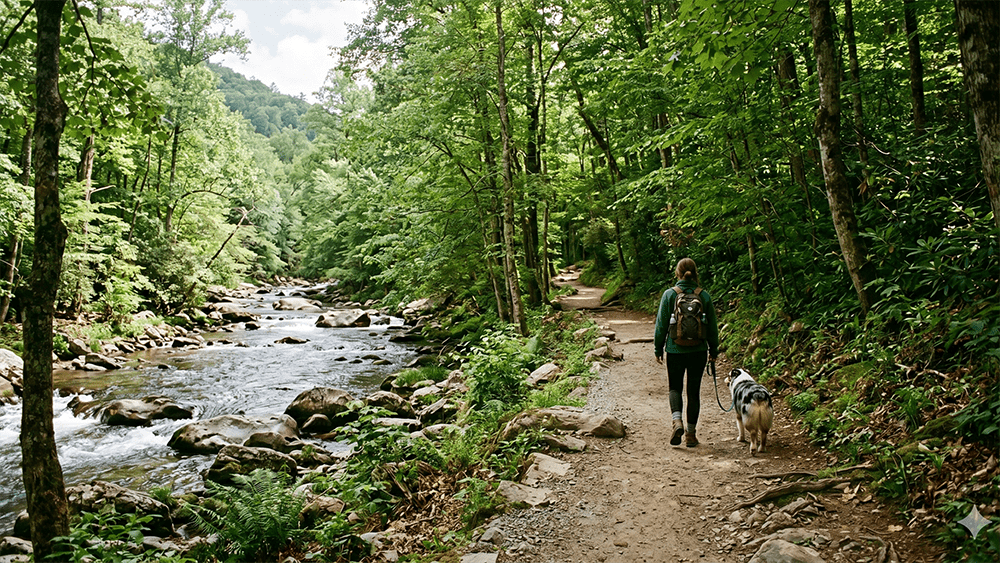
The West Prong of Little Pigeon River runs parallel to the trail for most of the 3.8 miles, with multiple easy entry points where dogs can wade, swim, and cool off. Your dog can hit the water at every accessible spot—quick dips at shallow riffles, longer swims in calm pools, full-body dunks where the river widens near the big footbridge at mile 0.5.

The water depth varies from ankle-deep shallows to waist-deep (on a human) pools. The current is generally gentle except after heavy rain. Most dogs can handle it safely, and the continuous access means you’re never more than a few minutes from the next cooling opportunity.
This isn’t decorative water in the distance, it’s functional hydration and temperature management for summer hiking. When the air temperature hits 88°F with humidity, those river access points transform a potentially dangerous dog hike into a manageable afternoon walk.
Historic Homestead Ruins (Tangible Park History)
The trail passes stone chimneys and rock walls from pre-park homesteads—families who lived here before the government purchased the land in the 1930s to create GSMNP. These aren’t marked with interpretive signs or fenced off as “exhibits.” They’re just there—moss-covered foundations, hand-stacked stone, remnants of lives lived in these mountains 90+ years ago.
Kids love exploring them (carefully—don’t climb on the structures). Dogs love sniffing around the bases. For adults, they’re quiet reminders that the “wilderness” we’re enjoying was someone’s backyard, farm, homeplace.
The most prominent ruins appear around mile 1.2—a stone chimney standing maybe 12 feet tall with the remains of a cabin foundation visible nearby. Worth stopping for photos.
The Challenges: What Makes This Trail Frustrating
Crowds (The Real Deal-Breaker for Some)
On summer weekends and holidays, Gatlinburg Trail sees dozens—sometimes hundreds—of hikers, cyclists, families with strollers, and dogs. Lots of dogs. The parking lot at Sugarlands fills by 10 AM. The trail becomes a highway of two-way traffic. You’ll wait at narrow sections for groups to pass. Your dog will encounter other dogs every few minutes.
If your dog is reactive to other dogs, this trail is miserable. If you hate crowds and came to the Smokies for solitude, this trail will disappoint you. If you envisioned a peaceful forest walk, the reality—especially weekends in July—will feel more like a busy greenway.
We hiked on a Wednesday morning in early May, arriving at 8:15 AM. We encountered maybe 15 other people total. It was pleasant. But the same trail on a Saturday in July at 11 AM? Completely different experience; crowded, noisy, stressful for dogs who need space.
The fix: Timing is everything (more on that below).
Cyclists Share the Trail
Gatlinburg Trail allows bicycles; unusual for GSMNP, but this trail connects downtown Gatlinburg to the visitor center and serves as a multi-use transportation corridor.
Most cyclists are respectful, calling out “On your left!” and slowing down around dogs. But some fly past without warning, startling dogs who aren’t expecting a bike at speed.
What helps: Keep dogs on your side (away from the trail’s edge where bikes pass), shorten the leash in high-traffic sections, and stay alert around blind corners.
Traffic Noise from US-441
For roughly a mile (between miles 0.8-1.8), the trail runs parallel to Newfound Gap Road (US-441). You’ll hear constant car traffic—not overwhelming, but noticeable enough that this doesn’t feel like deep wilderness. The sound diminishes near the river where water noise masks it, but on the uphill sections away from the river, it’s present.
This bothers some people more than others. If you came expecting pristine nature sounds, the highway hum breaks the illusion. If you’re just happy to be hiking with your dog legally in GSMNP, it’s a minor trade-off.
The Cataract Falls Temptation (Don’t Risk It)
At mile 0.5, you’ll see a sign for Cataract Falls Trail—a 0.8-mile side trail leading to a beautiful 25-foot waterfall. The sign does not say “No Pets,” which creates confusion.
DO NOT take your dog on Cataract Falls Trail. It’s prohibited. Dogs are only allowed on the main Gatlinburg Trail. Rangers patrol, and the fine is not worth it.
We watched a family turn onto Cataract Falls with their dog, then turn around 50 yards later when another hiker informed them. They were embarrassed and frustrated; the signage could be clearer. Just know: Main trail only. Side trails = off-limits.
Trail Details: What You Need to Know
The Basics
- Distance: 3.8 miles roundtrip (1.9 miles one-way)
- Elevation gain: 164-235 feet (essentially flat)
- Difficulty: Easy
- Surface: Mixed—paved near visitor center, gravel and packed dirt through forest, natural trail with roots/rocks in middle sections
- Estimated time: 1.5-2.5 hours depending on pace and dog swim breaks
- Dog rules: On-leash only (6 feet maximum), waste pickup required
- Crowds: High on weekends/holidays, low-moderate on weekday mornings
Getting There
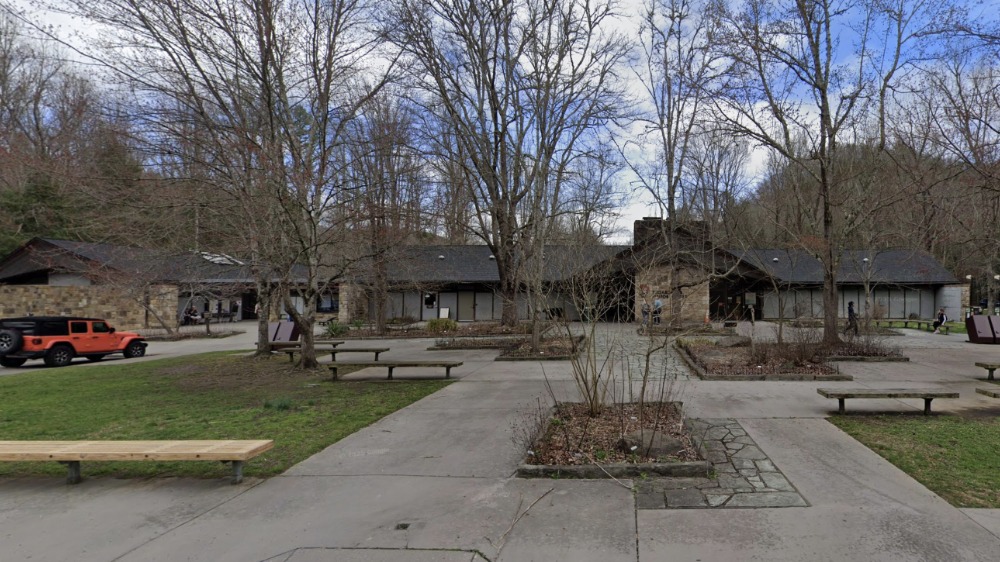
Primary Trailhead: Sugarlands Visitor Center
1420 Fighting Creek Gap Road, Gatlinburg, TN 37738 (Google Map Link)
GPS: 35.68579, -83.53677
From Pigeon Forge: 10-12 minutes via US-441 South into Gatlinburg
From downtown Gatlinburg: 2 miles south on US-441 (Newfound Gap Road)
From Hapey Cabins:
- Timeless Tranquility: 23 minutes
- Blissful Tranquility: 12 minutes
- Hapey Place: 11 minutes
- Hapey Memories: 11 minutes
- Sleepy Bear Cabin: 30 minutes
- Little Bear: 30 minutes
- Sunny View Cabin: 17 minutes (coming June 1, 2026!)
Parking (Critical Timing Information)
Sugarlands Visitor Center lot:
- Large paved lot with 100+ spaces
- Accessible parking available
- Fills by 10 AM on weekends (summer/fall)
- Fills by 11 AM on weekdays (summer/fall)
- Earlier in October (peak foliage)
Parking requires GSMNP tag for stays over 15 minutes:
- Day pass: $5 (good for 1-7 days)
- Weekly pass: $15
- Annual pass: $40
Purchase passes: At visitor center, online at recreation.gov, or at park entrance stations
Alternative parking: Downtown Gatlinburg end (near Traffic Light #10 on River Road)—smaller lot, free street parking nearby, but often full during peak season
Pro tip: Arrive before 9 AM on any day to guarantee parking and enjoy the trail before crowds hit. This single timing decision makes or breaks the experience.
Walking the Trail: What to Expect
Starting at Sugarlands (Mile 0.0-0.5)
The trail begins behind the visitor center. Walk past the restrooms and brick headquarters building—the trailhead sign is visible from there. The first quarter-mile is paved, wide, and flat, running alongside Park Headquarters Road.
This section sees the most foot traffic (visitors walking from the parking lot to use facilities or explore grounds). It’s not scenic yet, but you’re easing into the hike.
At 0.25 miles, the trail crosses under the Gatlinburg Bypass (US-321) via a tunnel. On the far side, the pavement ends and the trail transitions to gravel and natural surface. The river becomes visible to your right, and the forest closes in. This is where it starts feeling like a real trail.
The Big Footbridge & River Access (Mile 0.5)
Around mile 0.5, you’ll cross one of GSMNP’s longest footbridges—a sturdy wooden structure spanning the West Prong. It’s wide enough for two-way traffic, with railings. Some dogs hesitate at the hollow sound their paws make on wood planks.

image courtesy of nps.gov
Just past the bridge, multiple easy access points lead down to the river. This is prime swimming territory—the water is calm, clear, and maybe 1-2 feet deep depending on season.
Also at mile 0.5: The Cataract Falls Trail junction. Remember—side trail is off-limits to dogs. Stay on the main trail.
The Scenic Middle Section (Mile 0.5-1.5)
This is the best part of the trail. The path runs through cove hardwood forest—hemlocks, yellow buckeye, tulip poplars—with the West Prong paralleling to your right. Good shade coverage keeps temperatures comfortable. The river provides constant sound masking (partially) the highway noise from US-441.
You’ll pass more homestead ruins around mile 1.2—that prominent stone chimney and foundation mentioned earlier. We stopped here for water break and photos. A few other hikers were doing the same, but it wasn’t crowded (this was a Wednesday at 9 AM).
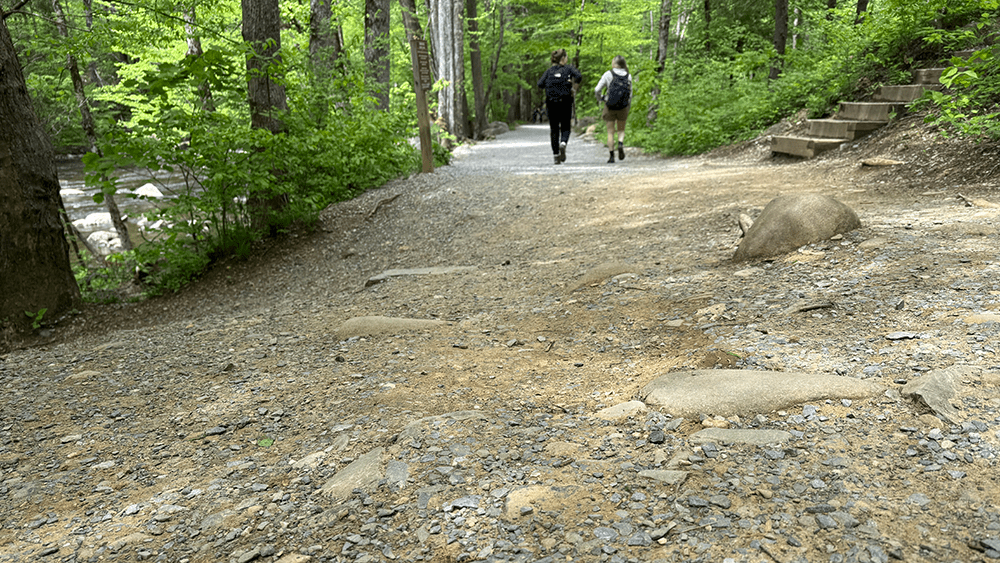
image courtesy of nps.gov
The trail surface through here is mostly natural dirt with some rocky sections and exposed roots. Nothing technical—just watch your footing. Dogs handle it easily.
River access continues throughout this stretch with multiple spots to descend to the water.
Approaching Downtown Gatlinburg (Mile 1.5-1.9)
The final half-mile transitions back to more developed terrain as you approach downtown Gatlinburg. The trail runs closer to US-441 here (traffic noise increases), crosses River Road near Traffic Light #10, and technically continues into downtown—though most people turn around before reaching the downtown end.
We turned around at mile 1.8, making our total hike 3.6 miles instead of the full 3.8. The final sections near downtown didn’t feel worth the extra steps—more traffic noise, less scenery, closer to roads. Your call.
The Return Trip
Walking back, the trail flips: what was uphill is now downhill (though this trail is so flat it barely matters). The return took about 40 minutes compared to our 55-minute outbound pace—we’d already stopped for photos and swim breaks on the way out, so the return was efficient.
One note: The big footbridge at mile 0.5 now comes at mile 1.4 on the return. It’s a good landmark: “Bridge ahead, then 1.4 miles back to the truck.”
Best Times to Hike
Weekday Mornings (⭐⭐⭐⭐⭐)
Ideal window: Tuesday-Thursday, 7:30-9:30 AM
This is when the Gatlinburg Trail is actually pleasant. Parking is easy. The trail is quiet—maybe 10-20 other people total. Your dog has space. You hear birds and river more than traffic. It feels like the trail everyone imagines when they picture “hiking GSMNP.”
We hiked on a Wednesday at 8:15 AM in early May. Weather was perfect (65°F, light breeze). We encountered 15 people, 3 dogs, zero cyclists. It was everything the trail is supposed to be.
If you can only hike one morning of your trip, make it a weekday and come here.
Weekend Mornings (⭐⭐⭐)
Arrive before 8:30 AM for parking and pre-crowd hiking
Weekends bring more people, but early arrival mitigates it. The trail from 8-10 AM on Saturday/Sunday is busier than Tuesday but still manageable. By 10:30 AM, it becomes crowded. By noon, it’s a zoo.
We tried this once—Saturday at 9:15 AM. Parking lot was 60% full (got a spot near the back). Trail had 30-40 people visible at any time. Not terrible, but not peaceful. Still worth it, but definitely busier.
Weekday Afternoons (⭐⭐⭐)
After 3 PM, crowds thin out
Most tourists follow the pattern: arrive mid-morning, hike, leave by 2-3 PM for lunch/dinner elsewhere. If you hike 3:30-6 PM on weekdays, the trail quiets down again.
Summer warning: Afternoon temps hit 85-90°F. Only do this if your dog tolerates heat well and you plan to use the river for cooling constantly.
Weekends & Holidays (⭐⭐)
Crowded, stressful, parking nightmare—only if you have no alternative
Summer Saturdays, July 4th weekend, fall foliage weekends in October—these are when Gatlinburg Trail is at its worst. Parking lot full by 9:30 AM. Trail packed with people, dogs, bikes. Wait times at narrow sections. Dogs encountering other dogs every 2-3 minutes.
If your only option is Saturday at 11 AM in July, consider hiking a different trail entirely (Pigeon Forge Riverwalk, Tennessee Gulf, Sevierville Greenway). The crowds on Gatlinburg Trail during peak times genuinely reduce the experience quality.
Seasonal Breakdown
Spring (April-May): ⭐⭐⭐⭐⭐
Perfect temps (60-75°F), wildflowers, high river flow, fewer crowds before summer rush. Best overall season.
Summer (June-August): ⭐⭐⭐
Hot (85-95°F), crowded on weekends, but river access makes heat manageable. Weekday mornings still work well.
Fall (September-October): ⭐⭐⭐⭐
Comfortable temps, stunning foliage (especially October), but October weekends are insanely crowded due to leaf peepers. Weekdays are excellent.
Winter (November-March): ⭐⭐⭐⭐
Lowest crowds, cold but manageable, fewer river swims (too cold for most dogs). Winterfest lights along portions of trail in December create a beautiful evening hike option.
Who This Trail Is For
✅ Anyone who wants to legally hike GSMNP with their dog (even if just to say you did it)
✅ Families with young kids + dogs (flat, easy, short, facilities at trailhead)
✅ Dogs who love water and tolerate crowds
✅ First-time Smokies visitors (it’s the “official” dog trail, quintessential GSMNP experience)
✅ People staying in Gatlinburg (2 miles from downtown, super convenient)
❌ Dogs who are reactive to other dogs or bikes
❌ Anyone seeking solitude or wilderness experience (unless you hit perfect timing)
❌ People who can’t hike early morning (afternoons and late mornings = crowded)
After the Hike: Return to Your Porch
The ideal Gatlinburg Trail day looks something like this: Trailhead by 8 AM. Finished hiking and toweling off the dog by 11. Back at your Hapey cabin by late morning, cold drink in hand, hot tub warming up on the back deck.
Three Hapey properties sit within about a dozen minutes of Sugarlands Visitor Center — pick the one that matches the trip you want:
Blissful Tranquility is 12 minutes from Sugarlands Visitor Center.

Perfect pairing: A mountain-side retreat with double porches and a fenced dog run — a trail-tired dog can take a proper post-hike zoomie lap and then pass out in the sun. The pick when you want the drive home to feel like part of the vacation.
Hapey Memories is 11 minutes from Sugarlands Visitor Center.
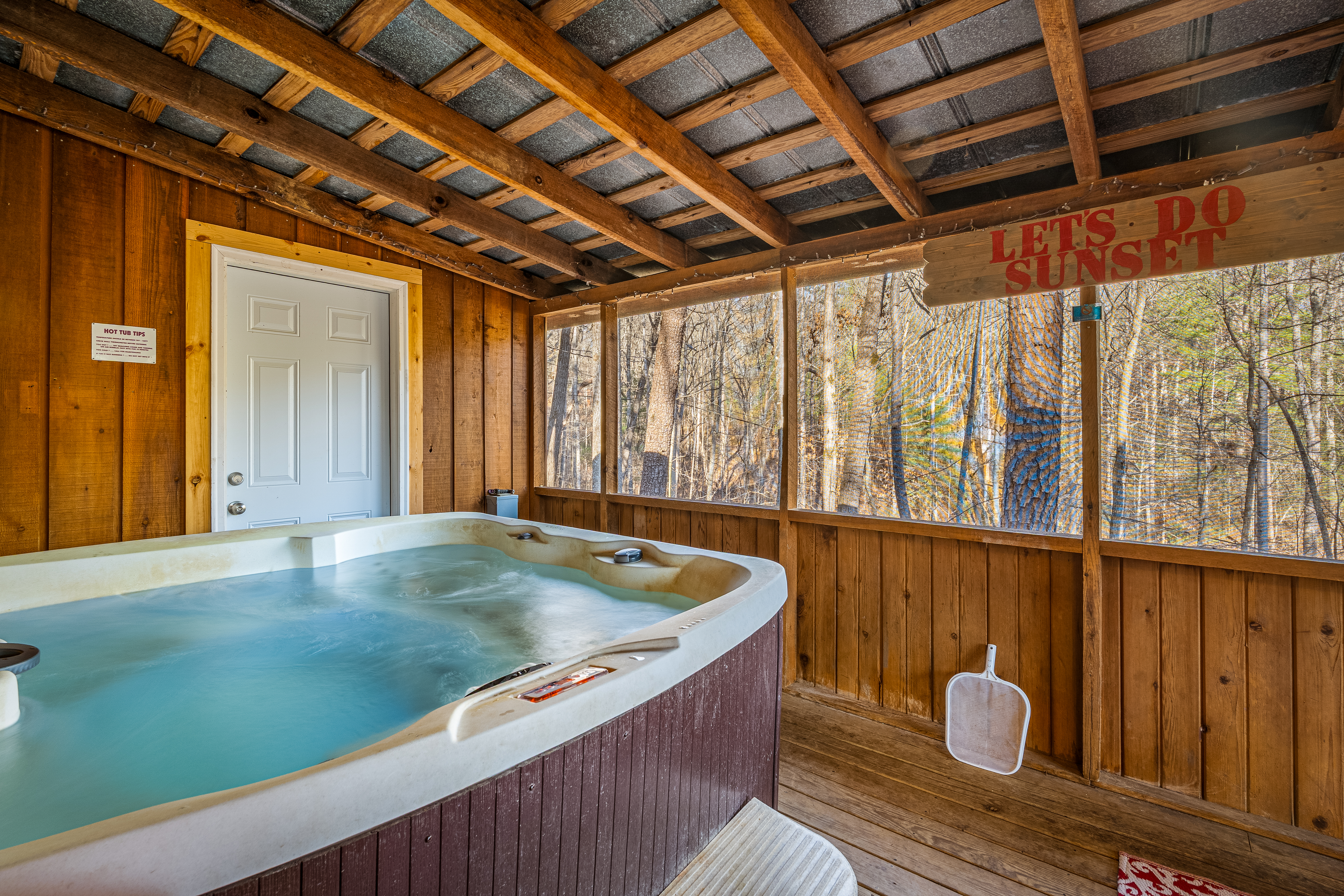
Perfect pairing: Same short drive as Hapey Place, with a layout that leans a little more toward quiet-porch decompress time. Fenced area and hot tub included, and the location makes post-hike Parkway runs effortless if dinner downtown is on the plan.
Hapey Place is 11 minutes from Sugarlands Visitor Center.
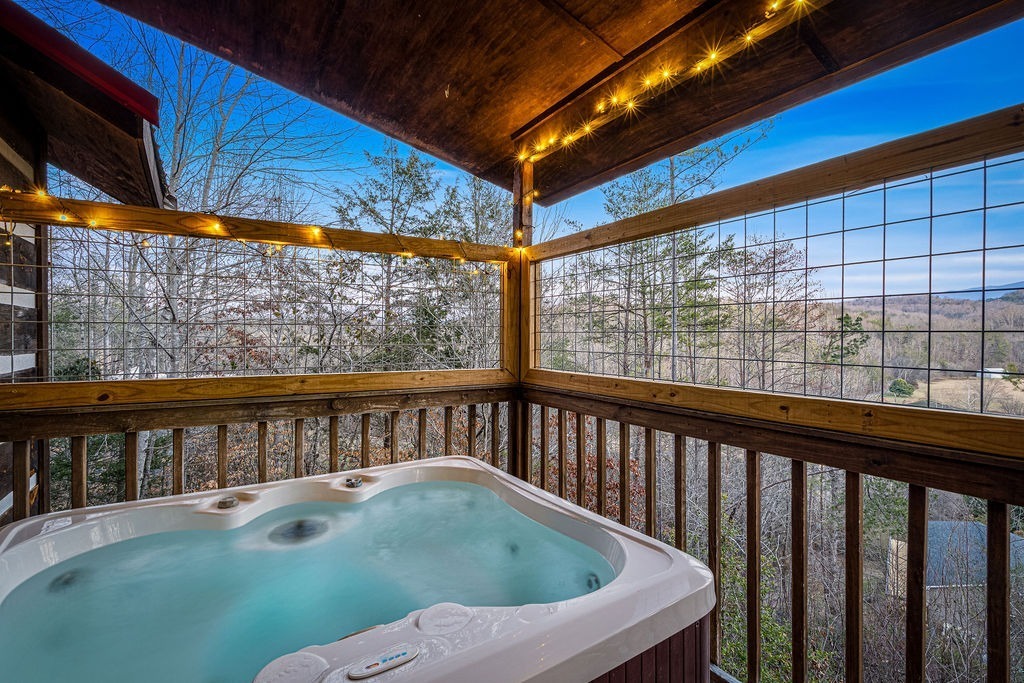
Perfect pairing: A central, easy-access cabin with the full Pet Paradise Promise setup: fully fenced dog run zero pet fees, hot tub, and an arcade room that earns its keep on rainy afternoons. The “everybody’s happy” pick for families mixing kids and dogs.
Post-Hike Dining (Dog-Friendly Patios)
Crockett’s Breakfast Camp (Gatlinburg)
5 minutes from trailhead
- Outdoor patio allows dogs
- Massive portions, camp-themed decor, breakfast served all day
- Try the s’mores French toast (ridiculous but worth it)
- Expect 20-30 min wait on weekends
The Park Grill (Gatlinburg)
5 minutes from trailhead
- Patio seating, dogs welcome
- Upscale casual (steaks, trout, pasta)
- Lunch and dinner, full bar
- More expensive but quality is solid
The Peddler Steakhouse (Gatlinburg)
8 minutes from trailhead
- Riverside deck, dogs allowed
- Famous for aged steaks and salad bar
- Dinner only, expect crowds
- Make reservations if weekend
Howard’s Restaurant (Gatlinburg)
downtown Gatlinburg
- A Gatlinburg institution since 1946 with a dog-welcoming outdoor patio
- Steaks, burgers, seafood — served in a casual, unfussy atmosphere
- Easy walk-in option
- Make reservations if weekend
Best Italian (Elks Plaza)
downtown Gatlinburg
- Family-run Italian with a patio that welcomes leashed, well-behaved dogs
- Hand-tossed pizzas, homemade pasta, and a surprisingly solid wine list
- The right kind of carb reload after a morning of river swims and trail miles
Tom & Earl’s Back Alley Grill
downtown Gatlinburg
- local favorite tucked off the Parkway with a relaxed back-patio vibe where dogs settle in easily
- Wings, burgers, and casual bar-and-grill comfort food
- Lower-key crowd than the main-drag spots — exactly what a tired dog (and tired hiker) wants
Pet policies at all spots can shift seasonally — a quick call before you walk over keeps the evening stress-free.
Bottom Line: Timing Is Everything
Gatlinburg Trail on a Tuesday morning in May at 8:15 AM? Absolutely worth it. Quiet, scenic, emotionally satisfying—the legal GSMNP access with your dog that you drove 8 hours to experience.
Gatlinburg Trail on a Saturday afternoon in July at 1 PM? Borderline miserable. Crowded, noisy, stressful for dogs who need space, and you’ll spend more time managing other hikers than enjoying the hike.
The trail itself is legitimately nice—flat and easy, continuous river access, historic ruins, genuine park scenery. But the experience quality varies wildly based on when you go.
If you can hike weekday mornings, do it. Park at Sugarlands before 9 AM, walk the trail before the buses arrive, let your dog swim in the West Prong, and return to your truck by 11 AM having hiked inside Great Smoky Mountains National Park legally with your best friend. That’s worth everything.
If you can only hike weekends or midday, consider alternative trails instead (Tennessee Gulf for solitude, Pigeon Forge Riverwalk for convenience). The crowds on Gatlinburg Trail during peak times turn a 4-star trail into a 2-star experience.
Choose your timing wisely.
Quick Reference: Gatlinburg Trail Essentials
Trailhead: Sugarlands Visitor Center, 1420 Fighting Creek Gap Road
GPS: 35.68579, -83.53677
Distance: 3.8 miles RT
Elevation gain: 164-235 feet (flat)
Difficulty: Easy
Best times: Weekday mornings before 10 AM
Worst times: Weekend afternoons, July 4th, October weekends
Water for dogs: ✅ Continuous river access
Shade: ⭐⭐⭐⭐ (Good coverage)
Crowds: High on weekends, low on weekday mornings
Cell service: Yes (near visitor center)
Facilities: Restrooms at visitor center
Dog rules: On-leash (6 ft), waste pickup required
Pack List:
- Water + collapsible bowl (even with river access)
- Waste bags (trash cans available at trailhead)
- Short leash (crowds require close control)
- Parking pass ($5 day pass or free senior pass)
- Towel for car (if dog swims)
Timing Strategy:
- ✅ Tuesday-Thursday, 7:30-9:30 AM = ideal
- ✅ Weekend before 8:30 AM = acceptable
- ❌ Any day 11 AM-3 PM = crowded
- ❌ October weekends = avoid entirely