
You’ve planned this trip down to the detail. The cabin is booked, the cooler is packed, and your dog is already doing that hopeful spin by the door because the suitcase came out. You can picture the good parts: the two of you on a quiet trail, the smell of damp leaves and spruce, your dog’s nose working overtime at every new scent. Steam rising off the hot tub while she stretches out on the porch boards, tired in the best way.
And then there’s the quieter thought, the one you haven’t said out loud. It lives in the back of every dog parent’s mind on a trip far from home: What if something happens? What if she cuts a paw, gets stung, or eats something she shouldn’t; and I have no idea where to go?
Here’s the reassuring part. That worry is completely manageable. Not by hoping nothing goes wrong, but by spending twenty minutes preparing before you leave; the same twenty minutes you’d happily spend packing a first-aid kit for your kids. This guide walks you through exactly what to pack, what to watch for on Smoky Mountain trails, and which emergency vets to have saved in your phone before you need them. The goal is simple: keep a small scare on vacation a small scare.
Why Pet Mishaps Tick Up in the Smokies
The Great Smoky Mountains are one of the most dog-loved destinations in the Southeast, and for good reason. But the same things that make the region wonderful for dogs; miles of trails, rushing creeks, warm afternoons, wildlife around every bend; also create a few more chances for trouble than your dog’s predictable home routine.
Spring and summer are the busiest windows for pet visits, and they’re also when minor injuries climb. Dogs that spend most of the year on neighborhood sidewalks suddenly cover real mileage on rocky terrain. Paw pads that have never met granite get a crash course. Temperatures swing from a cool mountain morning to a humid afternoon. There are ticks in the leaf litter, yellowjackets in the ground, fast-moving cold water in the creeks, and a whole catalog of smells your dog desperately wants to investigate.
None of this is a reason to leave your dog at home; quite the opposite. It’s simply a reason to treat a Smokies trip the way you’d treat any active outdoor adventure: with a little preparation. Dogs who are set up for success here have the time of their lives. The families who run into stressful moments are almost always the ones who got caught off guard, not the ones who got unlucky.
Before You Leave Home: The Pre-Trip Pet Prep Checklist
The single most valuable emergency tool you have is the prep you do at your kitchen table before the trip ever starts. Run through this list a few days out, while there’s still time to call your vet or order a missing supply.

Confirm your dog’s ID is current. Check that the tags on the collar show a cell phone number you’ll actually have with you; not an old landline. If your dog is microchipped, log in to the registry and confirm the contact info is up to date. A surprising number of microchips trace back to a phone number from three moves ago.
Snap a fresh photo. Take a clear, current picture of your dog on your phone before you leave. If your dog ever slips a leash in unfamiliar territory, a recent photo makes posting and searching dramatically faster than scrolling for one.
Pack a few days of extra medication. If your dog takes anything daily; joint supplements, allergy meds, prescriptions; bring several extra doses beyond your trip length. Travel days run long, and you don’t want to be hunting for a pharmacy that can help.
Bring a copy of vaccination and medical records. Keep a photo of your dog’s rabies certificate and vaccine history on your phone, and a paper copy in your bag. Any vet you visit on the road will want this, and it speeds everything up.
Talk to your regular vet. A quick call before you travel is worth its weight in gold. Ask whether your dog should have anything specific on hand, and importantly, ask for guidance on antihistamine use. Many vets are comfortable recommending a dog-safe antihistamine for insect stings, but the right product and dose depend on your individual dog’s weight and health. Get that answer from your vet in advance rather than guessing on a trail.
Know your coverage. If you have pet insurance, save the claims number. If you don’t, it’s worth quietly setting aside a small emergency cushion so that a “what do we do” moment is never also a “can we afford it” moment.
Plan a safe car setup. A crash-tested harness or a secured crate keeps your dog safer on the curvy mountain roads into Gatlinburg and over Newfound Gap. A loose dog in the car is a risk to everyone, including the dog.
Building a Smoky Mountain Pet First-Aid Kit
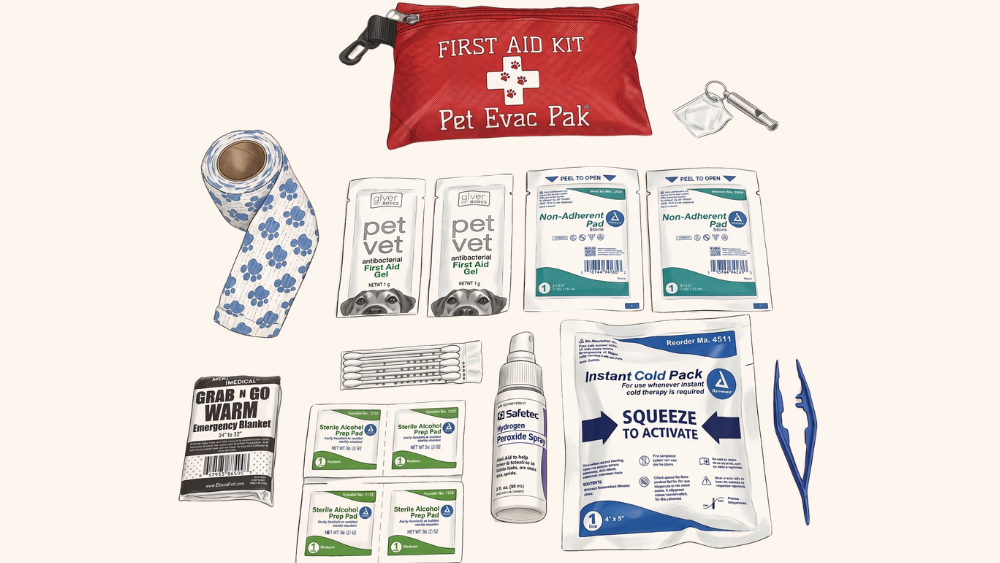
You can buy a pre-made pet first-aid kit, but the best one is the kit you assemble yourself, because you’ll actually know what’s in it and how to use it. Here’s what belongs in a Smokies-ready kit. Most of it fits in a gallon zip bag.
For wounds and bleeding, pack gauze pads, a roll of self-adhesive bandage wrap (the kind that sticks to itself, not to fur), adhesive tape, and blunt-tipped scissors. Add styptic powder or a styptic pencil; it stops bleeding from a torn nail fast, and torn nails are one of the most common trail injuries there are.
For cleaning, bring saline solution or sterile wound wash to flush out grit and debris, plus pet-safe antiseptic wipes. Skip the hydrogen peroxide for wound cleaning; it can damage healthy tissue.
For paws, pack paw balm and at least one set of dog booties. Even if your dog has never worn boots, a single bootie can protect an injured pad long enough to get back to the trailhead.
For the unexpected, include a digital thermometer (a dog’s normal temperature runs roughly 101–102.5°F), a pair of fine-tipped tweezers or a dedicated tick-removal tool, and a small towel or emergency blanket. Add a soft muzzle, too. This one surprises people, but it matters: even the gentlest, most devoted dog may snap when frightened and in pain, and a muzzle lets you safely help your own dog or move her to the car.
Round it out with a collapsible water bowl, a few extra poop bags, a copy of those medical records, and a card with your emergency vet numbers already written down; because phone batteries die at the worst possible time.
Tip: All of Hapey Cabin’s rentals contain a basic pet first aid kit and poop bags for your convenience. However, we still recommend packing one specifically for your pets.
Know Before You Need It: Emergency Vets Near Pigeon Forge, Gatlinburg & Sevierville
This is the part to handle now, on a calm evening before your trip; not in a panic with a hurt dog in the back seat. Save these numbers in your phone and jot them on the card in your first-aid kit.
Sevier County has several well-regarded veterinary hospitals serving Pigeon Forge, Gatlinburg, and Sevierville. Mountain Home Veterinary Hospital (302 Middle Creek Road, Sevierville, TN 37862; 865-453-9346) serves the whole county and is a solid first call during regular hours. Parkway Animal Hospital in Sevierville and the Holt Road Pet Hospital locations also serve the area, with Holt Road advertising emergency availability; call 877-334-8307. Hours and emergency capacity at local clinics can vary, so the smartest move is to call ahead the day you arrive, confirm their current hours, and ask how after-hours emergencies are handled.
For a true round-the-clock emergency, the area’s dedicated 24-hour hospitals are in Knoxville, roughly a 45-to-60-minute drive west of Sevier County. Animal Emergency & Specialty Center of Knoxville (10213 Kingston Pike, Knoxville, TN 37922; 865-693-4440) is open 24 hours a day, 7 days a week. The University of Tennessee Veterinary Medical Center (2407 River Drive, Knoxville, TN 37996; 865-974-8387) is a referral and specialty hospital with emergency and critical care services available daily; call ahead so their team can prepare for your arrival.
The takeaway: have a local daytime clinic and a 24-hour Knoxville option saved before you ever set foot on a trail. If something happens, you want to be driving, not Googling.
Related Reading: Top Veterinary Services in Pigeon Forge
Save these now: Local daytime clinic + a 24-hour Knoxville emergency hospital. Add the ASPCA Animal Poison Control number (888-426-4435) too; it’s a paid service, but invaluable if your dog eats something questionable.
Trail and Outdoor Hazards and How to Handle Them
Most Smoky Mountain dog adventures happen happily and uneventfully. But knowing the handful of real hazards means you can spot trouble early, when it’s easy to manage.
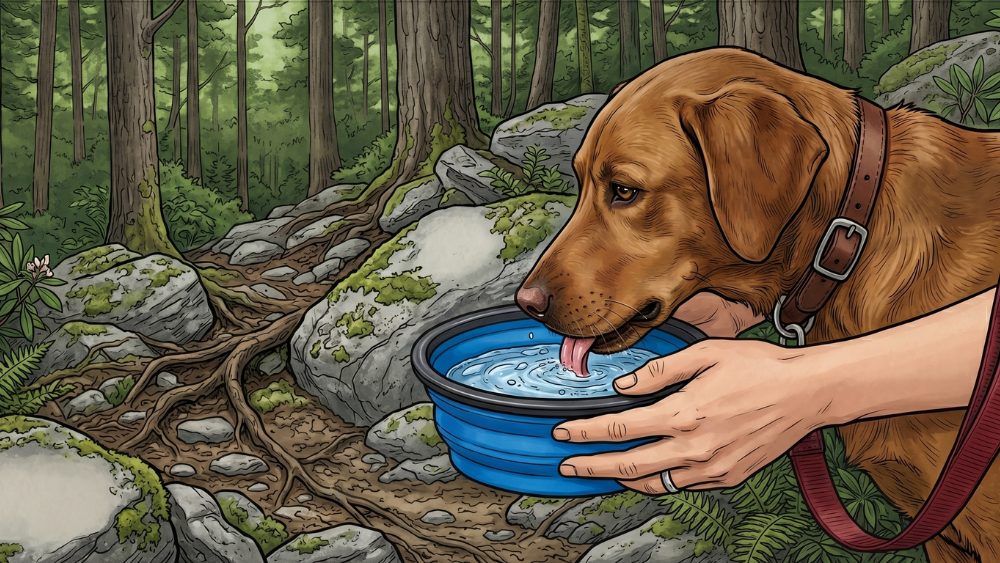
Heat and overheating. This is the big one, and it sneaks up on people. Dogs cool themselves far less efficiently than we do, and a humid Tennessee afternoon can overwhelm a dog quickly; especially short-nosed breeds, seniors, puppies, and any dog carrying extra weight. To recognize canine heatstroke, watch for heavy, frantic panting, thick drool, bright red gums, wobbliness, or a dog who suddenly wants to lie down and quit. If you see those signs, stop, move to shade, offer cool (not ice-cold) water, and wet your dog’s belly, paws, and ears with cool water. Then head for a vet; overheating can do internal damage even after a dog seems to perk up. The simplest prevention is timing: hike early in the morning, carry plenty of water, and take the afternoon as cabin-and-porch time.
Hot pavement and rough terrain. The Parkway sidewalks and parking lots in Pigeon Forge and Gatlinburg can get genuinely hot in summer. The rule of thumb: press the back of your hand to the pavement for seven seconds; if you can’t hold it, it’s too hot for paws. On the trail, rocky and rooty sections can split a pad or wear it raw. Check your dog’s feet during breaks and at the end of the day.
Ticks. The Smokies are tick country, full stop. And tick-borne illnesses in the southeast always increase in the warmer months. After every hike, run your hands slowly over your dog; ears, neck, armpits, between the toes, around the tail. Remove any tick promptly with fine-tipped tweezers, gripping close to the skin and pulling straight out. Make sure your dog’s tick prevention is current before the trip, and mention any travel to your vet at the next checkup.
Snakes. The Smokies are home to timber rattlesnakes and copperheads. They want nothing to do with your dog and will almost always avoid contact if given the chance; which is the best argument there is for keeping your dog leashed and on the trail rather than nosing into rock piles and tall grass. If your dog is ever bitten, stay as calm as you can, keep your dog as quiet and still as possible to slow venom spread, skip the old myths (no tourniquets, no ice, no cutting), and get to a vet immediately. Call ahead so they can prepare.
Stinging insects. Yellowjackets often nest in the ground along trails, and a curious dog can disturb a nest in a heartbeat. A sting or two usually just means a yelp and a sore spot. But watch for facial swelling, hives, or; rarely; a dog who becomes weak or has trouble breathing, which signals a serious allergic reaction and a same-day vet visit. This is exactly the scenario your vet’s pre-trip antihistamine guidance is for.
Creeks and standing water. Mountain streams are beautiful and tempting, but the current is stronger and the water far colder than it looks, and slick rocks make for easy falls. Let your dog wade in calm, shallow spots rather than fast channels. Try to discourage drinking from streams and especially from still puddles or ponds; stream water can carry giardia, and standing water carries other risks. Pack plenty of fresh water so your dog never feels the need.
Wildlife. Black bears, deer, and other wildlife are part of the Smokies experience, and the rule is the same for all of them: a leashed dog is a safe dog. A dog who chases wildlife can get hurt, get lost, or provoke a dangerous encounter. Keep your dog leashed and close, and simply give any animal you spot a wide, calm berth. Part of the Smoky Mountain experience is safely viewing the wildlife; emphasis on “Safely”.
A note on where dogs can go. Remember that dogs are not permitted on most trails inside Great Smoky Mountains National Park; only the Gatlinburg Trail and the Oconaluftee River Trail. Most off-leash-style hiking happens in the neighboring Cherokee National Forest. (See our full GSMNP dog policy guide for the complete rundown of where your dog is and isn’t welcome.) Knowing the rules ahead of time keeps your trip relaxed and avoids an unwanted surprise at a trailhead.
How to Tell a Real Emergency From a “Watch and See”
Not every scrape needs a vet, and part of staying calm is knowing the difference. A minor nick, a single bee sting with no swelling beyond the spot, or a brief limp that resolves with rest can often be handled with your first-aid kit and a quieter evening at the cabin.
Some signs, though, mean go now: difficulty breathing or nonstop panting that won’t settle; pale, white, or bluish gums; collapse, severe weakness, or inability to stand; a seizure; bleeding you can’t control with pressure; suspected snakebite; significant facial or throat swelling; repeated vomiting or diarrhea, especially with blood; a clearly broken bone or a dog who won’t bear weight at all; signs of severe overheating; or any reason to think your dog swallowed something toxic. When in doubt, call. A two-minute phone call to a vet or to Animal Poison Control will tell you whether you’re dealing with a cabin-night situation or a get-in-the-car situation.
The Cabin Side of Pet Safety

image: @eastcoastwoofers
A safe trip isn’t only about the trail; it’s also about where your dog rests, plays, and decompresses at the end of the day. This is where your choice of cabin quietly does a lot of the work for you.
A securely fenced yard is one of the most underrated safety features a dog parent can have on vacation. It means your dog can sniff, stretch, and do zoomies after a long car ride without a leash and without you white-knuckling every squirrel. It means a quick potty break at 6 a.m. without anyone getting fully dressed. And it means that in an unfamiliar place, your dog has a contained, predictable space that lowers everyone’s stress.
At Hapey Cabin Rentals, that’s the heart of our Pet Paradise Promise: Five of our six cabins; Blissful Tranquility, Timeless Tranquility, Sunny View, Sleepy Bear Ranch, and Hapey Memories; comes with a fenced dog run and zero pet fees. Your dog is a welcome guest, not a line item. Our Clean-Cabin Guarantee means you’re not walking into someone else’s mess or mystery smells, which matters more than people realize for dogs with allergies or sensitive stomachs. And because we have hot tubs on site, a quick word of caution worth repeating: hot tub water is far too hot for dogs and the cover should stay closed and secured when you’re not using it. A few seconds of supervision keeps the sunset-soaked porch exactly as relaxing as it should be.
Choosing a cabin with a fenced area also makes it easy to build genuine rest into your itinerary. Spend the cool morning hours on the trail, then let the hot afternoon be cabin time; your dog napping in the shade, the kids on the arcade games, everyone recharging. That rhythm isn’t just pleasant; it’s one of the best heat-safety strategies there is.
And because we believe planning a trip should feel calm, our pricing reflects our No-Surprise Pricing standard: the rate you see is the rate you get, with no hidden pet fees or last-minute add-ons. One less thing to worry about, so you can focus on the things that actually matter; like which trail to try tomorrow.
Quick Reference: Your Smoky Mountain Pet Safety Checklist
Before you leave home: current ID tags and microchip info, fresh photo of your dog, extra medication, copies of vaccination records, a pre-trip call to your vet (including antihistamine guidance), and a crash-tested harness or secured crate.
In your first-aid kit: gauze and self-adhesive wrap, blunt scissors, styptic powder, saline wound wash, pet-safe antiseptic wipes, paw balm and booties, digital thermometer, tweezers or tick tool, a soft muzzle, an emergency blanket, a collapsible bowl, and a card with emergency vet numbers.
Saved in your phone: a local Sevier County daytime clinic, a 24-hour Knoxville emergency hospital, and ASPCA Animal Poison Control (888-426-4435).
On the trail: hike early to beat the heat, carry plenty of fresh water, keep your dog leashed, check paws and do a full tick check after every outing, and steer clear of fast water and tall grass.
At the cabin: use the fenced yard, keep the hot tub cover closed and secured, and build in real afternoon rest.
Ready to plan a trip where your dog is genuinely set up to thrive? Every Hapey cabin is pet-friendly with a fenced yard, zero pet fees, and our Clean-Cabin Guarantee;so you can focus on the adventure and leave the worry at home. For more on local veterinary options, see our companion guide to veterinary services in Pigeon Forge.
CHECK CABIN AVAILABILITYThis guide is for general preparedness and is not a substitute for professional veterinary advice. Always consult your veterinarian about your individual dog, and contact an emergency vet right away if you suspect a serious problem. Clinic names, addresses, phone numbers, and hours are current as of May 2026;please verify directly before relying on them.